The working of God in all parts of our lives, in small things as well as great, we call 'providence'. These special workings of his providence are not mere accidents. From the day of our birth, to the day of our death, God is working for the good of those who have been called according to his purpose.
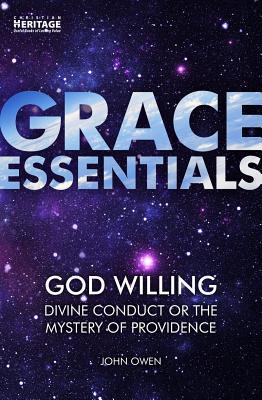
In this simplified and abridged form of his 1677 classic work entitled Divine conduct or The Mystery of ProvidenceDivine conduct or The Mystery of Providence John Flavel addresses how God works providentially in our lives, as well as why and how we should think deeply about these providences. An encouragement to Christians to taste and see the good God has done in our own lives.






















John Flavel (1628 - 1691)
Was an English Presbyterian clergyman, puritan, and author. Flavel, the eldest son of the Rev. Richard Flavel, described as ‘a painful and eminent minister,’ who was incumbent successively of Bromsgrove, Worcestershire, Hasler and Willersey, Gloucestershire (from which last living he was ejected in 1662), was born in or about 1630 at Bromsgrove.He was ejected from his living by the passing of the Act of Uniformity in 1662, but continued to preach and administer the sacraments privately till the Five Mile Act of 1665, when he retired to Slapton, 5 miles away. He then lived for a time in London, but returned to Dartmouth, where he labored till his death in 1691. He was married four times. He was a vigorous and voluminous writer, and not without a play of fine fancy. His principal works are his Navigation Spiritualized (1671); The Fountain of Life, in forty-two Sermons (1672); The Method of Grace (1680); Pneumatologia, a Treatise on the Soul of Man (1698); A Token for Mourners; Husbandry Spiritualized (1699).
John Flavel was an English Presbyterian clergyman. Flavel was born at Bromsgrove, Worcestershire and studied at Oxford. A Presbyterian, held livings at Diptford (in Devon) and Dartmouth. He was ejected from the latter as a result of the Great Ejection of 1662; however, he continued to preach there secretly. After the Declaration of Indulgence 1687, became a minister of a Nonconformist Church there.
He was a prolific and popular author. Among his works are The Mystery of Providence (1678), Husbandry Spiritualised (1669) and Navigation Spiritualised (1671), The Seamon's Companion (1676), titles which suggest some of his characteristics as a writer.
He died at Exeter, Devonshire, on 26 June 1691. Flavel is commemorated in the name of Flavel Road on Bromsgrove's Charford Estate.
John Flavel (or Flavell) was born in 1628 in Bromsgrove, Worcestershire. He was the son of Richard Flavel, a minister who died of the plague in 1665 while in prison for nonconformity. John Flavel was educated by his father in the ways of religion, then "plied his studies hard" as a commoner at University College, Oxford. In 1650, he was ordained by the presbytery at Salisbury. He settled in Diptford, where he honed his numerous gifts.
He married Joan Randall, a godly woman, who died while giving birth to their first child in 1655. The baby died as well. After a year of mourning, Flavel married Elizabeth Stapell and was again blessed with a close, God-fearing marriage, as well as children.
In 1656, Flavel accepted a call to be minister in the thriving seaport of Dartmouth. He earned a smaller income there, but his work was more profitable; many were converted. One of his parishioners wrote of Flavel, "I could say much, though not enough of the excellency of his preaching; of his seasonable, suitable, and spiritual matter; of his plain expositions of Scripture; his talking method, his genuine and natural deductions, his convincing arguments, his clear and powerful demonstrations, his heart-searching applications, and his comfortable supports to those that were afflicted in conscience. In short, that person must have a very soft head, or a very hard heart, or both, that could sit under his ministry unaffected."
... Show more