
Quote by G.K. Chesterton

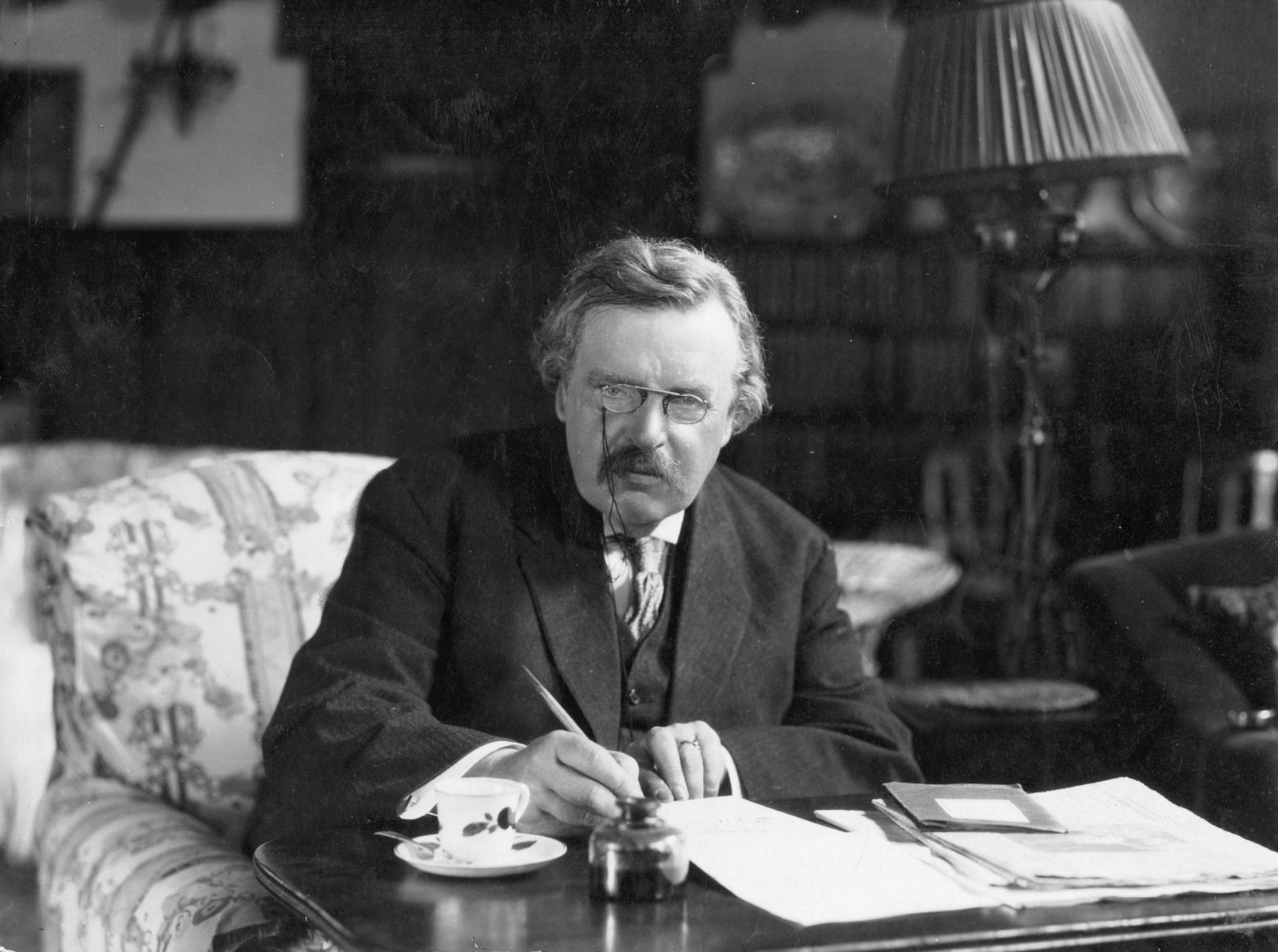
“The publisher said of somebody, 'That man will get on; he believes in himself.' [...] I said to him, 'Shall I tell you where the men are who believe most in themselves? For I can tell you. I know of men who believe in themselves more colossally than Napoleon or Caesar. I know where flames the fixed star of certainty and success. I can guide you to the thrones of Supermen. The men who really believe in themselves are all in lunatic asylums.' He said mildly that there were a good many men after all who believed in themselves and who were not in lunatic asylums. 'Yes, there are,' I retorted, 'and you of all men ought to know them. The drunken poet from whom you would not take a dreary tragedy, he believed in himself. That elderly minister with an epic from whom you were hiding in a back room, he believed in himself. If you consulted your business experiences instead of your ugly individualistic philosophy, you would know that believing in himself is one of the commonest signs of a rotter. Actors who can't act believe in themselves; and debtors who won't pay. It would be much truer to say that a man will certainly fail, because he believes in himself. Complete self confidence is not merely a sin; complete self-confidence is a weakness.”
― G.K. Chesterton ,
from Orthodoxy
Be the first to react on this!



Grupo de marcas


















© 2025 Bibleportal.com Reservados todos los derechos.
Gilbert Keith Chesterton was one of the most influential English writers of the 20th century. His prolific and diverse output included journalism, philosophy, poetry, biography, Christian apologetics, fantasy and detective fiction.
Chesterton has been called the "prince of paradox". Time magazine, in a review of a biography of Chesterton, observed of his writing style: "Whenever possible Chesterton made his points with popular sayings, proverbs, allegories—first carefully turning them inside out.