
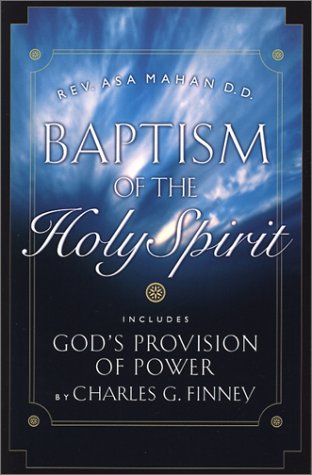
Baptism of the Holy Spirit/God's Provision of Power
by Charles Finney
"The Baptism of the Holy Spirit/God's Provision of Power" is a detailed discussion of:
- What Jesus taught about the baptism of the Holy Spirit - How to prepare for the baptism of the Holy Spirit - The unity, fellowship and power the Holy Spirit brings - The cleansing power of the Spirit - The conditions of receiving this power
- What Jesus taught about the baptism of the Holy Spirit - How to prepare for the baptism of the Holy Spirit - The unity, fellowship and power the Holy Spirit brings - The cleansing power of the Spirit - The conditions of receiving this powerThis edition was originally published in 1880 by Elliot Stock, London, as "The Baptism of the Holy Ghost/The Enduement of Power" and was highly influential in the early history of holiness and Pentecostal denominations.
This edition was originally published in 1880 by Elliot Stock, London, as "The Baptism of the Holy Ghost/The Enduement of Power" and was highly influential in the early history of holiness and Pentecostal denominations.BUY NOW
Paperback, 192 pages
Published June 1st 2002 by Williams Publishers



品牌集团


















© 2025 Bibleportal.com 版权所有.
Charles Grandison Finney was a Presbyterian minister who became an important figure in the Second Great Awakening. His influence during this period was enough that he has been called "The Father of Modern Revivalism".
In addition to becoming a popular Christian evangelist, Finney was involved with the abolitionist movement and frequently denounced slavery from the pulpit.
Finney was known for his innovations in preaching and religious meetings, such as having women pray in public meetings of mixed gender, development of the "anxious seat" (a place where those considering becoming Christians could come to receive prayer), and public censure of individuals by name in sermons and prayers. He was also known for his use of extemporaneous preaching.
No man in his day and generation was more signally blessed of God in winning souls than Charles G. Finney. Thousands and tens of thousands in this and other lands were brought to Christ through his instrumentality. It is hoped that this brief study of his life and labors may stimulate others to renewed effort in seeking to bring men to a saving knowledge of Him who is our Redeemer and Lord.
... Show more