
Inspirational Quotes on Catholicism


“Mind what you are about: labor faithfully in My vineyard: I will be your reward. Write, read, sing, lament, keep silence, pray, bear your crosses manfully: eternal life is worth all these, and greater combats....It is no small matter to lose or gain the kingdom of God. Lift up, therefore, thy face to Heaven; behold I and all My Saints with Me, who in this world have had a great conflict, now rejoice, are comforted now, are now secure, are now at rest; and they shall for all eternity abide with Me in the kingdom of My Father.”
topics: catholic , catholic-author , catholicism , christian , christianity , inspirational , religion , spirituality
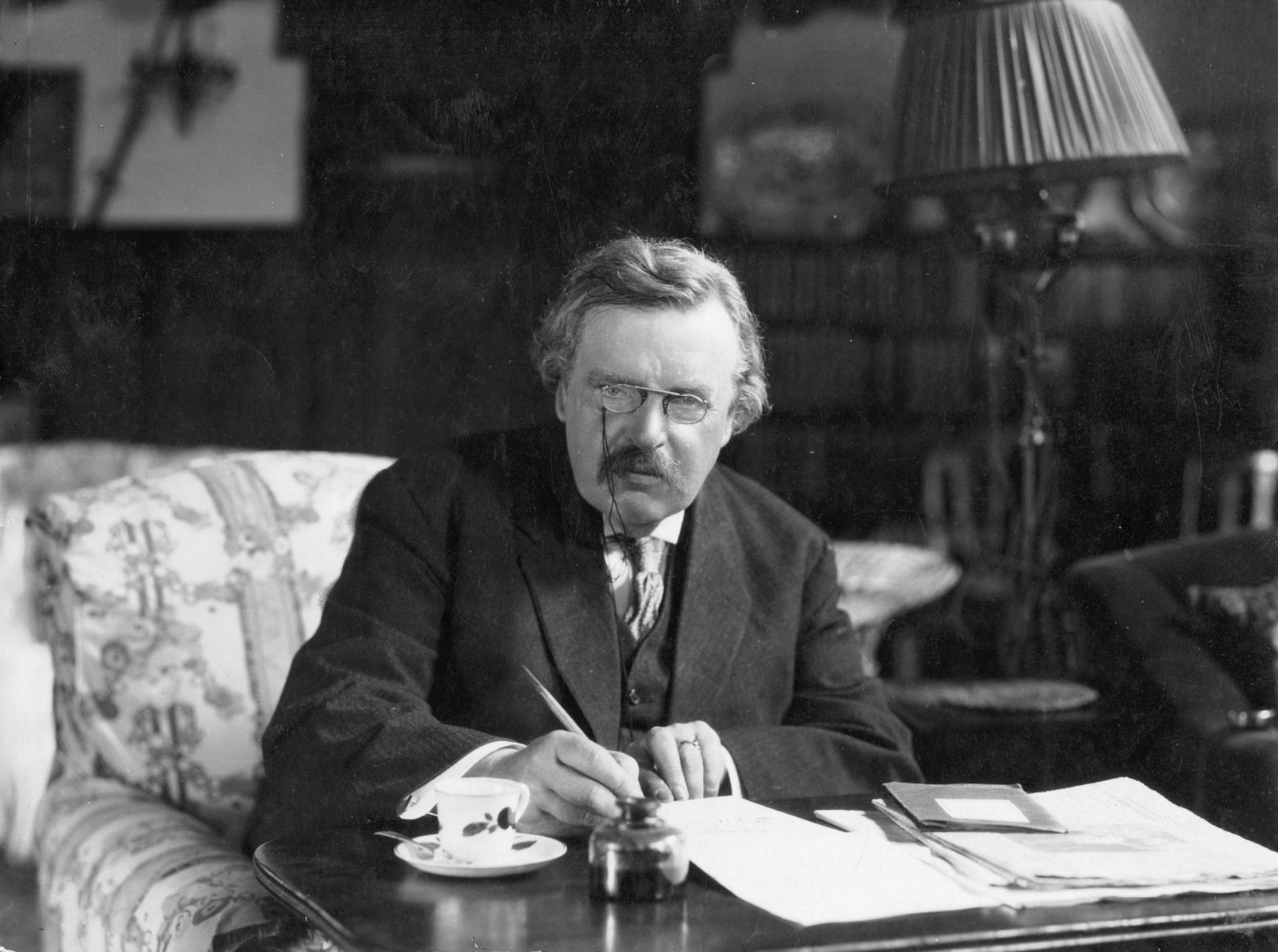
“It is true that this general truth was hidden from many by certain definite assertions. I can only call them, in simple language, Protestant lies about Catholic lying. The men who repeated them were not necessarily lying, because they were repeating. But the statements were of the same lucid and precise order as a statement that the Pope has three legs or that Rome is situated at the North Pole. There is no more doubt about their nature than that. One of them, for instance, is the positive statement, once heard everywhere and still heard often: "Roman Catholics are taught that anything is lawful if done for the good of the Church." This is not the fact; and there is an end of it. It refers to a definite statement of an institution whose statements are very definite; and it can be proved to be totally false. Here as always the critics cannot see that they are trying to have it both ways. They are always complaining that our creed is cut and dried; that we are told what to believe and must believe nothing else; that it is all written down for us in bulls and confessions of faith. In so far as this is true, it brings a matter like this to the point of legal and literal truth, which can be tested; and so tested, it is a lie. But even here I was saved at a very early stage by noticing a curious fact. I noticed that those who were most ready to blame priests for relying on rigid formulas seldom took the trouble to find out what the formulas were.”
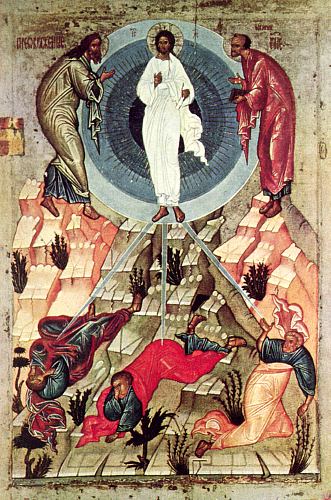
“It is this kind of consciousness, exacerbated to an extreme, which has made inevitable the so called "death of God." Cartesian thought began with an attempt to reach God as object by starting from the thinking self. But when God becomes object, he sooner or later "dies," because God as object is ultimately unthinkable. God as object is not only a mere abstract concept, but one which contains so many internal contradictions that it becomes entirely nonnegotiable except when it is hardened into an idol that is maintained in existence by a sheer act of will. For a long time man continued to be capable of this willfulness: but now the effort has become exhausting and many Christians have realised it to be futile. Relaxing the effort, they have let go the "God-object" which their fathers and grandfathers still hoped to manipulate for their own ends. Their weariness has accounted for the element of resentment which made this a conscious "murder" of the deity. Liberated from the strain of willfully maintaining an object-God in existence, the Cartesian consciousness remains none the less imprisoned in itself. Hence the need to break out of itself and to meet "the other" in "encounter," "openness," "fellowship," "communion".”
topics: cartesian , catholicism , christianity , descartes , god-is-dead , merton , modern-man , second-vatican-council , zen
“I could not understand why these romancers never took the trouble to find out a few elementary facts about the thing they denounced. The facts might easily have helped the denunciation, where the fictions discredited it. There were any number of real Catholic doctrines I should then have thought disgraceful to the Church. There are any number which I can still easily imagine being made to look disgraceful to the Church. But the enemies of the Church never found these real rocks of offence. They never looked for them. They never looked for anything. They seemed to have simply made up out of their own heads a number of phrases, such as a Scarlet Woman of deficient intellect might be supposed to launch on the world; and left it at that. Boundless freedom reigned; it was not treated as if it were a question of fact at all. A priest might say anything about the Faith; because a Protestant might say anything about the priest. These novels were padded with pronouncements like this one, for instance, which I happen to remember: "Disobeying a priest is the one sin for which there is no absolution. We term it a reserved case." Now obviously a man writing like that is simply imagining what might exist; it has never occurred to him to go and ask if it does exist. He has heard the phrase "a reserved case" and considers, in a poetic reverie, what he shall make it mean. He does not go and ask the nearest priest what it does mean. He does not look it up in an encyclopedia or any ordinary work of reference. There is no doubt about the fact that it simply means a case reserved for ecclesiastical superiors and not to be settled finally by the priest. That may be a fact to be denounced; but anyhow it is a fact. But the man much prefers to denounce his own fancy. Any manual would tell him that there is no sin "for which there is no absolution"; not disobeying the priest; not assassinating the Pope. It would be easy to find out these facts and quite easy to base a Protestant invective upon them. It puzzled me very much, even at that early stage, to imagine why people bringing controversial charges against a powerful and prominent institution should thus neglect to test their own case, and should draw in this random way on their own imagination. It did not make me any more inclined to be a Catholic; in those days the very idea of such a thing would have seemed crazy. But it did save me from swallowing all the solid and solemn assertion about what Jesuits said and did. I did not accept quite so completely as others the well-ascertained and widely accepted fact that "Roman Catholics may do anything for the good of the Church"; because I had already learned to smile at equally accepted truths like "Disobeying a priest is the one sin for which there is no absolution." I never dreamed that the Roman religion was true; but I knew that its accusers, for some reason or other, were curiously inaccurate.”
“The story of the Fall tells us in mythical language that "original sin" is not simply a stigma arbitrarily making good pleasures seem guilty, but a basic inauthenticity, a kind of predisposition to bad faith in our understanding of ourselves and of the world. It implies a determined willfulness in trying to make things be other than they are in order that we may be able to make them subserve, at any moment, to our individual desire for pleasure or for power. But since things do not obey our arbitrary impulsions, and since we cannot make the world correspond to and confirm the image of it dictated by our needs and illusions, our willfulness is inseparable from error and from suffering. Hence, Buddhism says, deluded life itself is in a state of Dukkha, and every movement of desire tends to bear ultimate fruit in pain rather than lasting joy, in hate rather than love, in destruction rather than creation. (Let us note in passing that when technological skill seems in fact to give man almost absolute power in manipulating the world, this fact is no way reverses his original condition of brokenness and error but only makes it all the more obvious. We who live in the age of the H-bomb and the extermination camp have reason to reflect on this, though such reflection is a bit unpopular.)”
topics: buddhism , catholicism , christianity , creation , h-bomb , original-sin , the-fall , thomas-merton , zen



Group of Brands


















© 2026 Bibleportal.com All rights reserved.