
Inspirational Quotes on Death


“The Lord gives a good many things twice over, but he don't give ye a mother but once.”
“Death is the dropping of the flower, that the fruit may, swell.”

“For my part I have no joy in tears after dinnertime. There will always be a new dawn tomorrow. Yet I can have no objection to tears for any mortal who dies and goes to his destiny. And this is the only consolation we wretched mortals can give, to cut our hair and let the tears roll down our faces.”
“Let whoever can win glory before death.”
“If you have been born only once, you will have to die twice. But if you have been born twice, you will have to die only once (and you may even escape that one death if Jesus returns to the earth during your lifetime).”

“The day of one's birth is a good day for the believer, but the day of death is the greatest day that a Christian can ever experience in this world because that is the day he goes home, the day he walks across the threshold, the day he enters the Father's house.”

“Yet I have often noticed since how much less stir nearly everyone's death makes than you might expect. Men better loved and more worth loving than my father go down making only a small eddy.”
― C.S. Lewis ,
from Till We Have Faces
topics: death
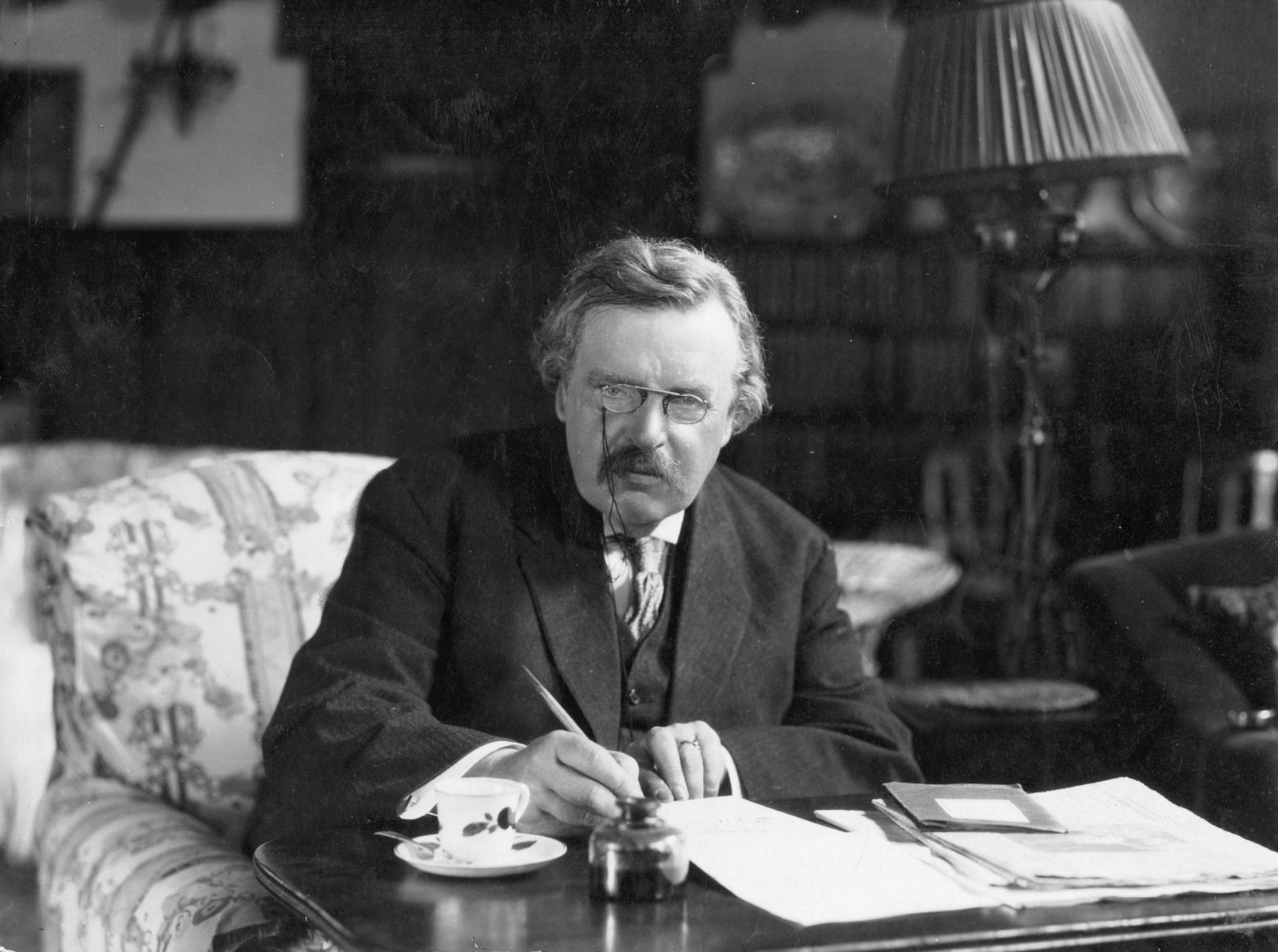
“If I beat my grandmother to death to-morrow in the middle of Battersea Park, you may be perfectly certain that people will say everything about it except the simple and fairly obvious fact that it is wrong. Some will call it insane; that is, will accuse it of a deficiency of intelligence. This is not necessarily true at all. You could not tell whether the act was unintelligent or not unless you knew my grandmother. Some will call it vulgar, disgusting, and the rest of it; that is, they will accuse it of a lack of manners. Perhaps it does show a lack of manners; but this is scarcely its most serious disadvantage. Others will talk about the loathsome spectacle and the revolting scene; that is, they will accuse it of a deficiency of art, or æsthetic beauty. This again depends on the circumstances: in order to be quite certain that the appearance of the old lady has definitely deteriorated under the process of being beaten to death, it is necessary for the philosophical critic to be quite certain how ugly she was before. Another school of thinkers will say that the action is lacking in efficiency: that it is an uneconomic waste of a good grandmother. But that could only depend on the value, which is again an individual matter. The only real point that is worth mentioning is that the action is wicked, because your grandmother has a right not to be beaten to death. But of this simple moral explanation modern journalism has, as I say, a standing fear. It will call the action anything else—mad, bestial, vulgar, idiotic, rather than call it sinful.”
― G.K. Chesterton ,
“We are thankful to come here for rest, sir," said Jenny. "You see, you don't know what the rest of this place is to us; does he, Lizzie? It's the quiet, and the air." "The quiet!" repeated Fledgeby, with a contemptuous turn of his head towards the City's roar. "And the air!" with a "Poof!" at the smoke. "Ah!" said Jenny. "But it's so high. And you see the clouds rushing on above the narrow streets, not minding them, and you see the golden arrows pointing at the mountains in the sky from which the wind comes, and you feel as if you were dead." The little creature looked above her, holding up her slight transparent hand. "How do you feel when you are dead?" asked Fledgeby, much perplexed. "Oh, so tranquil!" cried the little creature, smiling. "Oh, so peaceful and so thankful! And you hear the people who are alive, crying, and working, and calling to one another down in the close dark streets, and you seem to pity them so! And such a chain has fallen from you, and such a strange good sorrowful happiness comes upon you!" Her eyes fell on the old man, who, with his hands folded, quietly looked on. "Why it was only just now," said the little creature, pointing at him, "that I fancied I saw him come out of his grave! He toiled out at that low door so bent and worn, and then he took his breath and stood upright, and looked all round him at the sky, and the wind blew upon him, and his life down in the dark was over!—Till he was called back to life," she added, looking round at Fledgeby with that lower look of sharpness. "Why did you call him back?" "He was long enough coming, anyhow," grumbled Fledgeby. "But you are not dead, you know," said Jenny Wren. "Get down to life!" Mr Fledgeby seemed to think it rather a good suggestion, and with a nod turned round. As Riah followed to attend him down the stairs, the little creature called out to the Jew in a silvery tone, "Don't be long gone. Come back, and be dead!" And still as they went down they heard the little sweet voice, more and more faintly, half calling and half singing, "Come back and be dead, Come back and be dead!”
“That small world, like the great one out of doors, had the capacity of easily forgetting its dead; and when the cook had said she was a quiet-tempered lady, and the housekeeper had said it was the common lot, and the butler had said who'd have thought it, and the housemaid had said she couldn't hardly believe it, and the footman had said it seemed exactly like a dream, they had quite worn the subject out, and began to think their mourning was wearing rusty too.”

“We must, indeed, all hang together, or assuredly we shall all hang separately.”

“Now life is given in exchange for pain and fear, and that's the basis of the whole deception. Now man is still not what he should be. There will e a new man, happy and proud. Whoever doesn't care whether he lives or doesn't live, he himself will be God. And that other God will no longer be.' 'So, that other God does exist, in your opinion?' 'He doesn't exist, but he does exist. In the stone there' no pain, but in the fear of the stone there is pain. God is the pain of the fear of death. Whoever conquers pain and fear will himself become God.”
topics: classics , death , demons , dostoyevsky , fyodor-dostoyevsky , god , russia , russian , russian-lit , russian-literature , suicide
“War is hell, but sometimes in the midst of that hell men do things that heaven itself must be proud of. A hand grenade is hurled into a group of men. One of the men throws himself on top of it, making his body a living shield. In the burst of wild fire he dies, and the others live. Heroism is only a word, often a phony one. This is an action for which there is no good word because we can hardly even imagine it, let alone give it its proper name. Very literally, one man takes death into his bowels, takes fire into his own sweet flesh, so that the other men can take life, some of them men he hardly knows.”
― Frederick Buechner ,
from The Hungering Dark
“And who knows (one cannot vouch for it), perhaps the whole goal mankind strives for on earth consists just in this ceaselessness of the process of achievement alone, that is to say, in life itself, and not essentially in the goal, which, of course, is bound to be nothing other than two times two is four--that is, a formula; and two times two is four is no longer life, gentlemen, but the beginning of death.”
“But neither of them dared speak of it, and not having expressed the one thing that occupied their thoughts, whatever they said rang false.”
topics: death
“He saw either death or the approach of it everywhere. But his undertaking now occupied him all the more. He had to live his life to the end, until death came. Darkness covered everything for him; but precisely because of this darkness he felt that his undertaking was the only guiding thread in this darkness, and he seized it and held on to it with all his remaining strength.”
“Apart from such chaotic classics as these, my own taste in novel reading is one which I am prepared in a rather especial manner, not only to declare, but to defend. My taste is for the sensational novel, the detective story, the story about death, robbery and secret societies; a taste which I share in common with the bulk at least of the male population of this world. There was a time in my own melodramatic boyhood when I became quite fastidious in this respect. I would look at the first chapter of any new novel as a final test of its merits. If there was a murdered man under the sofa in the first chapter, I read the story. If there was no murdered man under the sofa in the first chapter, I dismissed the story as tea-table twaddle, which it often really was. But we all lose a little of that fine edge of austerity and idealism which sharpened our spiritual standard in our youth. I have come to compromise with the tea-table and to be less insistent about the sofa. As long as a corpse or two turns up in the second, the third, nay even the fourth or fifth chapter, I make allowance for human weakness, and I ask no more. But a novel without any death in it is still to me a novel without any life in it. I admit that the very best of the tea-table novels are great art - for instance, Emma or Northanger Abbey. Sheer elemental genius can make a work of art out of anything. Michelangelo might make a statue out of mud, and Jane Austen could make a novel out of tea - that much more contemptible substance. But on the whole I think that a tale about one man killing another man is more likely to have something in it than a tale in which, all the characters are talking trivialities without any of that instant and silent presence of death which is one of the strong spiritual bonds of all mankind. I still prefer the novel in which one person does another person to death to the novel in which all the persons are feebly (and vainly) trying to get the others to come to life.”
― G.K. Chesterton ,
from The Spice of Life
“What a fine thing capital punishment is! Dead men never repent; dead men never bring awkward stories to light. The prospect of the gallows, too, makes them hardy and bold. Ah, it’s a fine thing for the trade! Five of them strung up in a row, and none left to play booty or turn white-livered!”

“Jesus didn’t have to extend His love. He didn’t have to think of me when He went up on that cross. He didn’t have to rewrite my story from one of beauty to one of brokenness and create a whole new brand of beauty. He simply didn’t have to do it, but He did. He bought me. He bought me that day He died, and He showed His power when He overcame death and rose from the grave. He overcame my death in that moment. He overcame my fear of death in that unbelievable, beautiful moment, and the fruit of that death, that resurrection, and that stunning grace is peace. It is the hardest peace, because it is brutal. Horribly brutal and ugly, and we want to look away, but it is the greatest, greatest story that ever was. And it was, and it is.”



Grupo de Marcas


















© 2026 Bibleportal.com Todos os direitos reservados.