
- Bible
- Read the Bible
- Bible Versions
- Verse of the Day
- Reading Plans
- Verses by Topic
- Books of the Bible
- Bible Images
- Study
- Commentaries
- Concordances
- Dictionaries
- Encyclopedias
- Sermons
- Bible Atlas & Maps
- BP Wiki
- Devotionals
- Today's Devotionals
- All Devotionals
- Inspirational Quotes
- More
- Picture Quotes
- Videos
- Inspirational
- Bible Study
- What The Bible Says
- Bible Q&As
- Daily Bread
- Bible by Genre
- Bible Stories
- Random Bible Verse
- Community
- Store
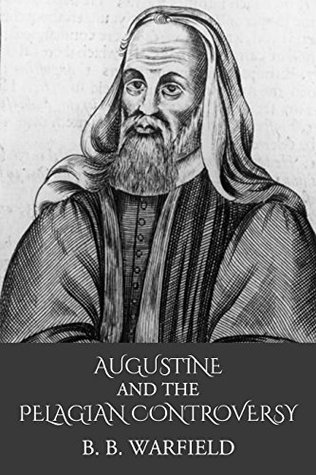
Augustine and the Pelagian Controversy
Thank you for choosing CrossReach Publications!
Please see the description below, but first our promises to you:
This edition includes all the original footnotes. Others do not. Our goal is to bring you high quality Christian publications at reasonable and affordable prices. Therefore all of our works are complete and unabridged unless specifically stated otherwise, which means that unlike some other independent publications you get what you see and pay for. No unpleasant surprises.
We endeavour to bring you updated editions of classic works. Therefore this work is not a scan, but is a completely digitized version of the original.
Unlike, many other independently published works, our publications are easy to read. Therefore you won't find illegible, faded, poor quality photocopies here. Neither will you find poorly done OCR versions of those faded scans either, with illegible “words” that contain all kinds of strange characters like £, %, &, etc. Our publications have all been looked over and corrected by the human eye.
We can't promise perfection, but we're sure gonna try!
If you have any problems or just want to get in touch then drop us an email: contactus@crossreach.net
If you have any problems or just want to get in touch then drop us an email: contactus@crossreach.netcontactus@crossreach.netPlease note this book is double-columned, 11 pt font, 8.5"x11" (A4). We chose these dimensions for economic reasons and have, as always, passed on the savings to you. At the standard 6"x9" size this book would have cost at least 50% more than it does now. We would be very happy to receive your opinions on this via email.
Please note this book is double-columned, 11 pt font, 8.5"x11" (A4). We chose these dimensions for economic reasons and have, as always, passed on the savings to you. At the standard 6"x9" size this book would have cost at least 50% more than it does now. We would be very happy to receive your opinions on this via email.Introduction:
Introduction:It was inevitable that the energy of the Church in intellectually realizing and defining its doctrines in relation to one another, should first be directed towards the objective side of Christian truth. The chief controversies of the first four centuries and the resulting definitions of doctrine, concerned the nature of God and the person of Christ; and it was not until these theological and Christological questions were well upon their way to final settlement, that the Church could turn its attention to the more subjective side of truth. Meanwhile she bore in her bosom a full recognition, side by side, of the freedom of the will, the evil consequences of the fall, and the necessity of divine grace for salvation. Individual writers, or even the several sections of the Church, might exhibit a tendency to throw emphasis on one or another of the elements that made up this deposit of faith that was the common inheritance of all. The East, for instance, laid especial stress on free will: and the West dwelt more pointedly on the ruin of the human race and the absolute need of God’s grace for salvation. But neither did the Eastern theologians forget the universal sinfulness and need of redemption, or the necessity, for the realization of that redemption, of God’s gracious influences; nor did those of the West deny the self-determination or accountability of men. All the elements of the composite doctrine of man were everywhere confessed; but they were variously emphasized, according to the temper of the writers or the controversial demands of the times. Such a state of affairs, however, was an invitation to heresy, and a prophecy of controversy; just as the simultaneous confession of the unity of God and the Deity of Christ, or of the Deity and the humanity of Christ, inevitably carried in its train a series of heresies and controversies, until the definitions of the doctrines of the Trinity and of the person of Christ were complete.
It was inevitable that the energy of the Church in intellectually realizing and defining its doctrines in relation to one another, should first be directed towards the objective side of Christian truth. The chief controversies of the first four centuries and the resulting definitions of doctrine, concerned the nature of God and the person of Christ; and it was not until these theological and Christological questions were well upon their way to final settlement, that the Church could turn its attention to the more subjective side of truth. Meanwhile she bore in her bosom a full recognition, side by side, of the freedom of the will, the evil consequences of the fall, and the necessity of divine grace for salvation. Individual writers, or even the several sections of the Church, might exhibit a tendency to throw emphasis on one or another of the elements that made up this deposit of faith that was the common inheritance of all. The East, for instance, laid especial stress on free will: and the West dwelt more pointedly on the ruin of the human race and the absolute need of God’s grace for salvation. But neither did the Eastern theologians forget the universal sinfulness and need of redemption, or the necessity, for the realization of that redemption, of God’s gracious influences; nor did those of the West deny the self-determination or accountability of men. All the elements of the composite doctrine of man were everywhere confessed; but they were variously emphasized, according to the temper of the writers or the controversial demands of the times. Such a state of affairs, however, was an invitation to heresy, and a prophecy of controversy; just as the simultaneous confession of the unity of God and the Deity of Christ, or of the Deity and the humanity of Christ, inevitably carried in its train a series of heresies and controversies, until the definitions of the doctrines of the Trinity and of the person of Christ were complete.BUY NOW
Published March 3rd 2018 by CrossReach Publications
Verse of the Day
Get a Bible verse delivered to your inbox every day!
Daily Devotional
Read on Mobile



Group of Brands


















Benjamin Breckinridge Warfield was professor of theology at Princeton Seminary from 1887 to 1921. Some conservative Presbyterians consider him to be the last of the great Princeton theologians before the split in 1929 that formed Westminster Seminary and the Orthodox Presbyterian Church.
During his tenure, his primary thrust (and that of the seminary) was an authoritative view of the Bible. This view was held in contrast to the emotionalism of the revival movements, the rationalism of higher criticism, and the heterodox teachings of various New religious movements that were emerging. The seminary held fast to the Reformed confessional tradition -- that is, it faithfully followed the Westminster Confession of Faith.
Warfield was a thoroughgoing evidentialist and the most prominent exponent of the Old Princeton school.
... Show more