
- Bible
- Read the Bible
- Bible Versions
- Verse of the Day
- Reading Plans
- Verses by Topic
- Books of the Bible
- Bible Images
- Study
- Commentaries
- Concordances
- Dictionaries
- Encyclopedias
- Sermons
- Bible Atlas & Maps
- BP Wiki
- Devotionals
- Today's Devotionals
- All Devotionals
- Inspirational Quotes
- More
- Picture Quotes
- Videos
- Inspirational
- Bible Study
- What The Bible Says
- Bible Q&As
- Daily Bread
- Bible by Genre
- Bible Stories
- Random Bible Verse
- Community
- Store
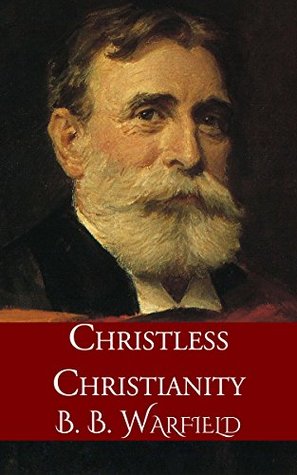
Christless Christianity
Our promises:
Our promises:1. Our goal is to bring you high quality Christian publications at reasonable and affordable prices. Therefore all of our works are complete and unabridged unless specifically stated otherwise, which means that unlike some other independent publications you get what you see and pay for. No unplesant surprises.
1. Our goal is to bring you high quality Christian publications at reasonable and affordable prices. Therefore all of our works are complete and unabridged unless specifically stated otherwise, which means that unlike some other independent publications you get what you see and pay for. No unplesant surprises.2. We endeavour to bring you updated editions of classic works. Therefore this work is not a scan, but is a completely digitized version of the original.
2. We endeavour to bring you updated editions of classic works. Therefore this work is not a scan, but is a completely digitized version of the original.3. Unlike, many other independently published works, our publications are easy to read. Therefore you won't find illegible, faded, poor quality photocopies here. Neither will you find poorly done OCR versions of those faded scans either, with illegible "words" that contain all kinds of strange characters like £, %, &, etc. Our publications have all been looked over and corrected by the human eye.
3. Unlike, many other independently published works, our publications are easy to read. Therefore you won't find illegible, faded, poor quality photocopies here. Neither will you find poorly done OCR versions of those faded scans either, with illegible "words" that contain all kinds of strange characters like £, %, &, etc. Our publications have all been looked over and corrected by the human eye.4. We can't promise perfection, but we're sure gonna try!
4. We can't promise perfection, but we're sure gonna try!The Christ Myth by Arthur Drews was published early in 1909,1 and before the year was out its author was being requisitioned by dissidents from Christianity of the most incongruous types as a promising instrument for the general anti-christian propaganda. Few more remarkable spectacles have ever been witnessed than the exploitation throughout Germany in the opening months of 1910 of this hyper-idealistic metaphysician, disciple of von Hartmann and convinced adherent of the “Philosophy of the Unconscious,” by an Alliance the declared basis of whose organization is a determinate materialism. As, under the auspices of the Monistenbund, he made his progress from city to city, lecturing and debating, he drew a tidal-wave of sensation along with him. A violent literary war was inaugurated. It seemed as if all theological Germany were aroused.
The Christ Myth by Arthur Drews was published early in 1909,1 and before the year was out its author was being requisitioned by dissidents from Christianity of the most incongruous types as a promising instrument for the general anti-christian propaganda. Few more remarkable spectacles have ever been witnessed than the exploitation throughout Germany in the opening months of 1910 of this hyper-idealistic metaphysician, disciple of von Hartmann and convinced adherent of the “Philosophy of the Unconscious,” by an Alliance the declared basis of whose organization is a determinate materialism. As, under the auspices of the Monistenbund, he made his progress from city to city, lecturing and debating, he drew a tidal-wave of sensation along with him. A violent literary war was inaugurated. It seemed as if all theological Germany were aroused.BUY NOW
Published August 4th 2017 by CrossReach Publications
Verse of the Day
Get a Bible verse delivered to your inbox every day!
Daily Devotional
Read on Mobile



Group of Brands


















Benjamin Breckinridge Warfield was professor of theology at Princeton Seminary from 1887 to 1921. Some conservative Presbyterians consider him to be the last of the great Princeton theologians before the split in 1929 that formed Westminster Seminary and the Orthodox Presbyterian Church.
During his tenure, his primary thrust (and that of the seminary) was an authoritative view of the Bible. This view was held in contrast to the emotionalism of the revival movements, the rationalism of higher criticism, and the heterodox teachings of various New religious movements that were emerging. The seminary held fast to the Reformed confessional tradition -- that is, it faithfully followed the Westminster Confession of Faith.
Warfield was a thoroughgoing evidentialist and the most prominent exponent of the Old Princeton school.
... Show more