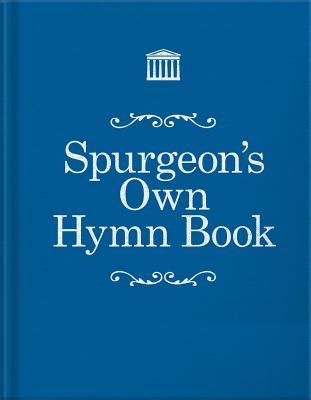
Charles Haddon Spurgeon was passionate about congregational worship. Arising from devout affection, the frustration he found while using the the compilations of hymns available in his day, spurred him to compile this selection of hymns for use in his congregation. Over 1,000 psalms, hymns and spiritual songs include not only direct praise, but doctrine, experience and exhortation, enabling the saints to edify one another in their singing. Cross-references to Spurgeon's other works ensure that this will be a valuable addition to any library.
This beautiful gift edition includes
a foreword by Spurgeon scholar Tom Nettles added Spurgeon essay 'How Shall We Sing?' elegant hardback cloth bound cover






















C.H. Spurgeon (1834 - 1892)
Spurgeon quickly became known as one of the most influential preachers of his time. Well known for his biblical powerful expositions of scripture and oratory ability. In modern evangelical circles he is stated to be the "Prince of Preachers." He pastored the Metropolitan Tabernacle in downtown London, England.His church was part of a particular baptist church movement and they defended and preached Christ and Him crucified and the purity of the Gospel message. Spurgeon never gave altar calls but always extended the invitation to come to Christ. He was a faithful minister in his time that glorified God and brought many to the living Christ.
Charles Haddon Spurgeon was England's best-known preacher for most of the second half of the nineteenth century. In 1854, just four years after his conversion, Spurgeon, then only 20, became pastor of London's famed New Park Street Church (formerly pastored by the famous Baptist theologian John Gill).
The congregation quickly outgrew their building, moved to Exeter Hall, then to Surrey Music Hall. In these venues Spurgeon frequently preached to audiences numbering more than 10,000 - all in the days before electronic amplification.
In 1861 the congregation moved permanently to the new Metropolitan Tabernacle.
... Show more