“In the world today freedom of religion is often talked about rather than put into practice.” - Pope Francis.
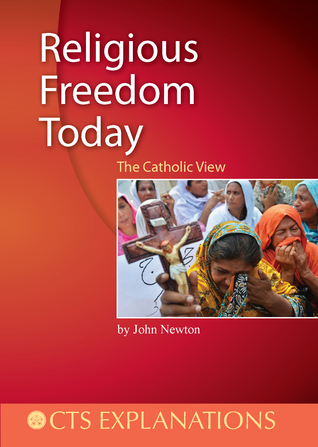
Today being a Christian could cost you your life. Catholic thinking on religious freedom believes that secular states should grant religious freedom to everyone who lives in them, and no one should be coerced in religious matters, either to hold, or not to hold, a set of beliefs or propositions - or forced to act in a manner contrary to their beliefs. Equally, for Catholics religion plays a positive role in society: so that civil authorities not only respect the rights of religious groups, but that they allow space for them to nurture their members, to contribute to society through their charitable works, socially orientated institutions, and insights and wisdom.






















He was a strong support of the Evangelicals in the Church of England, and was a friend of the dissenting clergy as well as of the ministry of his own church.
He was the author of many hymns, including "Amazing Grace".
John Henry Newton was an English Anglican clergyman and former slave-ship captain. He was the author of many hymns, including "Amazing Grace".
Sailing back to England in 1748 aboard the merchant ship, he experienced a spiritual conversion in the Greyhound, which was hauling a load of beeswax and dyer's wood. The ship encountered a severe storm off the coast of Donegal and almost sank. Newton awoke in the middle of the night and finally called out to God as the ship filled with water. It was this experience which he later marked as the beginnings of his conversion to evangelical Christianity. As the ship sailed home, Newton began to read the Bible and other religious literature. By the time he reached Britain, he had accepted the doctrines of Evangelical Christianity.
He became well-known as an evangelical lay minister, and applied for the Anglican priesthood in 1757, although it was more than seven years before he was eventually accepted and ordained into the Church of England.
Newton joined English abolitionist William Wilberforce, leader of the Parliamentary campaign to abolish the slave trade, and lived to see the passage of the Slave Trade Act 1807.
... Show more