
- Bible
- Read the Bible
- Bible Versions
- Verse of the Day
- Reading Plans
- Verses by Topic
- Books of the Bible
- Bible Images
- Study
- Commentaries
- Concordances
- Dictionaries
- Encyclopedias
- Sermons
- Bible Atlas & Maps
- BP Wiki
- Devotionals
- Today's Devotionals
- Light of the World
- All Devotionals
- Inspirational Quotes
- More
- Picture Quotes
- Videos
- Inspirational
- Bible Study
- What The Bible Says
- Bible Q&As
- Daily Bread
- Bible by Genre
- Bible Stories
- Random Bible Verse
- Community
- Store
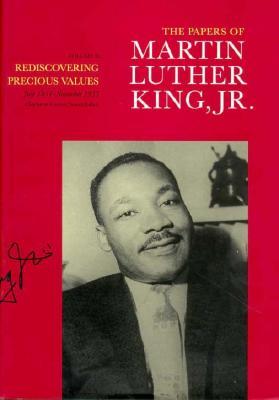
The Papers of Martin Luther King, Jr., Vol. 2: Rediscovering Precious Values, July 1951–November 1955
by Martin Luther King, Jr.
Martin Luther King, Jr.'s ideas his call for racial equality, his faith in the ultimate triumph of justice, his insistence on the power of nonviolence to bring about a major transformation of American society are as vital and timely as ever. The wealth of his writings, both published and unpublished, are now preserved in this authoritative, chronologically arranged, multi-volume edition. "Volume Two" begins with King's doctoral work at Boston University and ends with his first year as pastor of the historic Dexter Avenue Baptist Church in Montgomery, Alabama. It includes papers from his graduate courses and a fully annotated text of his dissertation. There is correspondence with people King knew in his years prior to graduate school and a transcription of the first known recording of a King sermon. We learn, too, that Boston was where King met his future wife, Coretta Scott. Accepting the call to serve Dexter, the young King followed the church's tradition of socially active pastors by becoming involved in voter registration and other social justice issues. In Montgomery he completed his doctoral work, and he and Coretta Scott began their marriage. "The Papers of Martin Luther King, Jr." represents a testament to a man whose life and teaching have had a profound influence, not only on Americans, but on people of all nations. The Martin Luther King, Jr., Papers Project at Stanford University was established by the Center for Nonviolent Social Change, Inc. in 1984.
BUY NOW
Hardcover, 710 pages
Published December 7th 1994 by University of California Press (first published November 7th 1994)
tags: history
Subscribe
Get Bible verse every day in your inbox
Read on Mobile



Group of Brands


















© 2025 Bibleportal.com All rights reserved.
1929-1968
Martin Luther King, Jr. was an American clergyman, activist and prominent leader in the African-American civil rights movement. His main legacy was to secure progress on civil rights in the United States and he is frequently referenced as a human rights icon today.
A Baptist minister, King became a civil rights activist early in his career. He led the 1955 Montgomery Bus Boycott and helped found the Southern Christian Leadership Conference in 1957, serving as its first president. King's efforts led to the 1963 March on Washington, where King delivered his "I Have a Dream" speech. There, he raised public consciousness of the civil rights movement and established himself as one of the greatest orators in U.S. history.
King's main legacy was to secure progress on civil rights in the United States, which has enabled more Americans to reach their potential.
... Show more