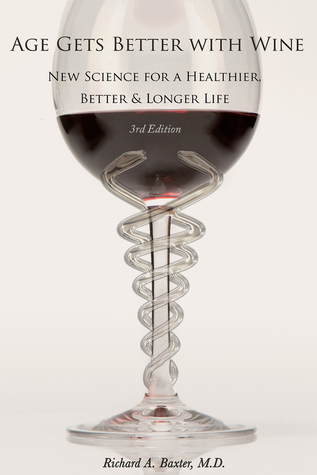
This new edition of Age Gets Better with WineAge Gets Better with Wine takes a fresh look at the science and reaffirms that daily moderate wine drinking remains a potent anti-aging strategy. Why do wine drinkers outlive nondrinkers and enjoy better health and mental function, especially later in life? Age Gets Better with WineAge Gets Better with Wine was the first book to comprehensively discuss the multiple ways that wine contributes to improved lifetime health. As a plastic surgeon, Dr. Baxter’s interest in the subject grew from an in-depth review of anti-aging science. What he found was that all serious studies on anti-aging intersected in one way or another on wine. The discovery of wine’s miracle molecule, resveratrol, appeared to provide a unifying answer to the question and reinforced wine’s role in healthy living. But despite continued advances in wine and health science, new challenges to the notion of healthy drinking have emerged. Neo-prohibitionists openly question the validity of studies supporting any level of drinking, while others attribute the entire benefit to resveratrol and suggest supplements instead. An objective analysis shows the fallacy of both views.






















He wrote 168 or so separate works -- such treatises as the Christian Directory, the Methodus Theologiae Christianae, and the Catholic Theology, might each have represented the life's work of an ordinary man. His Breviate of the Life of Mrs Margaret Baxter records the virtues of his wife, and reveals Baxter's tenderness of nature. Without doubt, however, his most famous and enduring contribution to Christian literature was a devotional work published in 1658 under the title Call to the Unconverted to Turn and Live. This slim volume was credited with the conversion of thousands and formed one of the core extra-biblical texts of evangelicalism until at least the middle of the nineteenth century.
Richard Baxter was ordained into the Church of England, 1638, but in two years allied with Puritans opposed to the episcopacy of his church. At Kidderminster (1641-60) he made the church a model parish. The church was enlarged to hold the crowds. Pastoral counseling was as important as preaching, and his program for his parish was a pattern for many other ministers. Baxter played an ameliorative role during the English Civil Wars.
He was a chaplain in the parliamentary army but then helped to restore the king (1660). After the establishment of the monarchy, he fought for toleration of moderate dissent in the Church of England. Persecuted for more than 20 years and was imprisoned (1685) for 18 months, the Revolution of 1688, replacing James II with William and Mary, brought about an Act of Toleration that freed Baxter to express his opinions.
... Show more