
- Bible
- Read the Bible
- Bible Versions
- Verse of the Day
- Reading Plans
- Verses by Topic
- Books of the Bible
- Bible Images
- Study
- Commentaries
- Concordances
- Dictionaries
- Encyclopedias
- Sermons
- Bible Atlas & Maps
- BP Wiki
- Devotionals
- Today's Devotionals
- Light of the World
- All Devotionals
- Inspirational Quotes
- More
- Picture Quotes
- Videos
- Inspirational
- Bible Study
- What The Bible Says
- Bible Q&As
- Daily Bread
- Bible by Genre
- Bible Stories
- Random Bible Verse
- Community
- Store
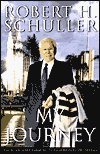
My Journey - Crystal Cathedral Edition
by Robert H. Schuller
"In 1955, I accepted a call from the Classis of California of the Reformed Church in America to establish a church in central Orange County. Certainly the scope off the ministry that resulted is something no one could have predicted from its all-too-humble beginnings." This kind of grand yet understated tone pervades the autobiography of Robert Schuller, My Journey: From an Iowa Farm to a Cathedral of DreamsMy Journey: From an Iowa Farm to a Cathedral of Dreams. Schuller's life began in 1926, "at the dead-end of a dirt road that had no name and no number." He was the fifth child in a poor, conservative family, and he grew into an earnest young man whose hard work and discipline fueled a rapid rise to success and power. Schuller's account of his personal life is both idealistic and candid (of his wedding night, Schuller writes, "The explosion of true joy and unalloyed affection was our reward for having waited to offer our virginity, each to the other!"). And his descriptions of his seminary years, his early ministries in the Midwest, and his move to California illustrate the development of his popular "Possibility Thinking" message, which built on the foundation of Norman Vincent Peale's The Power of Positive ThinkingThe Power of Positive Thinking. Schuller's influence on American Christianity has been immense. He has muffled the doctrine of sinfulness in favor of an optimistic message about joy, success, and possibility. And although the reader may wish at times the author had used fewer exclamation marks and given himself more to circumspection, My JourneyMy Journey is an engrossing spin on the classic Horatio Alger tale. --Paul Power--Paul Power
BUY NOW
Hardcover, 544 pages
Published November 28th 2001 by HarperOne (first published October 2001)
Subscribe
Get Bible verse every day in your inbox
Read on Mobile



Group of Brands


















© 2026 Bibleportal.com All rights reserved.
Robert Harold Schuller is an American televangelist, pastor, and author known around the world through his weekly Hour of Power television broadcast. He is the founder of the Crystal Cathedral in Garden Grove, California, where the Hour of Power program originates.
Schuller was born a few miles outside of Alton, Iowa to a family of Dutch ancestry and, after finishing his studies at Hope College and Western Theological Seminary, was ordained as a minister in the Reformed Church in America.
Strongly influenced by his mentor, Norman Vincent Peale, Schuller has chosen to focus on what he believes are the positive aspects of the Christian faith. He deliberately avoids condemning people for sin, and he encourages Christians (and non-Christians) to achieve great things through God, uplifting theology and positive thinking.
... Show more