
Inspirational Quotes on Atheism

“Unbelief is as much of a choice as belief is. What makes it in many ways more appealing is that whereas to believe in something requires some measure of understanding and effort, not to believe doesn't require much of anything at all.”

“If therefore my work is negative, irreligious, atheistic, let it be remembered that atheism — at least in the sense of this work — is the secret of religion itself; that religion itself, not indeed on the surface, but fundamentally, not in intention or according to its own supposition, but in its heart, in its essence, believes in nothing else than the truth and divinity of human nature.”
topics: atheism , atheistic , essence , human-nature , inspirational , intention , irreligious , truth

“Is any man skillful enough to have fashioned himself?”

“Atheism or similar charges was not unusual among intellectuals, nor condemned by the masses. The prize-winning plays of were not merely atheist, but made fun of the gods and their prophets and oracles.”

“God never wrought miracle to convince atheism, because his ordinary works convince it. It is true, that a little philosophy inclineth man’s mind to atheism; but depth in philosophy bringeth men’s minds about to religion.”
― Francis Bacon ,
from The Essays

“The science of this world, which has become a great power, has, especially in the last century, analysed everything divine handed down to us in the holy books. After this cruel analysis the learned of this world have nothing left of all that was sacred of old. But they have only analysed the parts and overlooked the whole, and indeed their blindness is marvellous. Yet the whole still stands steadfast before their eyes, and the gates of hell shall not prevail against it.... For even those who have renounced Christianity and attack it, in their in most being still follow the Christian ideal”
topics: atheism
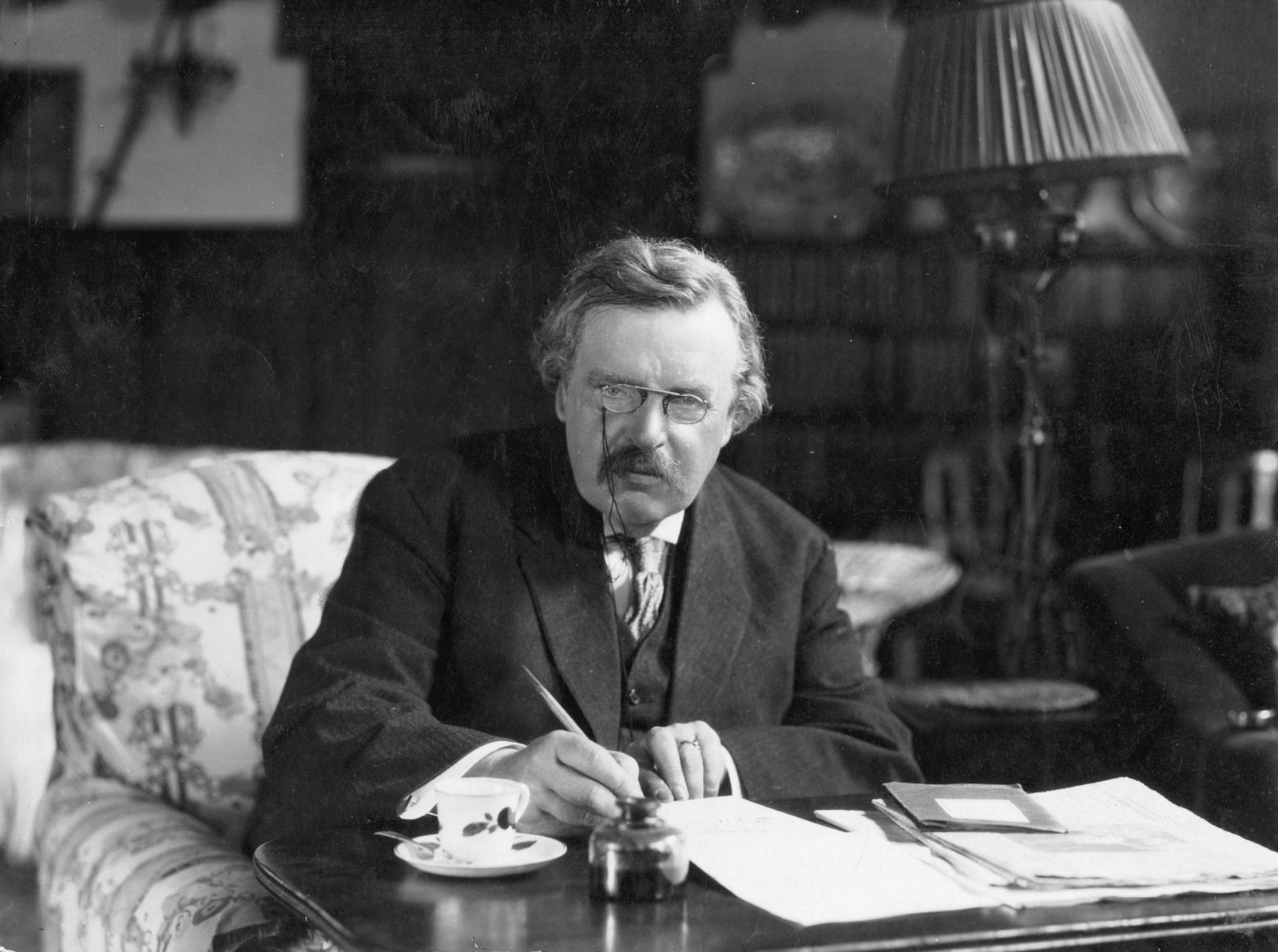
“I do not feel any contempt for an atheist, who is often a man limited and constrained by his own logic to a very sad simplification.”
― G.K. Chesterton ,
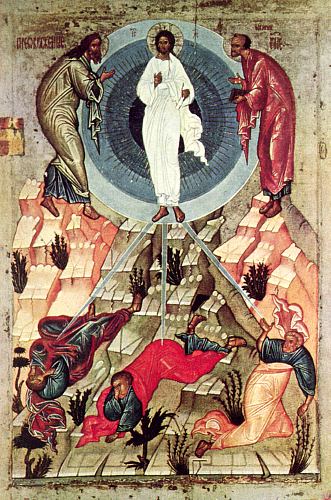
“Those who refuse His mercy satisfy His justice in another way. Without His mercy, they cannot love Him. Without love for Him they cannot be 'justified' or 'made just'. That is to say: they cannot conform to Him Who is love. Those who have not received His mercy are in a state of injustice with regard to Him. It is their own injustice that is condemned by His justice. And in what does their injustice consist? In the refusal of His mercy. We come, in the end, to this basic paradox: that we owe it to God to receive from Him the mercy that is offered to us in Christ, and that to refuse this mercy is the summation of our 'injustice'. Clearly, then, only the mercy of God can make us just, in this supernatural sense, since the primary demand of God's justice upon us is that we receive His mercy.”
― Thomas Merton ,
from No Man Is an Island
“By the way, a Bulgarian I met lately in Moscow," Ivan went on, seeming not to hear his brother's words, "told me about the crimes committed by Turks and Circassians in all parts of Bulgaria through fear of a general rising of the Slavs. They burn villages, murder, outrage women and children, they nail their prisoners by the ears to the fences, leave them so till morning, and in the morning they hang them- all sorts of things you can't imagine. People talk sometimes of bestial cruelty, but that's a great injustice and insult to the beasts; a beast can never be so cruel as a man, so artistically cruel. The tiger only tears and gnaws, that's all he can do. He would never think of nailing people by the ears, even if he were able to do it. These Turks took a pleasure in torturing children, -too; cutting the unborn child from the mothers womb, and tossing babies up in the air and catching them on the points of their bayonets before their mothers' eyes. Doing it before the mothers' eyes was what gave zest to the amusement. Here is another scene that I thought very interesting. Imagine a trembling mother with her baby in her arms, a circle of invading Turks around her. They've planned a diversion: they pet the baby, laugh to make it laugh. They succeed, the baby laughs. At that moment a Turk points a pistol four inches from the baby's face. The baby laughs with glee, holds out its little hands to the pistol, and he pulls the trigger in the baby's face and blows out its brains. Artistic, wasn't it? By the way, Turks are particularly fond of sweet things, they say.”
“At one time,' Golenishchev continued, either not observing or not willing to observe that both Anna and Vronsky wanted to speak, 'at one time a freethinker was a man who had been brought up in the conception of religion, law, and morality, who reached freethought only after conflict and difficulty. But now a new type of born freethinkers has appeared, who grow up without so much as hearing that there used to be laws of morality, or religion, that authorities existed. They grow up in ideas of negation in everything -- in other words, utter savages.”
“Remember young man, unceasingly,' Father Paissy began, without preface, 'that the science of this world, which has become a great power, has, especially in the last century, analysed everything divine handed down to us in the holy books. After this cruel analysis the learned of this world have nothing left of all that was sacred of old. But they have only analysed the parts and overlooked the whole, and indeed their blindness is marvelous. Yet the whole world still stands steadfast before their eyes, and the gates of hell shall not prevail against it Has it not lasted nineteen centuries, is it not still a living, a moving power in the individual soul and in the masses of the people? It is still as strong and living even in the souls of atheists, who have destroyed everything! For even those who have renounced Christianity and attack it, in their inmost being still follow the Christian ideal, for hitherto neither their subtlety nor the ardor of their hearts has been able to create a higher ideal of man and of virtue than the ideal given by Christ of old.”
“Our historical pastime is the direct satisfaction of inflicting pain. There are lines in Nekrassov describing how a peasant lashes a horse on the eyes, 'on its meek eyes,' everyone must have seen it. It's peculiarly Russian. He describes how a feeble little nag has foundered under too heavy a load and cannot move. The peasant beats it, beats it savagely, beats it at last not knowing what he is doing in the intoxication of cruelty, thrashes it mercilessly over and over again. 'However weak you are, you must pull, if you die for it.' The nag strains, and then he begins lashing the poor defenceless creature on its weeping, on its 'meek eyes.' The frantic beast tugs and draws the load, trembling all over, gasping for breath, moving sideways, with a sort of unnatural spasmodic action- it's awful in Nekrassov. But that only a horse, and God has horses to be beaten.”
“But I've still better things about children. I've collected a great, great deal about Russian children, Alyosha. There was a little girl of five who was hated by her father and mother, 'most worthy and respectable people, of good education and breeding.' You see, I must repeat again, it is a peculiar characteristic of many people, this love of torturing children, and children only. To all other types of humanity these torturers behave mildly and benevolently, like cultivated and humane Europeans; but they are very fond of tormenting children, even fond of children themselves in that sense. it's just their defencelessness that tempts the tormentor, just the angelic confidence of the child who has no refuge and no appeal, that sets his vile blood on fire. In every man, of course, a demon lies hidden- the demon of rage, the demon of lustful heat at the screams of the tortured victim, the demon of lawlessness let off the chain, the demon of diseases that follow on vice, gout, kidney disease, and so on. "This poor child of five was subjected to every possible torture by those cultivated parents. They beat her, thrashed her, kicked her for no reason till her body was one bruise. Then, they went to greater refinements of cruelty- shut her up all night in the cold and frost in a privy, and because she didn't ask to be taken up at night (as though a child of five sleeping its angelic, sound sleep could be trained to wake and ask), they smeared her face and filled her mouth with excrement, and it was her mother, her mother did this. And that mother could sleep, hearing the poor child's groans! Can you understand why a little creature, who can't even understand what's done to her, should beat her little aching heart with her tiny fist in the dark and the cold, and weep her meek unresentful tears to dear, kind God to protect her? Do you understand that, friend and brother, you pious and humble novice? Do you understand why this infamy must be and is permitted? Without it, I am told, man could not have existed on earth, for he could not have known good and evil. Why should he know that diabolical good and evil when it costs so much? Why, the whole world of knowledge is not worth that child's prayer to dear, kind God'! I say nothing of the sufferings of grown-up people, they have eaten the apple, damn them, and the devil take them all! But these little ones! I am making you suffer, Alyosha, you are not yourself. I'll leave off if you like”

“With reason did the Athenians adjudge guilty of atheism, in that he not only divulged the Orphic doctrine, and published the mysteries of Eleusis and of the Cabiri, and chopped up the wooden statue of Hercules to boil his turnips, but openly declared that there were no gods at all.”
― Athenagoras ,
topics: ancient-greece , atheism , diagoras , diagoras-of-melos , eleusinian , gods , hercules , mystery , orphic-doctrine , reason
“Certainly my work is negative, destructive; but … only in relation to the unhuman, not to the human[.]”

“Atheism is so senseless. When I look at the solar system, I see the earth at the right distance from the sun to receive the proper amounts of heat and light. This did not happen by chance.”
“Oh, you knew that your deed would be preserved in books, would reach tghe depths of the ages and the utmost limits of the earth, and you hoped that, following you, man, too, would remain with God, having no need of miracles. But you did not know that as soon as man rejects miracles, he will at once reject God as well, for man seeks not so much God as miracles. And since man cannot bear to be left without miracles, he will go and create new miracles for himself... Oh, there will be centuries of free reason, of their science and anthropophagy... Freedom, free reason, and science willl lead them into such a maze, and confront them with such miracles and insoluble mysteries, that some of them, unruly and ferocious, will exterminate themselves.”
“[L]et it be remembered that atheism … is the secret of religion … ; religion … in its heart, in its essence, believes in nothing else than the truth and divinity of human nature.”
“What we all dread most,” said the priest in a low voice, “is a maze with no centre. That is why atheism is only a nightmare.”



Group of Brands


















© 2026 Bibleportal.com All rights reserved.