
Inspirational Quotes on Education


“If then a practical end must be assigned to a University course, I say it is that of training good members of society... It is the education which gives a man a clear, conscious view of their own opinions and judgements, a truth in developing them, an eloquence in expressing them, and a force in urging them. It teaches him to see things as they are, to go right to the point, to disentangle a skein of thought to detect what is sophistical and to discard what is irrelevant.”

“Aristotle says that the aim of education is to make the pupil like and dislike what he ought.”
― C.S. Lewis ,
from The Abolition of Man

“If someone who wanted to learn to dance were to say: For centuries, one generation after the other has learned the positions, and it is high time that I take advantage of this and promptly begin with the quadrille--people would presumably laugh a little at him, but in the world of spirit this is very plausible. What, then, is education? I believed it is the course the individual goes through in order to catch up with himself, and the person who will not go through this course is not much helped by being born in the most enlightened age.”
topics: education

“I mean that they (students) should not play life, or study it merely, while the community supports them at this expensive game, but earnestly live it from beginning to end. How could youths better learn to live than by at once trying the experiment of living? Methinks this would exercise their minds as much as mathematics.”
“His education had been neither scientific nor classical—merely “Modern.” The severities both of abstraction and of high human tradition had passed him by: and he had neither peasant shrewdness nor aristocratic honour to help him. He was a man of straw, a glib examinee in subjects that require no exact knowledge (he had always done well on Essays and General Papers) and the first hint of a real threat to his bodily life knocked him sprawling.”
― C.S. Lewis ,
“A university training is the great ordinary means to a great but ordinary end; it aims at raising the intellectual tone of society…It is the education which gives a man a clear conscious view of his own opinions and judgments, a truth in developing them, an eloquence in expressing them and a force in urging them.”
“What does seem to me poisonous, what breeds a type of patriotism that is pernicious if it lasts but not likely to last long in an educated adult, is the perfectly serious indoctrination of the young in knowably false or biased history - the heroic legend drably disguised as text-book fact. With this creeps in the tacit assumption that other nations have not equally their heroes; perhaps even the belief - surely it is very bad biology - that we can literally 'inherit' tradition.”
― C.S. Lewis ,
from The Four Loves
“One of the reasons why it needs no special education to be a Christian is that Christianity is an education itself.”
“I am not sure that the best way to make a boy love the English poets might not be forbid him to read them and then make sure that he had plenty of opportunities to disobey you.”
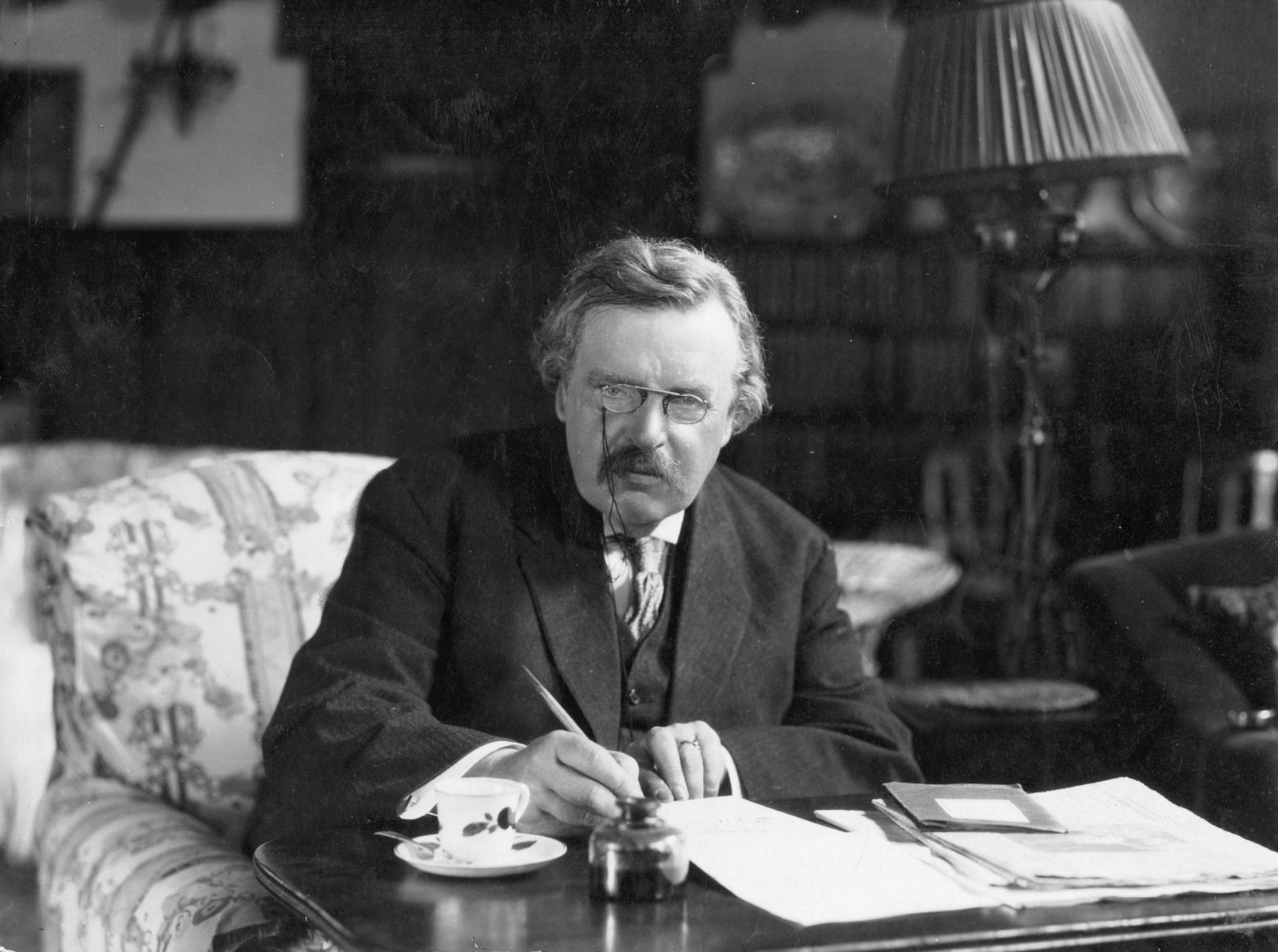
“He had been educated in no habits of application and concentration. The system which had addressed him in exactly the same manner as it had addressed hundreds of other boys, all varying in character and capacity, had enabled him to dash through his tasks, always with fair credit and often with distinction, but in a fitful, dazzling way that had confirmed his reliance on those very qualities in himself which it had been most desirable to direct and train. They were good qualities, without which no high place can be meritoriously won, but like fire and water, though excellent servants, they were very bad masters. If they had been under Richard’s direction, they would have been his friends; but Richard being under their direction, they became his enemies.”

“A Swedish minister having assembled the chiefs of the Susquehanna Indians, made a sermon to them, acquainting them with the principal historical facts on which our religion is founded — such as the fall of our first parents by eating an apple, the coming of Christ to repair the mischief, his miracles and suffering, etc. When he had finished an Indian orator stood up to thank him. ‘What you have told us,’ says he, ‘is all very good. It is indeed bad to eat apples. It is better to make them all into cider. We are much obliged by your kindness in coming so far to tell us those things which you have heard from your mothers. In return, I will tell you some of those we have heard from ours. ‘In the beginning, our fathers had only the flesh of animals to subsist on, and if their hunting was unsuccessful they were starving. Two of our young hunters, having killed a deer, made a fire in the woods to boil some parts of it. When they were about to satisfy their hunger, they beheld a beautiful young woman descend from the clouds and seat herself on that hill which you see yonder among the Blue Mountains. ‘They said to each other, “It is a spirit that perhaps has smelt our broiling venison and wishes to eat of it; let us offer some to her.” They presented her with the tongue; she was pleased with the taste of it and said: “Your kindness shall be rewarded; come to this place after thirteen moons, and you will find something that will be of great benefit in nourishing you and your children to the latest generations.” They did so, and to their surprise found plants they had never seen before, but which from that ancient time have been constantly cultivated among us to our great advantage. Where her right hand had touched the ground they found maize; where her left had touched it they found kidney-beans; and where her backside had sat on it they found tobacco.’ The good missionary, disgusted with this idle tale, said: ‘What I delivered to you were sacred truths; but what you tell me is mere fable, fiction, and falsehood.’ The Indian, offended, replied: ‘My brother, it seems your friends have not done you justice in your education; they have not well instructed you in the rules of common civility. You saw that we, who understand and practise those rules, believed all your stories; why do you refuse to believe ours?”
topics: courtesy , creation-myths , education , fable , falsehood , fantasy , indians , maize , myths , native-americans , orator , origins , proselytizing , stories , swedish

“Nothing can be rightly known, if God be not known; nor is any study well managed, nor to any great purpose, if God is not studied. We know little of the creature, till we know it as it stands related to the Creator: single letters, and syllables uncomposed, are no better than nonsense. He who overlooketh him who is the 'Alpha and Omega, the beginning and the ending,' and seeth not him in all who is the All of all, doth see nothing at all. All creatures, as such, are broken syllables; they signify nothing as separated from God. Were they separated actually, they would cease to be, and the separation would be annhiliation; and when we separate them in our fancies, we make nothing of them to ourselves. It is one thing to know the creatures as Aristotle, and another thing to know them as a Christian. None but a Christian can read one line of his Physics so as to understand it rightly. It is a high and excellent study, and of greater use than many apprehend; but it is the smallest part of it that Aristotle can teach us.”

“I probably felt more resentment for what I personally was to suffer than for the wrong they were doing to anyone and everyone. But at that time I was determined not to put up with badly behaved people more out of my own interest than because I wanted them to become good people.”
― Augustine ,
from Confessions
“Mrs General had no opinions. Her way of forming a mind was to prevent it from forming opinions. She had a little circular set of mental grooves or rails on which she started little trains of other people's opinions, which never overtook one another, and never got anywhere.”
“I never heard that it had been anybody’s business to find out what his natural bent was, or where his failings lay, or to adapt any kind of knowledge to him. He had been adapted to the verses and had learnt the art of making them to such perfection. I did doubt whether Richard would not have profited by some one studying him a little, instead of his studying them quite so much.”

“I am much afraid that the universities will prove to be the great gates of hell, unless they diligently labour in explaining the Holy Scriptures, and engraving them in the hearts of youth. I advise no one to place his child where the Scriptures do not reign paramount. Every institution in which men are not unceasingly occupied with the Word of God must become corrupt.”
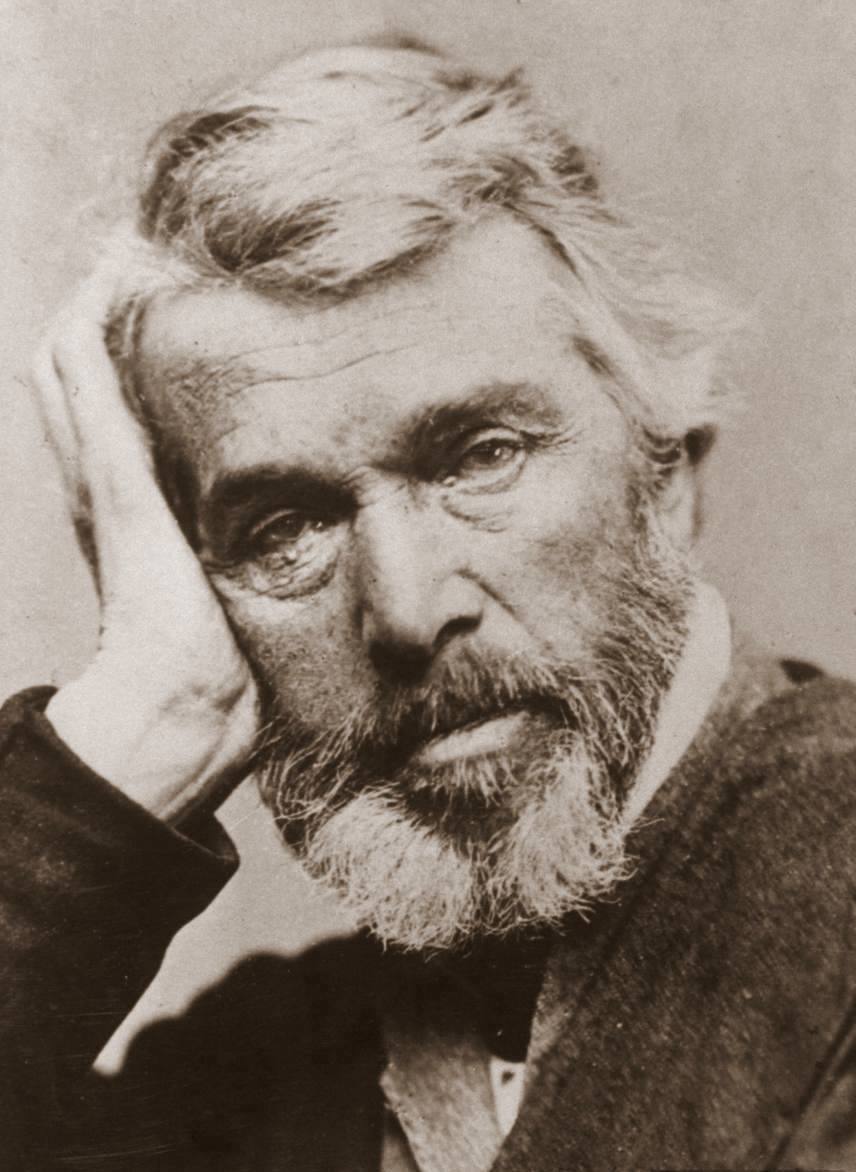
“(Quoted by Thomas Carlyle) The rude man requires only to see something going on. The man of more refinement must be made to feel. The man of complete refinement must be made to reflect.”

“The task of all Christian scholarship—not just biblical studies—is to study reality as a manifestation of God’s glory, to speak and write about it with accuracy, and to savor the beauty of God in it, and to make it serve the good of man. It is an abdication of scholarship when Christians do academic work with little reference to God. If all the universe and everything in it exist by the design of an infinite, personal God, to make his manifold glory known and loved, then to treat any subject without reference to God’s glory is not scholarship but insurrection.”
“Really great moral teachers never do introduce new moralities: it is quacks and cranks who do that.... The real job of every moral teacher is to keep on bringing us back, time after time, to the old simple principles which we are all so anxious not to see; like bringing a horse back and back to the fence it has refused to jump or bringing a child back and back to the bit in its lesson that it wants to shirk.”
“He was always so zealous and honorable in fulfilling his compact with me, that he made me zealous and honorable in fulfilling mine with him. If he had shown indifference as a master, I have no doubt I should have returned the compliment as a pupil. He gave me no such excuse, and each of us did the other justice.”



Group of Brands


















© 2026 Bibleportal.com All rights reserved.