
Inspirational Quotes on Jesus


“Therefore let every soul be in subjection to the higher powers' (Rom 13.1). The Christian must not be drawn to the bearers of high office; his calling is to stay below. The higher power are over him, and he must remain under them. The world exercises dominion, the Christian serves, and thus he shares the earthly lot of his Lord, who became a servant. 'For there is no power but of God.' (Mark 10.42-45) These words are addressed to the Christians, not to the powers.”
“But God does not neglect his lost creature. He plans to re-create his image in man, to recover his first delight in his handiwork. He is seeking in it his own image so that he may love it. But there is only one way to achieve this purpose and that is for God, out of sheer mercy, to assume the image and form of fallen man. But this restoration of the divine image concerns not just a part, but the whole image of divine nature. It is not enough for man to simply recover right ideas about God, or to obey his will in the isolated actions of his life. No, man must be re-fashioned as a living whole in the image of God. His whole form, body, soul and spirit, must once more bear that image on earth. Such is God’s purpose and destiny for man. His good pleasure can rest only on his perfected image.”
“An image needs a living object, and a copy can only be formed from a model. Either man models himself on the god of his own invention, or the true and living God moulds the human form in his image. There must be a complete transformation, a 'metamorphosis' (Rom. 12:2; 2 Cor. 3:18), if man is to be restored to the image of God.”

“Jesus - “the whole fullness of deity dwells bodily” (Colossians 2:9).”
― John Piper ,
topics: jesus
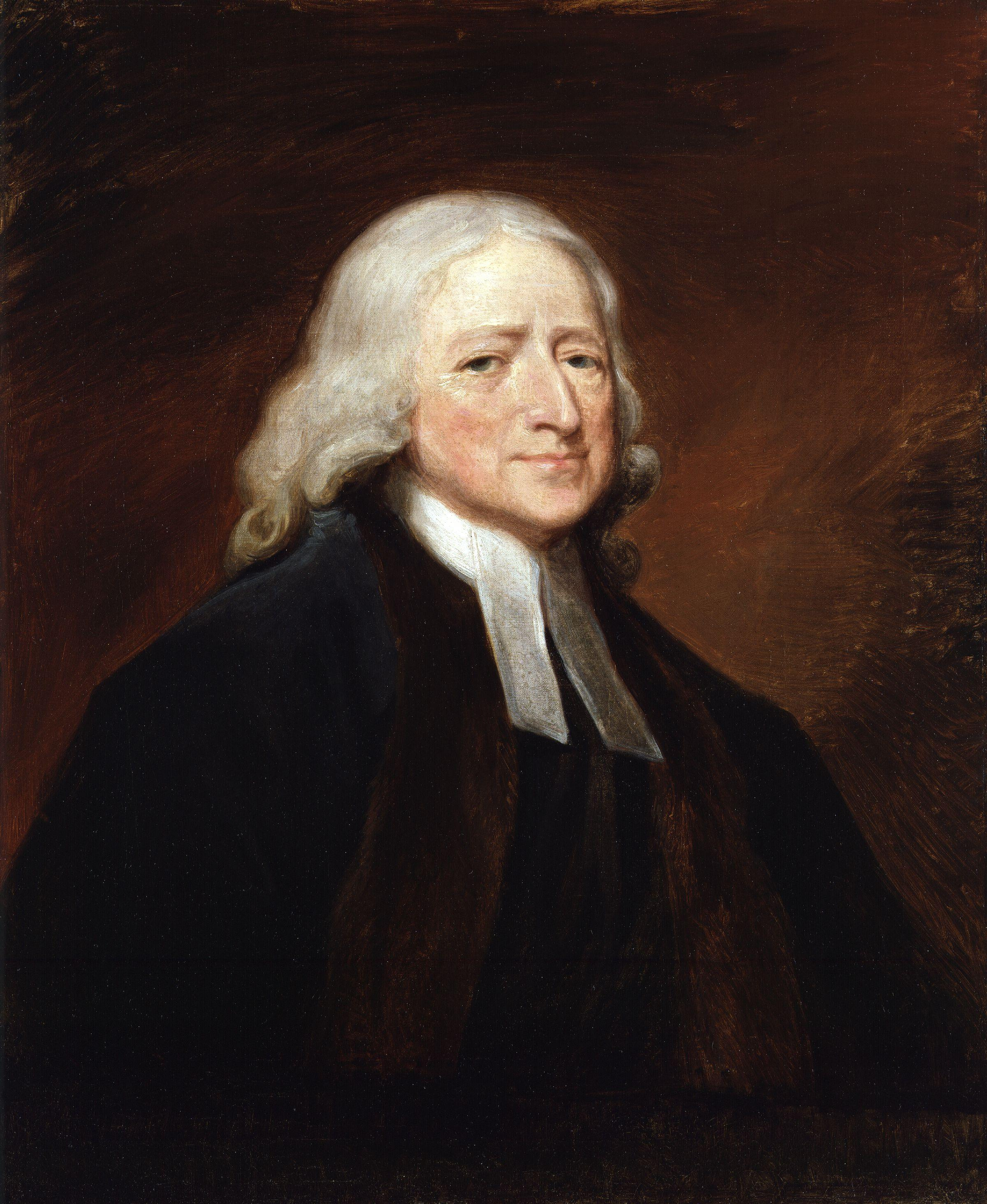
“The first help to prayer is our only Mediator and Advocate, Jesus Christ, the Son of God, 1 John 2:2. He is pleading our cause before God, when we are hardly able to express what we want; who is therefore called the Word of the Father, because God, by him, has discovered his will to us; as he is also called 'the Mediator,' because he solicits our cause before God. When Moses complained that he was of slow speech, and a slow tongue, that so he might avoid carrying the commanded message to Pharaoh, God tells him, 'Aaron thy brother can speak well, he shall be to thee instead of a mouth.' Se we also, when we shall pray, are dull, and slow of speech, and therefore must fly to Christ, our heavenly Aaron, who is to us instead of a mouth. Therefore Christ commands us to pray in his name, who is our eternal High-priest, 'having an everlasting priesthood,' (Heb. 7:24,) 'interceding for us,' (Rom. 8:34,) 'in whom we have boldness,' and access with confidence by the faith of him,' Eph. 3:12.”

“[Jesus] said, “Those who are strong have no need of a physician, but those who are ill.…For I did not come to call the righteous, but sinners” (Matt. 9:10-13). Jesus opened up God’s heart to men.”
― Watchman Nee ,
from God is Willing
“Darkness does something to a place, doesn’t it? It distorts. It becomes a canvas for the imagination. The good news is that shadows are only the deflection of light. They can frighten, but they can do no harm.”

“The miracles of healing, important as they were, were not an end in themselves. They did not constitute the highest good of the messianic salvation. This fact is illustrated by the arrangement of the phrases in Matthew 11:4-5. Greater than deliverance of the blind and the lame, the lepers and the deaf, even than raising of the dead, was the preaching of the good news to the poor. This “gospel” was the very presence of Jesus himself, and the joy and fellowship that he brought to the poor.”
topics: charismatic , christian , healing , jesus , kingdom-of-god , messianic-task , new-testament , religion , theology
“The mission of Jesus brought not a new teaching but a new event. It brought to people an actual foretaste of the eschatological salvation. Jesus did not promise the forgiveness of sins; he bestowed it. He did not simple assure people of the future fellowship of the Kingdom; he invited them into fellowship with himself as the bearer of the Kingdom. He did not merely promise them vindication in the day of judgment; he bestowed upon them the status of a present righteousness. He not only taught an eschatological deliverance from physical evil; he went about demonstrating the redeeming power of the Kingdom, delivering people from sickness and even death.”
“Jesus’ message of the Kingdom of God is the announcement by word and deed that God is acting and manifesting dynamically his redemptive will in history. God is seeking out sinners; he is inviting them to enter into the messianic blessing; he is demanding of them a favorable response to his gracious offer. God has again spoken. A new prophet has appeared, indeed one who is more than a prophet, one who bring to people the very blessings he promises.”

“Yet when God entered time and became a man, he who was boundless became bound. Imprisoned in flesh. Restricted by weary-prone muscles and eyelids. For more than three decades, his once limitless reach would be limited to the stretch of an arm, his speed checked to the pace of human feet. I wonder, was he ever tempted to regain his boundlessness? In the middle of a long trip, did he ever consider transporting himself to the next city? When the rain chilled his bones, was he tempted to change the weather? When the heat parched his lips, did he give thought to popping over to the Caribbean for some refreshment? If he ever entertained such thoughts, he never gave into them. Not once. Stop and think about this. Not once did Christ use his supernatural powers for personal comfort. With one word, he could've transformed the hard earth into a soft bed, but he didn't. With a wave of his hands, he could've boomeranged the spit of his accusers back into their faces, but he didn't. With an arch of his brow, he could've paralyzed the hand of the soldier as he braided the crown of thorns. But he didn't.”

“Let all things be loved for the sake of Jesus, but Jesus for His own sake.”

“All that God is, will supply your need.”
― Thomas Goodwin ,

“Often a work of God comes with two edges, great joy and great pain, and in that matter-of-fact response Mary embraced both. She was the first person to accept Jesus on His own terms, regardless of the personal cost.”
― Philip Yancey ,
topics: jesus

“We must learn, then, not to HAVE a spirituality, something we turn on at a particular place or time, but to BE spiritual, as a habit of life, a continuous state of being. It is to this end that we seek after God in the stillness and hubbub of life, but always and everywhere in and through the church, where Christ is made present to us and, through us, to the world.”
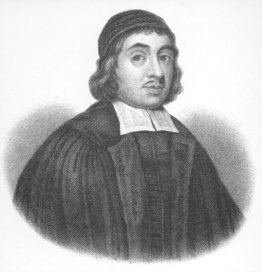
“God can turn stones into bread, and a sinner can turn bread into stones; the bread of life into the stone of stumbling.”
― Thomas Watson ,
from The Lord's Supper

“When Adam ate the irrevocable apple, Thou Saw'st beyond death the resurrection of the dead”
― C.S. Lewis ,
from Poems
“The real turning point in human history is less apt to be the day the wheel is invented or Rome falls than the day a boy is born to a couple of hick Jews.”
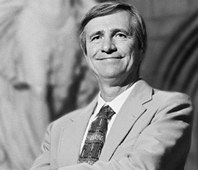
“If Christianity is true, this changes EVERYTHING. Christ's very last words to us in scripture were: "Behold, I make all things new." (Rev. 21:5) I hope you remember that most moving line in the most moving movie ever made, The Passion Of The Christ, when Christ turns to His mother on the way to Calvary, explaining the need for the Cross and the blood and the agony: "See, Mother, I make all things new." I hope you remember that line with your tear ducts, which connect to the heart, as well as with your ears, which connect to the brain. Christ changed every human being he ever met. In fact, He changed history, splitting it open like a coconut and inserting eternity into the split between B.C. and A.D. If anyone claims to have met Him without being changed, he has not met Him at all. When you touch Him, you touch lightning.”
― Peter Kreeft ,
from Jesus-Shock
“To invoke Jesus' name is to place yourself in his presence, to open yourself to his power, his energy. The prayer of Jesus' name actually brings God closer, making him more present. He is always present in some way, since he knows and loves each one of us at every moment; but he is not present to those who do not pray as intimately as he is present to those who do. Prayers a difference; 'prayer changes things.' It may or may not change our external circumstances. (It does if God sees that that change is good for us; it does not if God sees that it is not.) but it always changes our relationship to God, which is infinitely more important than external circumstances, however pressing they may seem, because it is eternal but they are temporary, and because it is our very self but they are not.”
― Peter Kreeft ,
from Prayer For Beginners



Group of Brands


















© 2026 Bibleportal.com All rights reserved.