
Inspirational Quotes on Poetry

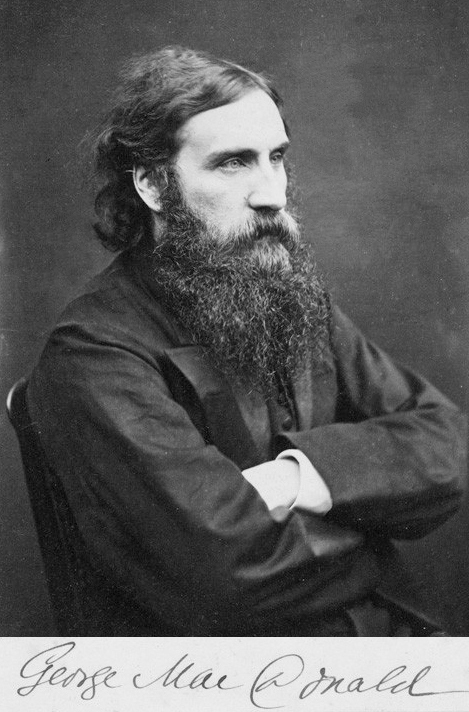
“There is hardly a limit to the knowledge and sympathy a man may have in respect of the finest things, and yet be a fool. Sympathy is not harmony. A man may be a poet even, and speak with the tongue of an angel, and yet be a very bad fool.”
― George MacDonald ,
from Mary Marston

“Dear love, for nothing less than thee Would I have broke this happy dream; It was a theme For reason, much too strong for fantasy, Therefore thou wak'd'st me wisely; yet My dream thou brok'st not, but continued'st it. Thou art so true that thoughts of thee suffice To make dreams truths, and fables histories; Enter these arms, for since thou thought'st it best, Not to dream all my dream, let's act the rest.”

“Ah youth, youth! That's what happens when you go steeping your soul into Shakespeare”
“I am two fools, I know, For loving, and for saying so In whining poetry; But where's that wiseman, that would not be I, If she would not deny? Then as th' earth's inward narrow crooked lanes Do purge sea water's fretful salt away, I thought, if I could draw my pains Through rhyme's vexation, I should them allay. Grief brought to numbers cannot be so fierce, For he tames it, that fetters it in verse.”
― John Donne ,
from Selected Poems
topics: poetry
“Are not heavens joyes as valiant to asswage Lusts, as earths honour was to them?”
― John Donne ,
from Donne: Poems

“I saw it throwing off its nightly clothing of mist, and here and there, by degrees, its soft ripples or its smooth reflecting surface was revealed.”
“The result is an allusive and partly symbolic kind of language able to communicate not merely single happenings but the universal truth behind them...These greater poets also reach back across time, and represent a view of the world which belongs not to one man or one generation of men but to the men of many succeeding generations or even a whole civilisation. (In his introduction to Virgil's Aenied)”

“The story of The Rape of the Lock, sylphs and all, could have been told, though not so effectively, in prose. The Odyssey and the Comedy have something to say that could have been said well, though not equally well, without verse. Most of the qualities Aristotle demands of a tragedy could occur in a prose play. Poetry and prose, however different in language, overlapped, almost coincided, in content. But modern poetry, if it ‘says’ anything at all, if it aspires to ‘mean’ as well as to ‘be’, says what prose could not say in any fashion. To read the old poetry involved learning a slightly different language; to read the new involves the unmaking of your mind, the abandonment of all the logical and narrative connections which you use in reading prose or in conversation. You must achieve a trance-like condition in which images, associations, and sounds operate without these. Thus the common ground between poetry and any other use of words is reduced almost to zero. In that way poetry is now more quintessentially poetical than ever before; ‘purer’ in the negative sense. It not only does (like all good poetry) what prose can’t do: it deliberately refrains from doing anything that prose can do. Unfortunately, but inevitably, this process is accompanied by a steady diminution in the number of its readers. Some have blamed the poets for this, and some the people. I am not sure that there need be any question of blame. The more any instrument is refined and perfected for some particular function, the fewer those who have the skill, or the occasion, to handle it must of course become. Many use ordinary knives and few use surgeons’ scalpels. The scalpel is better for operations, but it is no good for anything else. Poetry confines itself more and more to what only poetry can do; but this turns out to be something which not many people want done. Nor, of course, could they receive it if they did. Modern poetry is too difficult for them. It is idle to complain; poetry so pure as this must be difficult. But neither must the poets complain if they are unread. When the art of reading poetry requires talents hardly less exalted than the art of writing it, readers cannot be much more numerous than poets. The explication of poetry is already well entrenched as a scholastic and academic exercise. The intention to keep it there, to make proficiency in it the indispensable qualification for white-collared jobs, and thus to secure for poets and their explicators a large and permanent (because a conscript) audience, is avowed. It may possibly succeed. Without coming home any more than it now does to the ‘business and bosoms’ of most men, poetry may, in this fashion, reign for a millennium; providing material for the explication which teachers will praise as an incomparable discipline and pupils will accept as a necessary moyen de parvenir. But this is speculation.”
― C.S. Lewis ,
topics: poetry
“As of old Phoenician men, to the Tin Isles sailing Straight against the sunset and the edges of the earth, Chaunted loud above the storm and the strange sea's wailing, Legends of their people and the land that gave them birth- Sang aloud to Baal-Peor, sang unto the horned maiden, Sang how they should come again with the Brethon treasure laden, Sang of all the pride and glory of their hardy enterprise, How they found the outer islands, where the unknown stars arise; And the rowers down below, rowing hard as they could row, Toiling at the stroke and feather through the wet and weary weather, Even they forgot their burden in the measure of a song, And the merchants and the masters and the bondsmen all together, Dreaming of the wondrous islands, brought the gallant ship along; So in mighty deeps alone on the chainless breezes blown In my coracle of verses I will sing of lands unknown, Flying from the scarlet city where a Lord that knows no pity, Mocks the broken people praying round his iron throne, -Sing about the Hidden Country fresh and full of quiet green. Sailing over seas uncharted to a port that none has seen.”
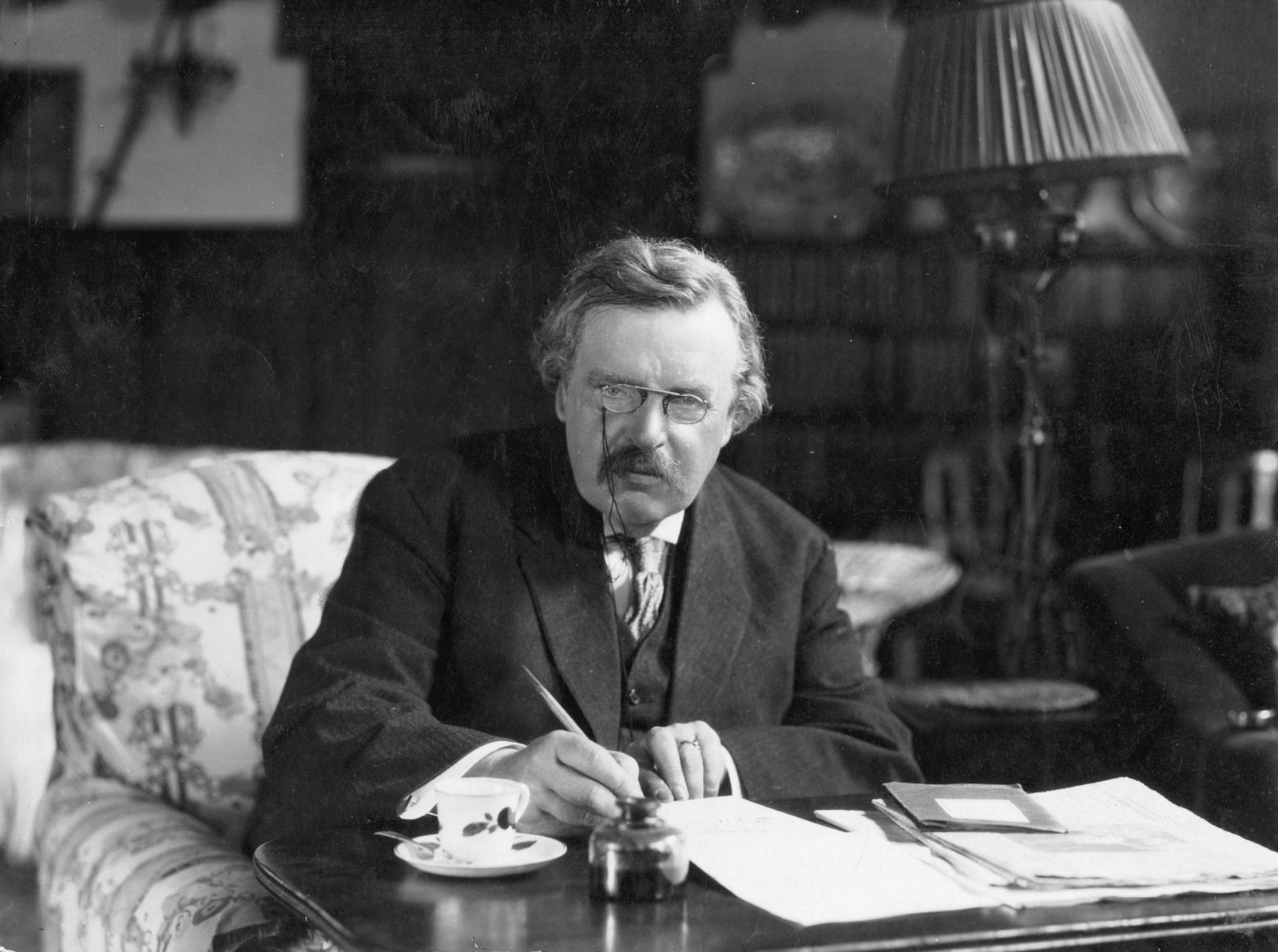
“(...) he always thinks of a dinner party as lasting all night; and he always thinks of a night as lasting forever. When the working women in the poor districts come to the doors of the public houses and try to get their husbands home, simple minded “social workers” always imagine that every husband is a tragic drunkard and every wife a broken-hearted saint. It never occurs to them that the poor woman is only doing under coarser conventions exactly what every fashionable hostess does when she tries to get the men from arguing over the cigars to come and gossip over the teacups. These women are not exasperated merely at the amount of money that is wasted in beer; they are exasperated also at the amount of time that is wasted in talk. It is not merely what goeth into the mouth but what cometh out the mouth that, in their opinion, defileth a man.”
“In most cases the name is unpoetical, although the fact is poetical. In the case of Smith, the name is so poetical that it must be an arduous and heroic matter for the man to live up to it. The name of Smith is the name of the one trade that even kings respected; it could claim half the glory of that arma virumque which all epics acclaimed. The spirit of the smithy is so close to the spirit of song that it has mixed in a million poems, and every blacksmith is a harmonious blacksmith. Even the village children feel that in some dim way the smith is poetic, as the grocer and the cobbler are not poetic, when they feast on the dancing sparks and deafening blows in the cavern of that creative violence. The brute repose of Nature, the passionate cunning of man, the strongest of earthly metals, the weirdest of earthly elements, the unconquerable iron subdued by its only conqueror, the wheel and the ploughshare, the sword and the steam-hammer, the arraying of armies and the whole legend of arms, all these things are written, briefly indeed, but quite legibly, on the visiting-card of Mr. Smith.”
― G.K. Chesterton ,
from Heretics
topics: poetry

“And the silken, sad, uncertain rustling of each purple curtain Thrilled me- filled me with fantastic terrors never felt before; So that now, to still the beating of my heart, I stood repeating, "'Tis some visitor entreating entrance at my chamber door- Some late visitor entreating entrance at my chamber door;- This it is, and nothing more.”
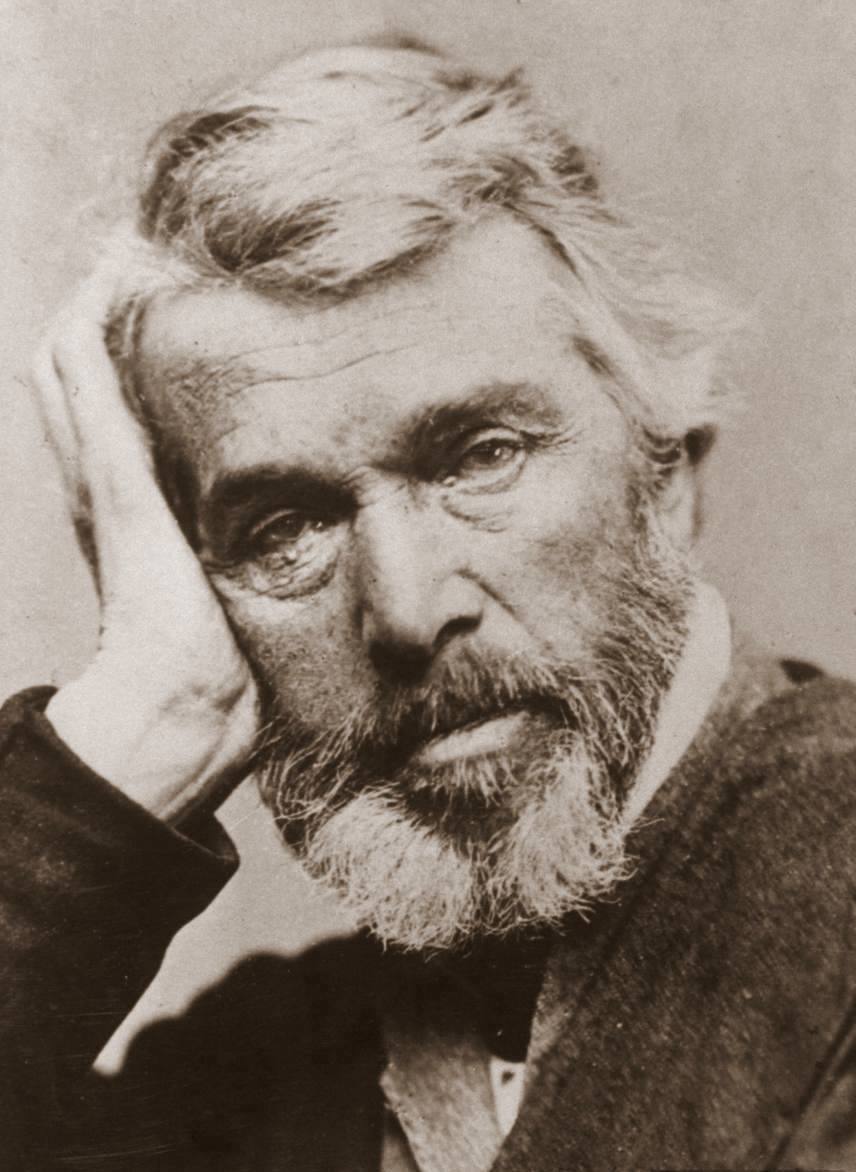
“Fortune, if thou’ll but gie me still Hale breeks, a scone, an whisky gill, An’ rowth o’ rhyme to rave at will, Take a’ the rest, An’ deal’t about as thy blind skill Directs thee best.”

“Happy the bard, (if that fair name belong To him that blends no fable with his song) Whose lines uniting, by an honest art, The faithful monitors and poets part, Seek to delight, that they may mend mankind, And while they captivate, inform the mind. Still happier, if he till a thankful soil, And fruit reward his honorable toil: But happier far who comfort those that wait To hear plain truth at Judah's hallow'd gate”
“The ice was here, the ice was there, The ice was all around: It cracked and growled, and roared and howled, Like noises in a swound!”

“আমি তো হয়েই গেছি একজন নিশিরাত সাথী। হেঁটেছি বৃষ্টিতে ভিজে– বৃষ্টিতেই ফিরেও এসেছি। পার হয়ে গেছি আমি শহরের দূরতম বাতি। সর্বাধিক দুঃখক্লিষ্ট গলি আমি স্বচক্ষে দেখেছি দায়িত্বপালনকারী দারোয়ানে কাটিয়েছি পাশে। চোখের দু’পাতা ফেলে, ব্যাখ্যা সব গোপন রেখেছি। থমকে দাঁড়িয়ে গেছি পদশব্দ যদি কিছু নাশে কান্নার শব্দের তুল্য– কোনো কান্না দূর থেকে হয়, পাশের সড়ক থেকে বাড়ির উপর দিয়ে আসে, কিন্তু কেউ ডাকেনি তো, বিদায় বচনটিও নয়; আরো দূরে, বহু দূরে অপার্থিব কোনো উচ্চতায়, আলোকিত ঘড়ি এক আকাশের উল্টো থেকে কয় না-শুভ বা না-অশুভ এই কাল আজিকার বাতি। আমি তো রয়েই গেছি একজন নিশিরাত সাথী।”

“With legal spade the gospel field he delves, Who thus drives sinners in unto themselves; Halving the truth that should be all reveal'd, The sweetest part of Christ is oft conceal'd, We bid men turn from sin, but seldom say, Behold the Lamb that takes all sin away! Christ, by the gospel rightly understood, Not only treats a peace, but makes it good. Those suitors therefore of the bride, who hope, By force to drag her with the legal rope, Nor use the drawing cord of conqu'ring grace, Pursue with flaming zeal a fruitless chase; In vain lame doings urge, with solemn awe, To bribe the fury of the fiery law: With equal success to the fool that aims By paper walls to bound devouring flames.”
“If we respected only what is inevitable and has a right to be, music and poetry would resound along the streets. When we are unhurried and wise, we perceive that only great and worthy things have any permanent and absolute existence, that petty fears and petty pleasures are but the shadow of the reality. This is always exhilarating and sublime.”
“Thou wouldst not have thy man crushed back to clay; It must be, God, thou hast strength to give To him that fain would do what thou dost say; Else how shall any soul repentant live, Old griefs and new fears hurrying on dismay? Let pain be what thou wilt, kind and degree, Only in pain calm thou my heart with thee.”
― George MacDonald ,



Group of Brands


















© 2026 Bibleportal.com All rights reserved.