
Inspirational Quotes on Religion


“For the secret of human existence lies not only in living, but in knowing what to live for. Without a firm conviction of the purpose of living, man will not consent to live and will destroy himself rather than remain on earth, though he be surrounded by bread.”
“Under his pillow lay the New Testament. He took it up mechanically. The book belonged to Sonia; it was the one from which she had read the raising of Lazarus to him. At first he was afraid that she would worry him about religion, would talk about the gospel and pester him with books. But to his great surprise she had not once approached the subject and had not even offered him the Testament. He had asked her for it himself not long before his illness and she brought him the book without a word. Till now he had not opened it. He did not open it now, but one thought passed through his mind: “Can her convictions not be mine now? Her feelings, her aspirations at least....”
― Fyodor Dostoevsky ,
from Crime and Punishment
“You took all that was most extraordinary, most hypothetical, and most vague, all that was beyond the understanding of the people, and thus You acted as though You did not love them at all—and who was this? The one who had come to give His life for them! Instead of taking control of human freedom, You intensified it and burdened man’s spiritual domain with its torments for ever. You desired man to have freedom of choice in love so that he would follow You freely, lured and captivated by You. Instead of the old immutable law, man should henceforth decide with a free heart what is good and what is evil, having only Your image before him as a guide—but didn’t it occur to You that in the end men would reject and dispute even Your image and Your truth if they were saddled with such a terrible burden as freedom of choice? They will cry out in the end that truth is not in You, for they could not have been left in worse confusion and torment than that in which You left them, bequeathing them so many problems and unresolved questions. So You Yourself sowed the seed of the destruction of Your own kingdom; blame no one else for this.”
“Oh it cannot be denied that in the monastery he believed completely in miracles, but in my experience miracles never bother a realist. It is not miracles that incline a realist towards faith. The true realist, if he is not a believer, will invariably find within himself the strength and the ability not to believe in miracles either, and if a miracle stands before him as a incontrovertible fact, he will sooner disbelieve his senses than admit that fact. And even if he does admit it, it will be as a fact of nature, but one that until now has been obscure to him. In the realist it is not faith that is born of miracles, but miracles of faith. Once a realist believes, his realism inexorably compels him to admit miracles too. The Apostle Thomas declared that he would not belive until he saw, and when he saw, said: 'mMy Lord and my God.' Was it the miracle that had made him believe? The likeliest explanation is that it was not, and that he came to believe for the sole reason that he wanted to believe and, perhaps, in the inmost corners of his being already fully believed, even when he said: 'Except I shall see... I will not believe.' [John 20:25]”
“Oh it cannot be denied that in the monastery he believed completely in miracles, but in my experience miracles never bother a realist. It is not miracles that incline a realist towards faith. The true realist, if he is not a believer, will invariably find within himself the strength and the ability not to believe in miracles either, and if a miracle stands before him as a incontrovertible fact, he will sooner disbelieve his senses than admit that fact. And even if he does admit it, it will be as a fact of nature, but one that until now has been obscure to him. In the realist it is not faith that is born of miracles, but miracles of faith. Once a realist believes, his realism inexorably compels him to admit miracles too. The Apostle Thomas declared that he would not belive until he saw, and when he saw, said: 'My Lord and my God.' Was it the miracle that had made him believe? The likeliest explanation is that it was not, and that he came to believe for the sole reason that he wanted to believe and, perhaps, in the inmost corners of his being already fully believed, even when he said: 'Except I shall see... I will not believe.' [John 20:25]”
“Dios creo la luz el primer día, y el sol, la luna y las estrellas, el cuarto. ¿Cómo, entonces, resplandeció la luz el primer día?”
topics: religión
“There is for man no preoccupation more constant or more nagging than, while in a condition of freedom, quickly to find someone to bow down before.”
“Leemos el Evangelio tan sólo en vísperas de nuestros discursos, para brillar, mediante el conocimiento de una obra originalísima, con la que se pueden obtener efectos a 'medida'.”
topics: religion
“I have a religion, my own religion, and I even have more religion than all of them, with their mummery and hocus-pocus. I adore God! I believe in the Supreme Being, in a Creator, whatever He is, it doesn't matter to me, who has placed us here below to fulfill our duties as citizens and as fathers; but I don't need to go to church to kiss silver plates and empty my pocket to fatten a lot of humbugs who are better fed than we are! For one can honor Him just as well in the woods, in a field, or even by contemplating the vault of the heavens, as the ancients did. My personal God is the God of Socrates, of Franklin, Voltaire, and Béranger. I'm for the Profession of Faith of the Savoyard Vicar and the immoral principles of '89! So I don't admit any old codger of a God who walks in his garden with a cane in his hand, lodges his friends in the bellies of whales, dies with a groan and comes to life at the end of three days: absurdities in themselves and, furthermore, completely opposed to all physical laws; which proves, by the way, that the priests have always beens sunk in a mire of ignorance in which they force the populace to wallow with them.”
“se adormiló suavemente con la languidez mística que brota de los aromas del altar, del frescor de las pilas de agua benita y del resplandor de las velas”
“esas comparaciones de prometido, esposo, amante celestial y de matrimonio eterno, que se repiten en los sermones, le despertaban en lo hondo del corazón ternezas inesperadas”
“se retiraban a lugares solitarios para llorar a los pies de Cristo todas las lágrimas de un corazón que la existencia había herido”
topics: religion
“Io ho una religione, la mia religione, ne ho anche più di tutti loro, con le loro buffonate e i loro imbrogli! Anzi, io Dio l’adoro! Credo nell’Essere supremo, in un Creatore, uno qualunque, chi sia non ha importanza, comunque uno che ci ha messi quaggiù per adempiervi ai nostri doveri di cittadini e di padri di famiglia; ma non sento nessun bisogno di andare in una chiesa a baciare vassoi d’argento e a ingrassare di tasca mia una manica di buffoni che campano molto meglio di noi! Perché Dio lo si può onorare altrettanto bene in mezzo a un bosco, in un campo, oppure contemplando la volta celeste come facevano gli antichi. Il Dio in cui credo io è quello di Socrate, di Franklin, di Voltaire e di Béranger! Sono per La professione di fede del vicario savoiardo e per gli immortali principi del ’89! No, non lo posso ammettere un povero diavolo di Padreterno che se ne va in giro per il suo giardino con il bastone in mano, che ospita i suoi amici nel ventre delle balene, muore emettendo un grido e in capo a tre giorni resuscita: tutte assurdità in contrasto, tra l’altro, con le leggi della fisica; il che ci dimostra, tra parentesi, che i preti hanno sempre sguazzato in una torbida ignoranza in cui vorrebbero trascinare anche i popoli.”
topics: religion
“My chief sin is doubt. I doubt everything and am in doubt nearly all the time.' 'Doubt is natural to human weakness,' repeated the priest.”
“...religion was just a bridle for the barbarous part of the population, and indeed Stepan Arkadyich could not even stand through a short prayer service without aching feet and could not grasp the point of all these fearsome and high-flown words about the other world, when life in this one could be so merry.”
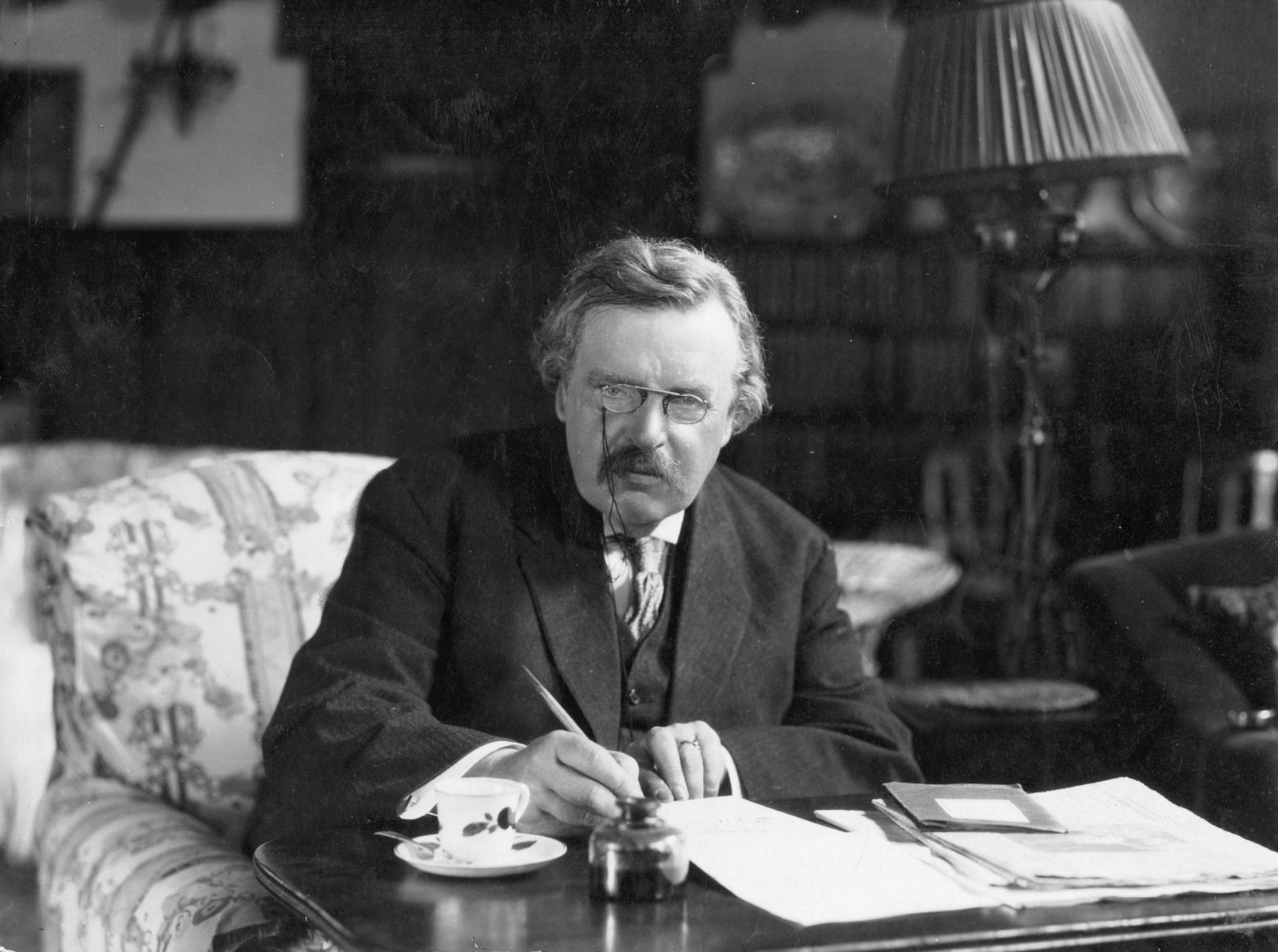
“Look at that blacksmith, for instance,” went on Father Brown calmly; “a good man, but not a Christian — hard, imperious, unforgiving. Well, his Scotch religion was made up by men who prayed on hills and high crags, and learnt to look down on the world more than to look up at heaven. Humility is the mother of giants. One sees great things from the valley; only small things from the peak.”
“All that genuinely remains of the ancient hymns or the ancient dances of Europe, all that has honestly come to us from the festivals of Phoebus or Pan, is to be found in the festivals of the Christian Church. If any one wants to hold the end of a chain which really goes back to the heathen mysteries, he had better take hold of a festoon of flowers at Easter or a string of sausages at Christmas. Everything else in the modern world is of Christian origin, even everything that seems most anti-Christian. The French Revolution is of Christian origin. The newspaper is of Christian origin. The anarchists are of Christian origin. Physical science is of Christian origin. The attack on Christianity is of Christian origin. There is one thing, and one thing only, in existence at the present day which can in any sense accurately be said to be of pagan origin, and that is Christianity.”
― G.K. Chesterton ,
from Heretics
“But everywhere the religious dance came before the religious hymn, and man was a ritualist before he could speak.”
― G.K. Chesterton ,
from Heretics
topics: religion
“The truths of religion are unprovable; the facts of science are unproved.”
― G.K. Chesterton ,
“Saint-worship is not the same as hero-worship; it is a much less dangerous thing than hero-worship. For hero-worship generally means the absorption or transmutation of some part, at any rate, of one's own original ideas of goodness under the heat and hypnotism of some strong personality. But saint-worship, especially when it is a worship of saints whom we know little or nothing about, is simply the worship of that tradition of goodness in which the saint's name has been embalmed; and into that empty mould our own natural idealism can much more easily be poured.”
― G.K. Chesterton ,
topics: religion



Group of Brands


















© 2026 Bibleportal.com All rights reserved.