
Inspirational Quotes on War


“There was no room for fear in Achilles' heart and he sprang at the Trojans with his terrible war-cry.”

“It did not please me, either, that the Christians and the princes were driven, urged, and irritated into attacking the Turk and making war on him, before they amended their own ways and lived like true Christians.”
― Martin Luther ,
“According to John 6:15, He [Christ] fled and would not let Himself be made king; before Pilate He confessed, “My kingdom is not of this world”; and He bade Peter, in the garden, put up his sword, and said, “He that taketh the sword shall perish by the sword.”
― Martin Luther ,
“In the first place, it is certain that the Turk has no right or command to begin war and to attack lands that are not his. Therefore, his war is nothing else than outrage and robbery, with which God is punishing the world, as He often does through wicked knaves, and sometimes through godly people. For he does not fight from necessity or to protect his land in peace, as the right kind of a ruler does, but like a pirate or highwayman, he seeks to rob and damage other lands, who are doing and have done nothing to him.”
― Martin Luther ,

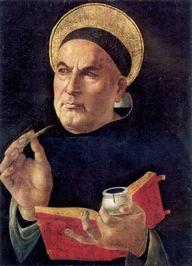
“Three things are required for a war to be just. Indeed, the first requirement is that the ruler at whose command the war is to be waged have the lawful authority to do so. . . . Second, there needs to be a just cause to wage war, namely, that the enemy deserve to have war waged against it because of some wrong it has inflicted. . . . Third, those waging war need to have a right intention, namely, an intention to promote good and avoid evil.”
topics: war
“Victory is the main object in war. If this is long delayed, weapons are blunted and morale depressed. When troops attack cities, their strength will be exhausted. When the army engages in protracted campaigns the resources of the state will not suffice. When your weapons are dulled and ardor damped, your strength exhausted and treasure spent, neighboring rulers will take advantage of your distress to act. And even though you have wise counsellors, none will be able to lay good plans for the future.”
“Where the army is, prices are high; when prices rise the wealth of the people is exhausted. When wealth is exhausted the peasantry will be afflicted with urgent exactions.”
“The reason troops slay the enemy is because they are enraged.”
“What is essential in war is victory, not prolonged operations. And therefore the general who understands war is the Minister of the people's fate and arbiter of the nation's destiny.”
“Supreme excellence consists in breaking the enemy's resistance without fighting.”
“In the practical art of war, the best thing of all is to take the enemy's country whole and intact; to shatter and destroy it is not so good.”
“Generally in war the best policy is to take a state intact; to ruin it is inferior to this. To capture the enemy's army is better than to destroy it; to take intact a battalion, a company or a five-man squad is better than to destroy them. For to win one hundred victories in one hundred battles is not the acme of skill. To subdue the enemy without fighting is the acme of skill. Thus, what is of supreme importance in war is to attack the enemy's strategy. Next best is to disrupt his alliances; do not allow your enemies to get together. The next best is to attack his army. If you cannot nip his plans in the bud, or disrupt his alliances when they are about to be consummated, sharpen your weapons to gain the victory.”
“Those skilled in war subdue the enemy's army without battle. They capture his cities without assaulting them and overthrow his state without protracted operations. Your aim must be to take All-under-Heaven intact. Thus your troops are not worn out and your gains will be complete. This is the art of offensive strategy.”
“To triumph in battle and be universally acclaimed 'Expert' is not the acme of skill, for to lift an autumn down requires no great strength; to distinguish between the sun and moon is no test of vision; to hear the thunderclap is no indication of acute hearing.”
“A victorious army wins its victories before seeking battle; an army destined to defeat fights in the hope of winning.”
“The art of using troops is this: When ten to the enemy's one, surround him; When five times his strength, attack him (if my force is five times that of the enemy I alarm him to the front, surprise him to the rear, create an uproar in the east and strike in the west); If double his strength, divide him (if a two-to-one superiority is insufficient to manipulate the situation, we use a distracting force to divide his army); If equally matched you may engage him (in these circumstances only the able general can win); If weaker numerically, be capable of withdrawing (if I am in good order and the enemy in disarray, if I am energetic and he careless, then, even if he be numerically stronger, I can give battle); And if in all respects unequal, be capable of eluding him, for a small force is but booty for one more powerful (the small certainly cannot equal the large, nor can the weak match the strong, nor the few the many).”



Group of Brands


















© 2026 Bibleportal.com All rights reserved.