Many, many centuries ago, out on a lonely, obscure island called Patmos, a man by the name of John caught a vision of the new Jerusalem descending out of heaven from God. One of the greatest glories of this new city of God that John saw was its completeness. It was not partial and one-sided, but it was complete in all three of its dimensions. And so, in describing the city in the twenty-first chapter of the book of Revelation, John says this: “The length and the breadth and the height of it are equal.” In other words, this new city of God, this city of ideal humanity, is not an unbalanced entity but it is complete on all sides.
Now John is saying something quite significant here. For so many of us the book of Revelation is a very difficult book, puzzling to decode. We look upon it as something of a great enigma wrapped in mystery. And certainly if we accept the book of Revelation as a record of actual historical occurrences it is a difficult book, shrouded with impenetrable mysteries. Rut if we will look beneath the peculiar jargon of its author and the prevailing apocalyptic symbolism, we will find in this book many eternal truths which continue to challenge us. One such truth is that of this text. What John is really saying is this: that life as it should be and life at its best is the life that is complete on all sides.
There are three dimensions of any complete life to which we can fitly give the words of this text: length, breadth, and height. The length of life as we shall think of it here is not its duration or its longevity, but it is the push of a life forward to achieve its personal ends and ambitions. It is the inward concern for one’s own welfare. The breadth of life is the outward concern for the welfare of others. The height of life is the upward reach for God.

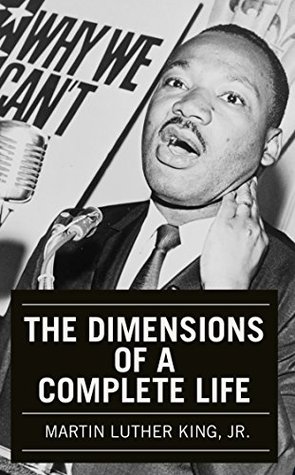





















1929-1968
Martin Luther King, Jr. was an American clergyman, activist and prominent leader in the African-American civil rights movement. His main legacy was to secure progress on civil rights in the United States and he is frequently referenced as a human rights icon today.
A Baptist minister, King became a civil rights activist early in his career. He led the 1955 Montgomery Bus Boycott and helped found the Southern Christian Leadership Conference in 1957, serving as its first president. King's efforts led to the 1963 March on Washington, where King delivered his "I Have a Dream" speech. There, he raised public consciousness of the civil rights movement and established himself as one of the greatest orators in U.S. history.
King's main legacy was to secure progress on civil rights in the United States, which has enabled more Americans to reach their potential.
... Show more