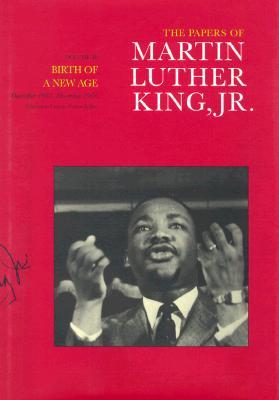
Martin Luther King, Jr.'s ideas his call for racial equality, his faith in the ultimate triumph of justice, his insistence on the power of nonviolence to bring about a major transformation of American society are as vital and timely as ever. The wealth of his writings, both published and unpublished, is now preserved in this authoritative, chronologically arranged multi-volume edition. "Volume III" chronicles the Montgomery bus boycott of 1956 and Dr. King's emergence as a public figure who attracted international attention. Included is the galvanizing speech he gave on the first day of the bus boycott, transcribed from a fragile tape recording and published here in its entirety for the first time. Also included are his remarks to an angry crowd after the bombing of his home and his powerful speech at the 1956 NAACP convention. King's words from this period reveal the evolution of his distinctive blend of Christian and Gandhian ideas and show his appreciation of the broader significance of the Montgomery movement, a protest that revealed the "longing for human dignity that motivates oppressed people all over the world." "The Papers of Martin Luther King, Jr." is a testament to a man whose life and teaching continue to have a profound influence not only on Americans, but on people of all nations. "The Martin Luther King, Jr., Papers Project at Stanford University was established by The Center for Nonviolent Social Change, Inc., in 1984."






















1929-1968
Martin Luther King, Jr. was an American clergyman, activist and prominent leader in the African-American civil rights movement. His main legacy was to secure progress on civil rights in the United States and he is frequently referenced as a human rights icon today.
A Baptist minister, King became a civil rights activist early in his career. He led the 1955 Montgomery Bus Boycott and helped found the Southern Christian Leadership Conference in 1957, serving as its first president. King's efforts led to the 1963 March on Washington, where King delivered his "I Have a Dream" speech. There, he raised public consciousness of the civil rights movement and established himself as one of the greatest orators in U.S. history.
King's main legacy was to secure progress on civil rights in the United States, which has enabled more Americans to reach their potential.
... Show more