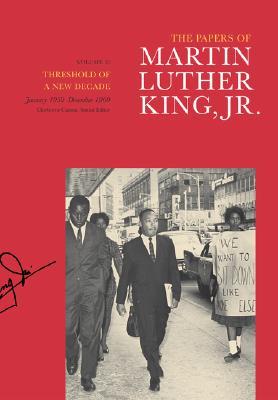
"The Papers of Martin Luther King, Jr. "has become the definitive record of the most significant correspondence, sermons, speeches, published writings, and unpublished manuscripts of one of America's best-known advocates for peace and justice. "Threshold of a New Decade, "Volume V of the planned fourteen-volume series, illustrates the growing sophistication and effectiveness of King and the organizations he led while providing an unparalleled look into the surprising emergence of the sit-in protests that sparked the social struggles of the 1960s. During this pivotal period of his career, King traveled to India in early 1959 to meet with Prime Minister Nehru and other associates of Mahatma Gandhi. After returning to Montgomery, King confronted the continuing ineffectiveness of his Southern Christian Leadership Conference (SCLC) by demanding personnel changes and agreeing to relocate to Atlanta at the beginning of 1960. King's move took place just before African American students in the South reclaimed the energy of the Montgomery bus boycott with their bold sit-in protests, which King predicted would become "an integral part of the history which is reshaping the world, replacing a dying order with modern democracy." He was arrested in October after participating in a sit-in protest in Atlanta. His resulting imprisonment led presidential candidate John F. Kennedy to phone his sympathies to King's wife, Coretta, a move many credit for providing the margin of victory in the close election of 1960.






















1929-1968
Martin Luther King, Jr. was an American clergyman, activist and prominent leader in the African-American civil rights movement. His main legacy was to secure progress on civil rights in the United States and he is frequently referenced as a human rights icon today.
A Baptist minister, King became a civil rights activist early in his career. He led the 1955 Montgomery Bus Boycott and helped found the Southern Christian Leadership Conference in 1957, serving as its first president. King's efforts led to the 1963 March on Washington, where King delivered his "I Have a Dream" speech. There, he raised public consciousness of the civil rights movement and established himself as one of the greatest orators in U.S. history.
King's main legacy was to secure progress on civil rights in the United States, which has enabled more Americans to reach their potential.
... Show more