
- Biblia
- Leer la Biblia
- Versiones de la Biblia
- Verso del dia
- Planes de lectura
- Versos por tema
- Books of the Bible
- Imágenes De La Biblia
- Estudio
- Comentarios
- Concordancias
- Diccionarios bíblicos
- Enciclopedias bíblicas
- Sermones
- Bible Atlas & Maps
- BP Wiki
- Devocionales
- Devocionales de hoy
- Light of the World
- Todos los devocionales
- Inspirational Quotes
- Más
- Picture Quotes
- Videos
- Inspirador
- Estudio Bíblico
- Lo que dice la Biblia
- Bible Q&As
- Daily Bread
- Bible by Genre
- Bible Stories
- Random Bible Verse
- Comunidad
- Store
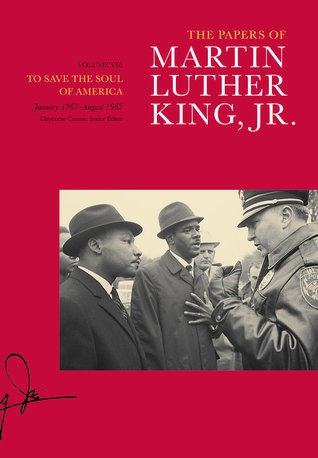
The Papers of Martin Luther King, Jr., Vol. 7: To Save the Soul of America, January 1961–August 1962
by Martin Luther King, Jr.
Preserving the legacy of one of the twentieth century’s most influential advocates for peace and justice, The Papers of Martin Luther King, Jr.The Papers of Martin Luther King, Jr., is described by one historian as being the “equivalent to a conversation” with King. To Save the Soul of America,To Save the Soul of America, the seventh volume of the anticipated fourteen-volume edition, provides an unprecedented glimpse into King’s early relationship with President John F. KennedyPresident John F. Kennedy and his efforts to remain relevant in a protest movement growing increasingly massive and militant.
Following Kennedy's inauguration in January 1961, King’s high expectations for the new administration gave way to disappointment as the president hesitated to commit to comprehensive civil rights legislation. As the initial Freedom Ride catapulted King into the national spotlight in May, tensions with student activists affiliated with the Student Nonviolent Coordinating Committee (SNCC) were exacerbated after King refused to participate in subsequent freedom rides. These tensions became more evident after King accepted an invitation in December 1961 to help the SNCC-supported Albany Movement in southwest Georgia. King’s arrests in Albany prompted widespread national press coverage for the protests there, but he left with minimal tangible gains.
During 1962 King worked diligently to improve the effectiveness of the Southern Christian Leadership Conference (SCLC) by hiring new staff and initiating grassroots outreach. King also increased his influence by undertaking an overcrowded schedule of appearances, teaching a course at Morehouse College, and participating in an additional round of protests in Albany during July 1962. As King confronted these difficult challenges, he learned valuable lessons that would later impact his efforts to desegregate Birmingham, Alabama, in 1963.
Following Kennedy's inauguration in January 1961, King’s high expectations for the new administration gave way to disappointment as the president hesitated to commit to comprehensive civil rights legislation. As the initial Freedom Ride catapulted King into the national spotlight in May, tensions with student activists affiliated with the Student Nonviolent Coordinating Committee (SNCC) were exacerbated after King refused to participate in subsequent freedom rides. These tensions became more evident after King accepted an invitation in December 1961 to help the SNCC-supported Albany Movement in southwest Georgia. King’s arrests in Albany prompted widespread national press coverage for the protests there, but he left with minimal tangible gains.
During 1962 King worked diligently to improve the effectiveness of the Southern Christian Leadership Conference (SCLC) by hiring new staff and initiating grassroots outreach. King also increased his influence by undertaking an overcrowded schedule of appearances, teaching a course at Morehouse College, and participating in an additional round of protests in Albany during July 1962. As King confronted these difficult challenges, he learned valuable lessons that would later impact his efforts to desegregate Birmingham, Alabama, in 1963.
BUY NOW
Hardcover, 746 pages
Published October 1st 2014 by University of California Press (first published August 14th 2014)
Suscribir
Obtenga el versículo bíblico diario todos los días en su bandeja de entrada
Leer en el móvil



Grupo de marcas


















© 2025 Bibleportal.com Reservados todos los derechos.
1929-1968
Martin Luther King, Jr. was an American clergyman, activist and prominent leader in the African-American civil rights movement. His main legacy was to secure progress on civil rights in the United States and he is frequently referenced as a human rights icon today.
A Baptist minister, King became a civil rights activist early in his career. He led the 1955 Montgomery Bus Boycott and helped found the Southern Christian Leadership Conference in 1957, serving as its first president. King's efforts led to the 1963 March on Washington, where King delivered his "I Have a Dream" speech. There, he raised public consciousness of the civil rights movement and established himself as one of the greatest orators in U.S. history.
King's main legacy was to secure progress on civil rights in the United States, which has enabled more Americans to reach their potential.
... Show more