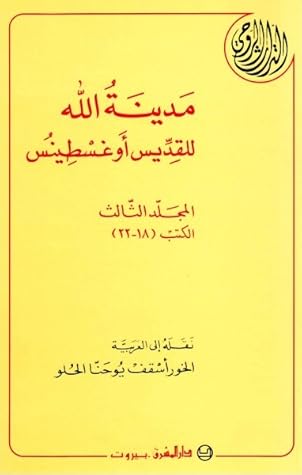
في هذا الكتاب يقدّم لنا المؤلِّف عدّة مفاجآت: إلى جانب التاريخ المقارن بين التاريخ المسيحيّ والتاريخ المدنيّ أو العالميّ، يقيم أوغسطينس، من جديد، مقاماً للأنبياء الذين يهمّه أمرهم، بقدر ما يبشّرون بأسرار المسيح وكنيسته. ويعطي مجالاً للفلاسفة اليونانيّين: مثلاً بين الحكماء السبعة، في التقليد الأغريقيّ، والأنبياء، مقارنةٌ ورهان على من يحقّ لهم أن يعلّموا الناس، وينهيه لمصلحة الأنبياء، وبخاصّة، لأنّ أقوال الأنبياء نقلت إلى اللغة اليونانيّة في (السبعون) La Septante.
في الفصول الأخيرة من هذا الكتاب، يبرز الكاتب، دور الكنيسة في نصٍّ طافح بالأمل والرجاء، فيرى تحقيق النبوءات التي تحدّث عنها، سابقاً، بواسطة الكنائس التي تمتدّ في العالم كلّه، وتشتُّت الشعب اليهوديّ في العالم كلّه يهيّئ انتشار الكنيسة ويشهد لمصلحتها.






















Aurelius Augustinus - more commonly "St. Augustine of Hippo," or simply "Augustine" - was a philosopher and theologian, and one of the most important figures in the development of Western Christianity. He framed the concepts of original sin and just war. Augustine was one of the most prolific Latin authors in terms of surviving works, and the list of his works consists of more than a hundred separate titles.
Augustine took the view that the Biblical text should not be interpreted literally if it contradicts what we know from science and our God-given reason. Many Protestants, especially Calvinists, consider him to be one of the theological fathers of Reformation teaching on salvation and divine grace.
... Show more