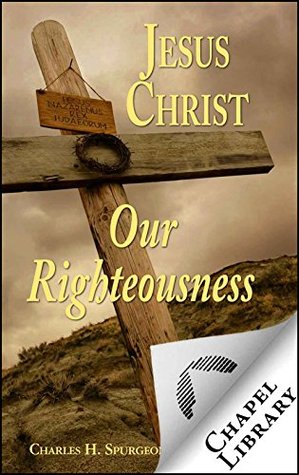
Another quality eBook from Chapel Library.
“This is his name whereby he shall be called, The Lord our Righteousness.”
—Jeremiah 23:6
Man by the fall sustained an infinite loss in the matter of righteousness. He suffered the loss of a righteous nature, and then a two-fold loss of legal righteousness in the sight of God. Man sinned; he was therefore no longer innocent of transgression. Man did not keep the command; he therefore was guilty of the sin of omission. In that which he committed, and in that which he omitted, his original character for uprightness was completely wrecked.
Jesus Christ came to undo the mischief of the fall for His people. So far as their sin concerned their breach of the command, that He has removed by His precious blood. His agony and bloody sweat have for ever taken away the consequences of sin from believers, seeing Christ did by His one sacrifice bear the penalty of that sin in His flesh. He, His own self, bare our sins in His own body on the tree…






















C.H. Spurgeon (1834 - 1892)
Spurgeon quickly became known as one of the most influential preachers of his time. Well known for his biblical powerful expositions of scripture and oratory ability. In modern evangelical circles he is stated to be the "Prince of Preachers." He pastored the Metropolitan Tabernacle in downtown London, England.His church was part of a particular baptist church movement and they defended and preached Christ and Him crucified and the purity of the Gospel message. Spurgeon never gave altar calls but always extended the invitation to come to Christ. He was a faithful minister in his time that glorified God and brought many to the living Christ.
Charles Haddon Spurgeon was England's best-known preacher for most of the second half of the nineteenth century. In 1854, just four years after his conversion, Spurgeon, then only 20, became pastor of London's famed New Park Street Church (formerly pastored by the famous Baptist theologian John Gill).
The congregation quickly outgrew their building, moved to Exeter Hall, then to Surrey Music Hall. In these venues Spurgeon frequently preached to audiences numbering more than 10,000 - all in the days before electronic amplification.
In 1861 the congregation moved permanently to the new Metropolitan Tabernacle.
... Show more