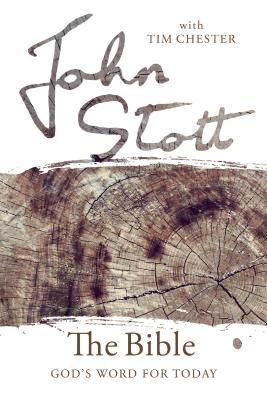
How can Christians effectively engage today's world while staying true to Scripture?How can Christians effectively engage today's world while staying true to Scripture? Calling us to listen well to both the Word and the world, John Stott shows how Christianity can preserve its authentic identity andand remain relevant to current realities. With the God's Word for Today series, pastor Tim Chester has updated Stott's classic book The Contemporary ChristianThe Contemporary Christian and made it accessible to new generations of readers. Unless Scripture is widely respected and its teaching followed, there is little hope for the church to be renewed or to influence the surrounding culture for good. In The BibleThe Bible, Stott explains how Christians can continue standing firmly on the Word, respond with obedience, and interpret the text faithfully in our own cultural contexts. He also paints a picture of authentic biblical preaching, in which both preacher and hearers listen for and respond to the voice of God. With pastoral wisdom and clear biblical exposition, Stott helps readers understand the central role of the Word of God in the church and the individual lives of all followers of Jesus.






















John Robert Walmsley Stott is a British Christian leader and Anglican clergyman who is noted as a leader of the worldwide evangelical movement. He is famous as one of the principal authors of the Lausanne Covenant in 1974.
Stott was ordained in 1945 and went on to become a curate at All Souls Church, Langham Place (1945-1950) then rector (1950-75). This was the church in which he had grown up, and in which he has spent almost all of his life, aside from a few years spent in Cambridge.
Stott played a central role at two landmark events in the history of British evangelicalism. He was chairing the National Assembly of Evangelicals in 1966, a convention organised by the Evangelical Alliance, when Martyn Lloyd-Jones made an unexpected call for evangelicals to unite together as evangelicals and no longer within their 'mixed' denominations.
... Show more