A one-of-a-kind learning experience with the potential to transform you…and your worshiping community, Webber calls you to explore, restore, renew, question, think, serve, love, pray…and live a renewed life of worship in Christ.
Robert Webber serves as a friendly, knowledgeable and engaging tour guide through theology, the arts, culture, communication, ancient-future worship, history, and so much more in this pithy and engaging series of essays on worship.
Webber encourages us to learn about God in every way, and by all means, gently, yet firmly reminding us that Worship is more than music, more than a well organized liturgy, more than a good sermon: “Worship is the gospel in motion. It proclaims and enacts the victory of Christ over the powers of evil; the Holy Spirit delivers the saving and healing power of Jesus Christ; and we in turn extol and glorify God as we receive (present tense) the continuous gift of God's healing presence in worship.”
Worship Leaders are the avatars of new music. Yet, worship is more than simply creating, producing and singing new music, it is connecting with the New Song of heaven, with Christ himself through all available means: silence, song and symbol; Scripture, preaching and prophecy; communion and community…and beyond. Bob Webber brings clarity to the difference between new music and New Song and ignites the renewal we seek in today’s Church.

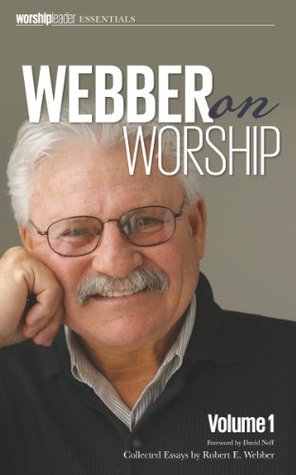





















Robert E. Webber (1933 - 2007)
was an American theologian known for his work on worship and the early church. He played a key role in the Convergence Movement, a move among evangelical and charismatic churches in the United States to blend charismatic worship with liturgies from the Book of Common Prayer and other liturgical sources. Webber began teaching theology at Wheaton College in 1968. Existentialism was the primary focus of Webber's research and lectures during his first years at Wheaton. However, he soon shifted his focus to the early church. In 1978 he wrote Common Roots, a book that examined the impact of 2nd-century Christianity on the modern church.In 1985 Webber wrote Evangelicals on the Canterbury Trail: Why Evangelicals Are Attracted to the Liturgical Church, in which he described the reasons behind his own gradual shift away from his fundamentalist/evangelical background toward the Anglican tradition. Webber faced an enormous amount of criticism from evangelicals in response to this book. Nevertheless, his work was highly influential, and his ideas grew in popularity in evangelical circles. During the latter half of his life, Webber took a special interest in Christian worship practices. He wrote more than 40 books on the topic of worship, focusing on how the worship practices of the ancient church have value for the church in the 21st century postmodern era. Among his books are Ancient-Future Worship, Ancient-Future Faith, Ancient-Future Time, Ancient-Future Evangelism, The Younger Evangelicals, and The Divine Embrace.
... Show more