
- Bible
- Read the Bible
- Bible Versions
- Verse of the Day
- Reading Plans
- Verses by Topic
- Books of the Bible
- Bible Images
- Study
- Commentaries
- Concordances
- Dictionaries
- Encyclopedias
- Sermons
- Bible Atlas & Maps
- BP Wiki
- Devotionals
- Today's Devotionals
- Light of the World
- All Devotionals
- Inspirational Quotes
- More
- Picture Quotes
- Videos
- Inspirational
- Bible Study
- What The Bible Says
- Bible Q&As
- Daily Bread
- Bible by Genre
- Bible Stories
- Random Bible Verse
- Community
- Store
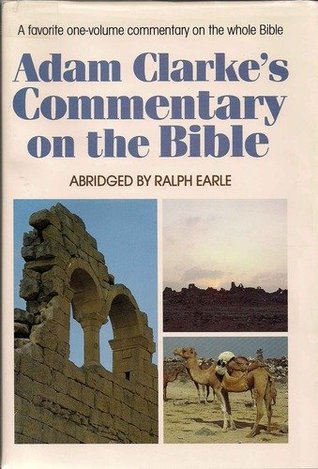
Adam Clarke's Commentary on the Entire Bible
by Adam Clarke
Adam Clarke's monumental commentary on the Bible has been a standard reference work for over a century and has been widely used by men of all evangelical denominations. Its thorough and authoritative scholarship has been recognized by Arminians and Calvinists alike, and has won for the author the accolade, "Prince of Commentators."
The eminent British scholar began his work on the commentary with the New Testament on May 1, 1798. This section was first published in 1810. Though hampered by failing eyesight, Clarke continued with his work on the Old Testament, which he completed March 28, 1825. The entire commentary in eight volumes was published the following year.
Clarke spent the rest of his life in revising his original work. At the close of Revelation he inscribed these words: "Finished correcting for a new edition, Jan. 9, 1832." Only a few months later he passed away.
In this abridgment of the standard six-volume work, the actual words of Adam Clarke have not been changed except to modernize the phrasing where appropriate. In a very few instances a word or so has been inserted in brackets to complete the sense when there was deletion of original text. Thus the great scholar is allowed to speak for himself. Only dated or extraneous material has been omitted. There was also the elimination of the scripture text itself.
The eminent British scholar began his work on the commentary with the New Testament on May 1, 1798. This section was first published in 1810. Though hampered by failing eyesight, Clarke continued with his work on the Old Testament, which he completed March 28, 1825. The entire commentary in eight volumes was published the following year.
Clarke spent the rest of his life in revising his original work. At the close of Revelation he inscribed these words: "Finished correcting for a new edition, Jan. 9, 1832." Only a few months later he passed away.
In this abridgment of the standard six-volume work, the actual words of Adam Clarke have not been changed except to modernize the phrasing where appropriate. In a very few instances a word or so has been inserted in brackets to complete the sense when there was deletion of original text. Thus the great scholar is allowed to speak for himself. Only dated or extraneous material has been omitted. There was also the elimination of the scripture text itself.
BUY NOW
Hardcover, 1356 pages
Published June 1st 1967 by Beacon Hill Press (first published January 1st 1967)
Subscribe
Get Bible verse every day in your inbox
Read on Mobile



Group of Brands


















© 2025 Bibleportal.com All rights reserved.
Adam Clarke (1762 - 1832)
Was a British Methodist theologian and Biblical scholar. He is chiefly remembered for writing a commentary on the Bible which took him 40 years to complete and which was a primary Methodist theological resource for two centuries. Contained in 6 volumes, consisting of nearly 1,000 pages each, it was considered the most comprehensive commentary on the Bible ever prepared by one man.As a theologian, Clarke reinforced the teachings of Methodist founder John Wesley. He taught that the Bible provides a complete interpretation of God's nature and will. He considered Scripture itself a miracle of God's grace that "takes away the veil of darkness and ignorance." With such an understanding, Clarke was first and foremost a Biblical theologian, often uneasy with purely systematic approaches to theology.
Clarke is chiefly remembered for writing a commentary on the Bible which took him forty years to complete and which was a primary Methodist theological resource for two centuries.
As a theologian, Clarke reinforced the teachings of Methodist founder John Wesley. He taught that the Bible provides a complete interpretation of God's nature and will. He considered Scripture itself a miracle of God's grace that "takes away the veil of darkness and ignorance." With such an understanding, Clarke was first and foremost a Biblical theologian, often uneasy with purely systematic approaches to theology.
Clarke followed Wesley in opposing a Calvinistic scheme of salvation, preferring instead the Wesleyan-Arminian positions regarding predestination, prevenient grace, the offer of justification from God to all persons, entire sanctification, and assurance of salvation. Perhaps his most controversial position regarded the eternal Sonship of Jesus. Clarke did not believe it Biblically faithful to affirm this doctrine, maintaining that prior to the Incarnation, Jesus was "unoriginated." Otherwise, according to Clarke, he would be subordinate to God and therefore not fully divine. This was important to Clarke because he felt that Jesus' divinity was crucial to understanding the atonement.
Clarke's view was opposed by many Methodists, notably Richard Watson. Watson and his allies argued that Clarke's position jeopardized the integrity of the doctrine of the trinity. Clarke's view was rejected by Methodism in favor of the traditional, orthodox perspective.
... Show more