Of all the 'Founding Fathers' of the United States of America, Benjamin Franklin left the greatest literary legacy behind him. A noted polymath, as well as a prolific author and printer, Franklin's works span an astonishing array of genres - from his groundbreaking scientific work on electricity, to his maxims and aphorisms on how to live a good and meaningful life.
This vast anthology contains over 85 individual works by Benjamin Franklin, including his famous "Autobiography", the "Memoirs", and various other timeless classics such as "The Way To Wealth", "The Silence Doogood Letters", and many shorter works on a selection of political and scientific subjects. They have been separated into the chapters listed below, each containing numerous texts.
The Autobiography
The Memoirs of Benjamin Franklin
The Silence Dogood Letters
Letters and Correspondence
Philosophical Subjects
Speeches
Essays
Published Works
This ebook contains color illustrations and an interactive table of contents for ease of navigation.

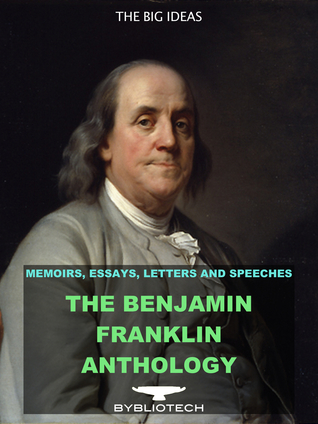





















Benjamin Franklin was an important conservative figure in the American Restoration Movement, especially as the leading antebellum conservative in the northern United States branch of the movement. He is notable as the early and lifelong mentor of Daniel Sommer, whose support of the 1889 Sand Creek Declaration set in motion events which led to the formal division of the Churches of Christ from the Disciples of Christ in 1906.
According to contemporary biographies "His early religious training was according to the Methodist faith, though he never belonged to any church until he united with the Disciples."
In 1856, Franklin began to publish the ultra-conservative American Christian Review, which he published until his death in 1878. Its influence, initially considerable, was said to have waned following the American Civil War. Franklin undertook a rigorous program of publication correspondence, and traveling lectures which took him to "many" U. S. states and Canada.
Franklin's last move was to Anderson, Indiana, where he lived from 1864 until his death.
... Show more