
Subscribe
Verse of the Day
Get a Bible verse delivered to your inbox every day!
Daily Devotional
Subscribe to receive daily devotionals to help you grow in faith and walk closer with God.
Read on Mobile



Most Searched
Group of Brands


















© 2026 Bibleportal.com All rights reserved.
Among the contemporaries of Descartes none displayed greater natural genius than Pascal, but his mathematical reputation rests more on what he might have done than on what he actually effected, as during a considerable part of his life he deemed it his duty to devote his whole time to religious exercises.
At 16, Pascal began designing a calculating machine, which he finally perfected when he was thirty, the pascaline, a beautiful handcrafted box about fourteen by five by three inches. The first accurate mechanical calculator was born.
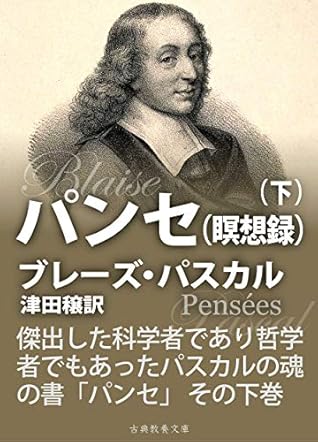
Pascal was dismayed and disgusted by society's reactions to his machine and completely renounced his interest in science an mathematics, devoting the rest of his life to God. He is best known for his collection of spiritual essays, Les Pensees.
Ironically, Pascal, who was a genius by any measure, with one of the finest brains of all time, died of a brain hemorrhage at the age of 39.
Among the contemporaries of Descartes none displayed greater natural genius than Pascal, but his mathematical reputation rests more on what he might have done than on what he actually effected, as during a considerable part of his life he deemed it his duty to devote his whole time to religious exercises.
He was a child prodigy who was educated by his father, a Tax Collector in Rouen. Pascal's earliest work was in the natural and applied sciences where he made important contributions to the study of fluids, and clarified the concepts of pressure and vacuum by generalizing the work of Evangelista Torricelli.
In 1646, he and his sister Jacqueline identified with the religious movement within Catholicism known by its detractors as Jansenism. Following a mystical experience in late 1654, he had his "second conversion", abandoned his scientific work, and devoted himself to philosophy and theology. His two most famous works date from this period: the Lettres provinciales and the Pensees.
In honor of his scientific contributions, the name Pascal has been given to the SI unit of pressure, to a programming language, and Pascal's law (an important principle of hydrostatics), and as mentioned above, Pascal's triangle and Pascal's wager still bear his name.
... Show more