
- Bible
- Read the Bible
- Bible Versions
- Verse of the Day
- Reading Plans
- Verses by Topic
- Books of the Bible
- Bible Images
- Study
- Commentaries
- Concordances
- Dictionaries
- Encyclopedias
- Sermons
- Bible Atlas & Maps
- BP Wiki
- Devotionals
- Today's Devotionals
- All Devotionals
- Inspirational Quotes
- More
- Picture Quotes
- Videos
- Inspirational
- Bible Study
- What The Bible Says
- Bible Q&As
- Daily Bread
- Bible by Genre
- Bible Stories
- Random Bible Verse
- Community
- Store
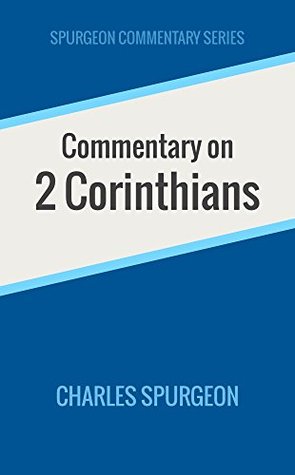
Commentary on 2 Corinthians
by C.H. Spurgeon
Baptist pastor Charles Haddon Spurgeon is remembered today as the Prince of Preachers. But in addition to his sermons, he regularly reading a Bible passage before his message and gave a verse-by-verse exposition, rich in gospel insight and wisdom for the Christian life.
===
Sample: 2 Corinthians 4
===
The apostle is writing concerning a certain collection which was being made for the poor saints of Jerusalem. It was from Jerusalem that the gospel had spread into Greece, and, therefore, those who had received spiritual things from the poor Jews at Jerusalem were bound by every tie of holy brotherhood to remember their benefactors in the time of famine. The apostle stirs up the Corinthian Church about this contribution.
1. Moreover, brethren, we do you to wit of the grace of God bestowed on the churches of Macedonia;
That is a quaint old expression, “We do you to wit.” It means, “We would let you know, we would tell you, we would inform you of what the Macedonia saints have done;” and he does not at first say, “We would let you know of the liberality which the Macedonia churches have shown;” but, “of the grace of God bestowed on the churches of Macedonia.” What we do for God, God’s grace has first bestowed upon us. If there be any virtue, if there be any zeal, if there be any faith, if there be any love, it is the result of the grace of God bestowed upon us. Always look upon things in that light, for then you will not grow proud. Give what you may, and do what you may, you may regard it as the elect of the grace of God bestowed upon you.
2. How that in a great trial of affliction the abundance of the joy and their deep poverty abounded unto the riches of their liberality.
It is good to stir one Christian up by the example of another, and Paul excites those at Corinth by the example of the churches in Macedonia—especially, no doubt, the church at Philippi. They were very poor people in Macedonia but they loved God so much that they abounded in liberality. Considering how little they possessed, and how much they were tried and persecuted, they had been wonderfully generous.
3. For to their power, I bear record, yea, and beyond their power they were willing of themselves;
They were willing to give even beyond their power. They gave up to the full limit of what they could do, and then wished that they could give even more. And notice that “they were willing of themselves.” Paul had not to stir them up to do this, nor even to mention the subject to them: “They were willing of themselves.” That is the best kind of service to God which a man ever does, that in which he is willing of himself. It is the slave who is flogged to his work, the child is willing of himself. Oh, that on the altar of God, you and I may gladly place our offerings because we have been made willing of ourselves!
4. Praying us with much intreaty that we would receive the gift, and take upon us the fellowship of the ministering to the saints.
Paul did not have to beg them to give, but they begged him to take their gifts; and when the saints of God are in a right state, they come forward voluntarily, as Paul says that these Macedonian Christians did, “praying us with much intreaty that we would receive the gift, and take upon us the fellowship of the ministering to the saints” by going to Jerusalem and giving away this money where it was needed.
===
Sample: 2 Corinthians 4
===
The apostle is writing concerning a certain collection which was being made for the poor saints of Jerusalem. It was from Jerusalem that the gospel had spread into Greece, and, therefore, those who had received spiritual things from the poor Jews at Jerusalem were bound by every tie of holy brotherhood to remember their benefactors in the time of famine. The apostle stirs up the Corinthian Church about this contribution.
1. Moreover, brethren, we do you to wit of the grace of God bestowed on the churches of Macedonia;
That is a quaint old expression, “We do you to wit.” It means, “We would let you know, we would tell you, we would inform you of what the Macedonia saints have done;” and he does not at first say, “We would let you know of the liberality which the Macedonia churches have shown;” but, “of the grace of God bestowed on the churches of Macedonia.” What we do for God, God’s grace has first bestowed upon us. If there be any virtue, if there be any zeal, if there be any faith, if there be any love, it is the result of the grace of God bestowed upon us. Always look upon things in that light, for then you will not grow proud. Give what you may, and do what you may, you may regard it as the elect of the grace of God bestowed upon you.
2. How that in a great trial of affliction the abundance of the joy and their deep poverty abounded unto the riches of their liberality.
It is good to stir one Christian up by the example of another, and Paul excites those at Corinth by the example of the churches in Macedonia—especially, no doubt, the church at Philippi. They were very poor people in Macedonia but they loved God so much that they abounded in liberality. Considering how little they possessed, and how much they were tried and persecuted, they had been wonderfully generous.
3. For to their power, I bear record, yea, and beyond their power they were willing of themselves;
They were willing to give even beyond their power. They gave up to the full limit of what they could do, and then wished that they could give even more. And notice that “they were willing of themselves.” Paul had not to stir them up to do this, nor even to mention the subject to them: “They were willing of themselves.” That is the best kind of service to God which a man ever does, that in which he is willing of himself. It is the slave who is flogged to his work, the child is willing of himself. Oh, that on the altar of God, you and I may gladly place our offerings because we have been made willing of ourselves!
4. Praying us with much intreaty that we would receive the gift, and take upon us the fellowship of the ministering to the saints.
Paul did not have to beg them to give, but they begged him to take their gifts; and when the saints of God are in a right state, they come forward voluntarily, as Paul says that these Macedonian Christians did, “praying us with much intreaty that we would receive the gift, and take upon us the fellowship of the ministering to the saints” by going to Jerusalem and giving away this money where it was needed.
BUY NOW
Kindle Edition, 79 pages
Published June 18th 2014 by Titus Books
Subscribe
Verse of the Day
Get a Bible verse delivered to your inbox every day!
Daily Devotional
Subscribe to receive daily devotionals to help you grow in faith and walk closer with God.
Read on Mobile



Group of Brands


















© 2026 Bibleportal.com All rights reserved.
C.H. Spurgeon (1834 - 1892)
Spurgeon quickly became known as one of the most influential preachers of his time. Well known for his biblical powerful expositions of scripture and oratory ability. In modern evangelical circles he is stated to be the "Prince of Preachers." He pastored the Metropolitan Tabernacle in downtown London, England.His church was part of a particular baptist church movement and they defended and preached Christ and Him crucified and the purity of the Gospel message. Spurgeon never gave altar calls but always extended the invitation to come to Christ. He was a faithful minister in his time that glorified God and brought many to the living Christ.
Charles Haddon Spurgeon was England's best-known preacher for most of the second half of the nineteenth century. In 1854, just four years after his conversion, Spurgeon, then only 20, became pastor of London's famed New Park Street Church (formerly pastored by the famous Baptist theologian John Gill).
The congregation quickly outgrew their building, moved to Exeter Hall, then to Surrey Music Hall. In these venues Spurgeon frequently preached to audiences numbering more than 10,000 - all in the days before electronic amplification.
In 1861 the congregation moved permanently to the new Metropolitan Tabernacle.
... Show more