Observe here a type of the condition of the natural and the spiritual man! In this world in temporals and in all other respects the merely carnal man has to be his own providence, and to look to himself for all his needs. Hence his cares are always many, and frequently they become so heavy that they drive him to desperation. He lives a life of care, anxiety, sorrow, fretfulness and disappointment. He dwells in Egypt, and he knows that there is no joy, or comfort, or provision if it does not wear out his soul in winning it. But the spiritual man dwells in another country! His faith makes him a citizen of another land. It is true he endures the same toils, and experiences the same afflictions as the ungodly, but they deal with him after another fashion, for they come as a gracious Father's appointments and they go at the bidding of loving wisdom.

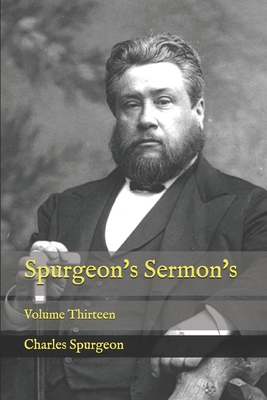





















C.H. Spurgeon (1834 - 1892)
Spurgeon quickly became known as one of the most influential preachers of his time. Well known for his biblical powerful expositions of scripture and oratory ability. In modern evangelical circles he is stated to be the "Prince of Preachers." He pastored the Metropolitan Tabernacle in downtown London, England.His church was part of a particular baptist church movement and they defended and preached Christ and Him crucified and the purity of the Gospel message. Spurgeon never gave altar calls but always extended the invitation to come to Christ. He was a faithful minister in his time that glorified God and brought many to the living Christ.
Charles Haddon Spurgeon was England's best-known preacher for most of the second half of the nineteenth century. In 1854, just four years after his conversion, Spurgeon, then only 20, became pastor of London's famed New Park Street Church (formerly pastored by the famous Baptist theologian John Gill).
The congregation quickly outgrew their building, moved to Exeter Hall, then to Surrey Music Hall. In these venues Spurgeon frequently preached to audiences numbering more than 10,000 - all in the days before electronic amplification.
In 1861 the congregation moved permanently to the new Metropolitan Tabernacle.
... Show more