
- Bible
- Read the Bible
- Bible Versions
- Verse of the Day
- Reading Plans
- Verses by Topic
- Books of the Bible
- Bible Images
- Study
- Commentaries
- Concordances
- Dictionaries
- Encyclopedias
- Sermons
- Bible Atlas & Maps
- BP Wiki
- Devotionals
- Today's Devotionals
- All Devotionals
- Inspirational Quotes
- More
- Picture Quotes
- Videos
- Inspirational
- Bible Study
- What The Bible Says
- Bible Q&As
- Daily Bread
- Bible by Genre
- Bible Stories
- Random Bible Verse
- Community
- Store
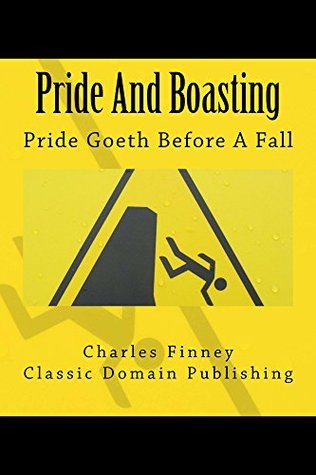
Pride And Boasting
1. It renders men in a great measure blind to their own faults. The man of a proud heart will not see his own faults. He has no desire to see them. He would sooner see anything else in the world than see the bad side of his own character, and of course he takes every precaution to avoid the honest view of himself. He has no intention or even desire to find his own proper level in society, but tries to deceive both himself and others. He would fain imagine that he is vastly better than he really is, and make everybody else believe it if he can. Hence he will overlook his own faults either wholly, or at least as far as he can, and would be glad to make others do the same. This is one of the workings of a proud heart.
1. It renders men in a great measure blind to their own faults. The man of a proud heart will not see his own faults. He has no desire to see them. He would sooner see anything else in the world than see the bad side of his own character, and of course he takes every precaution to avoid the honest view of himself. He has no intention or even desire to find his own proper level in society, but tries to deceive both himself and others. He would fain imagine that he is vastly better than he really is, and make everybody else believe it if he can. Hence he will overlook his own faults either wholly, or at least as far as he can, and would be glad to make others do the same. This is one of the workings of a proud heart.
2. It leads men to excuse, or at least palliate their own faults. If a proud man can no longer cover his own faults, this will be his next resort. When he can not deny that many things in his conduct are palpably wrong objectively considered, he will yet maintain that under his very peculiar circumstance, they are nearly or quite right. They will at least admit of much palliation; so he sets himself most diligently to this labor. He will be that last man to come down to a candid and through examination of his own faults. Ah, he does not relish this honest-hearted work.
2. It leads men to excuse, or at least palliate their own faults. If a proud man can no longer cover his own faults, this will be his next resort. When he can not deny that many things in his conduct are palpably wrong objectively considered, he will yet maintain that under his very peculiar circumstance, they are nearly or quite right. They will at least admit of much palliation; so he sets himself most diligently to this labor. He will be that last man to come down to a candid and through examination of his own faults. Ah, he does not relish this honest-hearted work.
3. It leads men to imagine that they have virtues which they have not. This is often manifest in their egotistical manner of speaking. In their common conversation they assume that they possess virtues which nobody ever saw them exhibit, or ever dreamed of attributing to them. Whatever in their own conduct has the remotest appearance of virtue, they are sure to drag into their service to prove themselves the best of men.
3. It leads men to imagine that they have virtues which they have not. This is often manifest in their egotistical manner of speaking. In their common conversation they assume that they possess virtues which nobody ever saw them exhibit, or ever dreamed of attributing to them. Whatever in their own conduct has the remotest appearance of virtue, they are sure to drag into their service to prove themselves the best of men.
BUY NOW
Published April 27th 2016
Verse of the Day
Get a Bible verse delivered to your inbox every day!
Daily Devotional
Read on Mobile



Group of Brands


















Charles Grandison Finney was a Presbyterian minister who became an important figure in the Second Great Awakening. His influence during this period was enough that he has been called "The Father of Modern Revivalism".
In addition to becoming a popular Christian evangelist, Finney was involved with the abolitionist movement and frequently denounced slavery from the pulpit.
Finney was known for his innovations in preaching and religious meetings, such as having women pray in public meetings of mixed gender, development of the "anxious seat" (a place where those considering becoming Christians could come to receive prayer), and public censure of individuals by name in sermons and prayers. He was also known for his use of extemporaneous preaching.
No man in his day and generation was more signally blessed of God in winning souls than Charles G. Finney. Thousands and tens of thousands in this and other lands were brought to Christ through his instrumentality. It is hoped that this brief study of his life and labors may stimulate others to renewed effort in seeking to bring men to a saving knowledge of Him who is our Redeemer and Lord.
... Show more