
- Bible
- Read the Bible
- Bible Versions
- Verse of the Day
- Reading Plans
- Verses by Topic
- Books of the Bible
- Bible Images
- Study
- Commentaries
- Concordances
- Dictionaries
- Encyclopedias
- Sermons
- Bible Atlas & Maps
- BP Wiki
- Devotionals
- Today's Devotionals
- Light of the World
- All Devotionals
- Inspirational Quotes
- More
- Picture Quotes
- Videos
- Inspirational
- Bible Study
- What The Bible Says
- Bible Q&As
- Daily Bread
- Bible by Genre
- Bible Stories
- Random Bible Verse
- Community
- Store
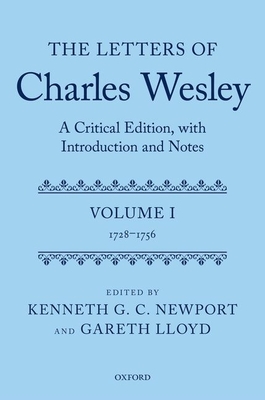
The Letters of Charles Wesley: A Critical Edition, with Introduction and Notes: Volume 1 (1728-1756)
by Charles Wesley
This first volume of a two volume edition contains letters written between 1727 and 1756 by the famous hymn writer, poet, and co-founder of Methodism, Charles Wesley (1707-1788), Volume 2 will contain letters written between 1757 and 1788. The edition brings together texts which are located in
libraries and archives from across the globe and here presents them as a complete collection for the first time - many of the letters have never been previously published. The appended notes help the reader locate the letters in their proper historical and literary context and provide full
information regarding the location of the original source and, where possible, something of its provenance.
These texts provide an intimate glimpse into the world of early Methodism and Charles' own struggles and triumphs as a central figure within it. They collectively document the story of Charles Wesley's early experiences as he sought to find his own place in Methodism and, of key importance for
Charles, Methodism's place in the wider purposes of God. Here are letters of a theological kind, letters that reflect on his experiences as an itinerant preacher, letters that show something of his rather unsettled personality and letters that relate to his own personal and domestic circumstances.
Here we see something of the inner workings of a nascent religious group. These are not sanitised accounts written by those looking back, but first-hand accounts written from the heart of a lived experience.
While this book will naturally appeal to those who have a specialist interest in the early history of Methodism, for others there is much to be gained from the picture it gives of the wider eighteenth-century world in which Charles and his co-religionists worked and lived.
libraries and archives from across the globe and here presents them as a complete collection for the first time - many of the letters have never been previously published. The appended notes help the reader locate the letters in their proper historical and literary context and provide full
information regarding the location of the original source and, where possible, something of its provenance.
These texts provide an intimate glimpse into the world of early Methodism and Charles' own struggles and triumphs as a central figure within it. They collectively document the story of Charles Wesley's early experiences as he sought to find his own place in Methodism and, of key importance for
Charles, Methodism's place in the wider purposes of God. Here are letters of a theological kind, letters that reflect on his experiences as an itinerant preacher, letters that show something of his rather unsettled personality and letters that relate to his own personal and domestic circumstances.
Here we see something of the inner workings of a nascent religious group. These are not sanitised accounts written by those looking back, but first-hand accounts written from the heart of a lived experience.
While this book will naturally appeal to those who have a specialist interest in the early history of Methodism, for others there is much to be gained from the picture it gives of the wider eighteenth-century world in which Charles and his co-religionists worked and lived.
BUY NOW
Hardcover, 512 pages
Published June 10th 2013 by Oxford University Press, USA (first published April 1st 2013)
Subscribe
Get Bible verse every day in your inbox
Read on Mobile



Group of Brands


















© 2025 Bibleportal.com All rights reserved.
Charles Wesley (1707 - 1788)
Was an English hymn writer, poet, and preacher who wrote over 5,500 hymns including And Can It Be That I Should Gain?, O for a Thousand Tongues to Sing, and Hark! the Herald Angels Sing. A leader of the Methodist movement with his brother John Wesley.Wesley's conversion had a clear impact on his doctrine, especially the doctrine of the Holy Spirit. The change in doctrine can be seen in his sermons after 1738, but is most notable in his hymns written after 1738. From Charles published work “Hymns and Prayers to the Trinity” and in Hymn number 62 he writes “The Holy Ghost in part we know, For with us He resides, Our whole of good to Him we owe, Whom by His grace he guides, He doth our virtuous thoughts inspire, The evil he averts, And every seed of good desire, He planted in our hearts.”
Charles Wesley is best known for his prolific hymn writing, his poetry and for being one of the founding fathers of the Methodist denomination of Christianity. He wrote more than six thousand hymns, of which a handful remain in modern day worship.
John and Charles Wesley's Methodist style was to take the word of God to people, wherever they were, rather than try to get them into a church to hear it. The numbers of converts grew and were gathered into 'societies' to nurture their faith.
With their helpers they began their travelling ministry, covering thousands of miles on horseback over the years throughout England and in Scotland, Wales and Ireland, with London, Bristol, and Newcastle being the main centres of their work.
The high-intensity preaching took its toll on Charles; he suffered from nervous exhaustion and severe depression. He was 80 when he died on 29th March 1788. With his famous carol Hark the Herald Angels Sing heard everywhere from cathedrals to supermarkets, the legacy of Charles Wesley is likely to continue for years to come.
Charles Wesley was an English leader of the Methodist movement, son of Anglican clergyman and poet Samuel Wesley, the younger brother of Anglican clergyman John Wesley and Anglican clergyman Samuel Wesley (the Younger), and father of musician Samuel Wesley, and grandfather of musician Samuel Sebastian Wesley.
Despite their closeness, Charles and his brother John did not always agree on questions relating to their beliefs. In particular, Charles was strongly opposed to the idea of a breach with the Church of England into which they had been ordained. Charles Wesley is chiefly remembered for the many hymns he wrote. He founded Wesley Chapel in the village of Brayton, which is just south of Selby. His house, located nearby, can still be visited today.
... Show more