Between 1872 and 1900 Miss Nightingale used, when she was able, to send an annual letter or address to the pro�bationer-nurses of the Nightingale School at St. Thomas' Hospital, "and the nurses who have been trained there." These addresses were usually read aloud by Sir Harry Ver-ney, the chairman of the Nightingale Fund, in the presence of the probationers and nurses, and a printed copy or a lith�ographed facsimile of the manuscript was given to each of the nurses present, "for private use only." A few also were written for the Nightingale Nurses serving in Edinburgh. The letters were not meant for publication, and indeed are hardly suitable to be printed as a whole as there is nat�urally a good deal of repetition in them. Since Miss Night�ingale's death, however, heads of nursing institutions and others have asked for copies of the addresses to be read or given to nurses, and her family hope that the publication of a selection may do something to carry further the intention with which they were originally written.

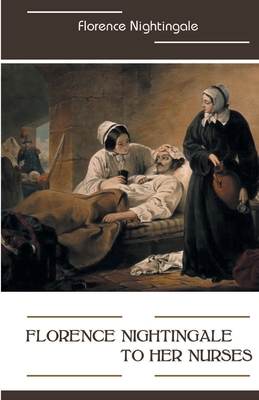





















1820-1910
Florence Nightingale who came to be known as "The Lady with the Lamp", was a pioneering English nurse, writer and noted statistician.
Inspired by what she took as a Christian divine calling, experienced first in 1837 at Embley Park and later throughout her life, Florence announced her decision to enter nursing in 1845. Nightingale worked hard to educate herself in the art and science of nursing, in spite of opposition from her family and the restrictive societal code for affluent young English women.
She cared for people in poverty. In December 1844, she became the leading advocate for improved medical care in the infirmarie. This led to her active role in the reform of the Poor Laws, extending far beyond the provision of medical care.
... Show more