"Surely if we could but look down upon mankind with an all-surveying eye as the great God does, we should see a dreadful and universal spread of this vice of pride over all the race of man, and an infinite number of mischiefs derived from it, and diffused through kingdoms and churches, through all human societies and personal affairs. Pride was the ruin of angels; pride was the fall of man; 'Ye shall be as gods' was the great temptation, and the event is 'we are become like Devils.'" The great English hymnwriter Isaac Watts attacks the vice of pride and extols the virtue of humility, in frank and practical language that sounds as current today as when it was written more than 200 years ago. Language slightly updated for modern readers.

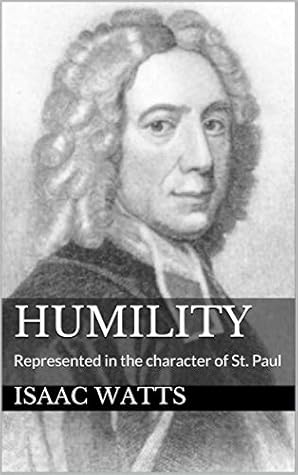





















Isaac Watts is recognised as the "Father of English Hymnody", as he was the first prolific and popular English hymnwriter, credited with some 750 hymns. Many of his hymns remain in active use today and have been translated into many languages.
His education led him to the pastorate of a large Independent Chapel in London, and he also found himself in the position of helping trainee preachers, despite poor health. Taking work as a private tutor, he lived with the non-conformist Hartopp family at Fleetwood House, Abney Park in Stoke Newington, and later in the household of Sir Thomas Abney and Lady Mary Abney at Theobalds, Cheshunt, in Hertfordshire, and at their second residence, Abney House, Stoke Newington.
Though a non-conformist, Sir Thomas practised occasional conformity to the Church of England as necessitated by his being Lord Mayor of London 1700-01. Likewise, Isaac Watts held religious opinions that were more non-denominational or ecumenical than was at that time common for a non-conformist, having a greater interest in promoting education and scholarship, than preaching for any particular ministry.
... Show more