
- Bible
- Read the Bible
- Bible Versions
- Verse of the Day
- Reading Plans
- Verses by Topic
- Books of the Bible
- Bible Images
- Study
- Commentaries
- Concordances
- Dictionaries
- Encyclopedias
- Sermons
- Bible Atlas & Maps
- BP Wiki
- Devotionals
- Today's Devotionals
- Light of the World
- All Devotionals
- Inspirational Quotes
- More
- Picture Quotes
- Videos
- Inspirational
- Bible Study
- What The Bible Says
- Bible Q&As
- Daily Bread
- Bible by Genre
- Bible Stories
- Random Bible Verse
- Community
- Store
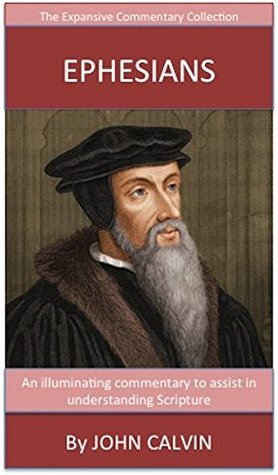
THE EXPANSIVE COMMENTARY COLLECTION is a new release of much loved and oft used commentaries.
Each commentary is beautifully formatted with every verse given an uncluttered presentation for ease of reference and use. We have taken great care to provide you with each individual commentary as it was intended and written by the original author.
Our commentaries are equipped with the very best active tables of contents that drill down from the main contents page to the individual Bible book, to the author, to the Bible book chapter and then to the very verse you are looking to study. These tables of contents have been designed for ease of use and to get you to the exact verse you are looking at.
In this volume we give you John Calvin’s commentary on Paul’s Epistle to the Ephesians.
One of the father’s of the Reformation, John Calvin, has been given a prominent place in today’s theology. Indeed his very name has been lent to a system of theology – Calvanism. Born in Noyon, France on 10th July 1509 he carried on the work of the Reformation, which had recently begun.
He had trained as a humanist lawyer and broke away from the Catholic Church around 1530. His new-found religion caused tension that led to him fleeing France, eventually settling in Geneva, Switzerland.
Calvin is a spiritual giant whose mind was exceptional in producing theological writing and sermons.
Reading Calvin today may be secondary to the impossibility of hearing him but there is no doubt that his words still carry the weight of Biblical truth.
As a commentary the value of John Calvin's contribution must not be underestimated. His writing is doctrinal but not dogmatic. He shines new light on various passages but all the time remaining true to the biblical meaning.
This work was translated by the Calvin Translation Society who published these works between 1846-51.
Each commentary is beautifully formatted with every verse given an uncluttered presentation for ease of reference and use. We have taken great care to provide you with each individual commentary as it was intended and written by the original author.
Our commentaries are equipped with the very best active tables of contents that drill down from the main contents page to the individual Bible book, to the author, to the Bible book chapter and then to the very verse you are looking to study. These tables of contents have been designed for ease of use and to get you to the exact verse you are looking at.
In this volume we give you John Calvin’s commentary on Paul’s Epistle to the Ephesians.
One of the father’s of the Reformation, John Calvin, has been given a prominent place in today’s theology. Indeed his very name has been lent to a system of theology – Calvanism. Born in Noyon, France on 10th July 1509 he carried on the work of the Reformation, which had recently begun.
He had trained as a humanist lawyer and broke away from the Catholic Church around 1530. His new-found religion caused tension that led to him fleeing France, eventually settling in Geneva, Switzerland.
Calvin is a spiritual giant whose mind was exceptional in producing theological writing and sermons.
Reading Calvin today may be secondary to the impossibility of hearing him but there is no doubt that his words still carry the weight of Biblical truth.
As a commentary the value of John Calvin's contribution must not be underestimated. His writing is doctrinal but not dogmatic. He shines new light on various passages but all the time remaining true to the biblical meaning.
This work was translated by the Calvin Translation Society who published these works between 1846-51.
BUY NOW
Kindle Edition, 130 pages
Published November 25th 2016
Subscribe
Get Bible verse every day in your inbox
Read on Mobile



Group of Brands


















© 2026 Bibleportal.com All rights reserved.
John Calvin (1509 - 1584)
Was an influential French theologian and pastor during the Protestant Reformation. He was a principal figure in the development of the system of Christian theology later called Calvinism. Originally trained as a humanist lawyer, he broke from the Roman Catholic Church around 1530. After religious tensions provoked a violent uprising against Protestants in France, Calvin fled to Basel, Switzerland, where he published the first edition of his seminal work The Institutes of the Christian Religion in 1536.Calvin's writing and preachings provided the seeds for the branch of theology that bears his name. The Reformed, Congregational, and Presbyterian churches, which look to Calvin as the chief expositor of their beliefs, have spread throughout the world.
John Calvin was an influential French theologian and pastor during the Protestant Reformation. He was a principal figure in the development of the system of Christian theology later called Calvinism. Originally trained as a humanist lawyer, he broke from the Roman Catholic Church around 1530. After religious tensions provoked a violent uprising against Protestants in France, Calvin fled to Basel, Switzerland, where in 1536 he published the first edition of his seminal work Institutes of the Christian Religion.
Calvin's writing and preaching provided the seeds for the branch of theology that bears his name. The Presbyterian and other Reformed churches, which look to Calvin as a chief expositor of their beliefs, have spread throughout the world. Calvin's thought exerted considerable influence over major religious figures and entire religious movements, such as Puritanism, and some have argued that his ideas have contributed to the rise of capitalism, individualism, and representative democracy in the West.
Founder of Calvinism. John Calvin, a French scholar who became a leading preacher and dominant force in the Reformation of the 16th Century, studied at the University of Paris and at the University of Orleans. He became dissatisfied with the teachings of the Roman Catholic Church and allied himself with the cause of the Protestant Reformation in 1532.
When the king of France decided to settle the religious question in his country in favor of the Catholics, Calvin fled to Geneva, Switzerland, where his writings and lectures made Geneva the Rome of Protestantism. His institutes of the Christian religion became the basis for the Presbyterian way of thought and church life. Calvinism is the main doctrine of the Presbyterian and Reformed Churches.
... Show more