
- Bible
- Read the Bible
- Bible Versions
- Verse of the Day
- Reading Plans
- Verses by Topic
- Books of the Bible
- Bible Images
- Study
- Commentaries
- Concordances
- Dictionaries
- Encyclopedias
- Sermons
- Bible Atlas & Maps
- BP Wiki
- Devotionals
- Today's Devotionals
- All Devotionals
- Inspirational Quotes
- More
- Picture Quotes
- Videos
- Inspirational
- Bible Study
- What The Bible Says
- Bible Q&As
- Daily Bread
- Bible by Genre
- Bible Stories
- Random Bible Verse
- Community
- Store
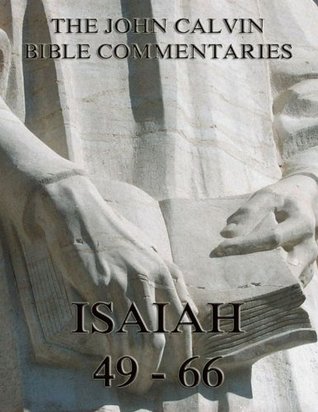
Commentaries on Isaiah 49–66: Extended Annotated Edition
by John Calvin
This is the extended and annotated edition including
* an extensive biographical annotation about the author and his life
Calvin produced commentaries on most of the books of the Bible. His commentaries cover the larger part of the Old Testament, and all of the new excepting Second and Third John and the Apocalypse. His commentaries and lectures stand in the front rank of Biblical interpretation.
All who take delight in the Holy Scriptures are familiarly acquainted with the writings of The Prophet Isaiah. Every variety of taste finds in them its appropriate gratification. Lofty conceptions, illustrated by splendid imagery, and clothed in language usually copious and flowing, some times abrupt, but always graceful, leave no room for hesitation to pronounce him, with Bishop Lowth, to be "the most sublime and elegant of the Prophets of the Old Testament." He is regarded with peculiar veneration as an honest, fearless, and able messenger of the Most High God, boldly reproving nobles and monarchs, denouncing the judgments of Heaven against all transgressors, and asserting the claims of the Divine law and government above all human authority. In his Prophecies he takes a wide range, surveys those nations which power or wealth or learning or commerce had raised to the highest celebrity in those remote times, and describes their rise and fall, and wonderful revolutions, so eagerly traced lay us in the page of history, as the execution of Jehovah's counsels, and the arrangements of unerring wisdom But chiefly does he pour out rich instruction concerning the Messiah, whose life and sufferings, and death and glorious reign, he delineates so faithfully, and with such thrilling interest, that he has obtained the appellation of "The Evangelical Prophet." To the devout reader there is added a still more powerful attraction in his seraphic piety, which, breathing throughout all his communications, and kindling a holy flame in the hearts of the children of God, attests the important fact, not only that in the visions of God he reached the noblest heights of inspiration, but - which was far more valuable - that he enjoyed habitual and intimate fellowship with The Father of Spirits.
This book contains Calvin's commentaries on chapters 49 - 66 of Isaiah.
* an extensive biographical annotation about the author and his life
Calvin produced commentaries on most of the books of the Bible. His commentaries cover the larger part of the Old Testament, and all of the new excepting Second and Third John and the Apocalypse. His commentaries and lectures stand in the front rank of Biblical interpretation.
All who take delight in the Holy Scriptures are familiarly acquainted with the writings of The Prophet Isaiah. Every variety of taste finds in them its appropriate gratification. Lofty conceptions, illustrated by splendid imagery, and clothed in language usually copious and flowing, some times abrupt, but always graceful, leave no room for hesitation to pronounce him, with Bishop Lowth, to be "the most sublime and elegant of the Prophets of the Old Testament." He is regarded with peculiar veneration as an honest, fearless, and able messenger of the Most High God, boldly reproving nobles and monarchs, denouncing the judgments of Heaven against all transgressors, and asserting the claims of the Divine law and government above all human authority. In his Prophecies he takes a wide range, surveys those nations which power or wealth or learning or commerce had raised to the highest celebrity in those remote times, and describes their rise and fall, and wonderful revolutions, so eagerly traced lay us in the page of history, as the execution of Jehovah's counsels, and the arrangements of unerring wisdom But chiefly does he pour out rich instruction concerning the Messiah, whose life and sufferings, and death and glorious reign, he delineates so faithfully, and with such thrilling interest, that he has obtained the appellation of "The Evangelical Prophet." To the devout reader there is added a still more powerful attraction in his seraphic piety, which, breathing throughout all his communications, and kindling a holy flame in the hearts of the children of God, attests the important fact, not only that in the visions of God he reached the noblest heights of inspiration, but - which was far more valuable - that he enjoyed habitual and intimate fellowship with The Father of Spirits.
This book contains Calvin's commentaries on chapters 49 - 66 of Isaiah.
BUY NOW
Kindle Edition, Extended annotated, 540 pages
Published July 21st 2012 by Jazzybee Verlag
Subscribe
Verse of the Day
Get a Bible verse delivered to your inbox every day!
Daily Devotional
Subscribe to receive daily devotionals to help you grow in faith and walk closer with God.
Read on Mobile



Group of Brands


















© 2026 Bibleportal.com All rights reserved.
John Calvin (1509 - 1584)
Was an influential French theologian and pastor during the Protestant Reformation. He was a principal figure in the development of the system of Christian theology later called Calvinism. Originally trained as a humanist lawyer, he broke from the Roman Catholic Church around 1530. After religious tensions provoked a violent uprising against Protestants in France, Calvin fled to Basel, Switzerland, where he published the first edition of his seminal work The Institutes of the Christian Religion in 1536.Calvin's writing and preachings provided the seeds for the branch of theology that bears his name. The Reformed, Congregational, and Presbyterian churches, which look to Calvin as the chief expositor of their beliefs, have spread throughout the world.
John Calvin was an influential French theologian and pastor during the Protestant Reformation. He was a principal figure in the development of the system of Christian theology later called Calvinism. Originally trained as a humanist lawyer, he broke from the Roman Catholic Church around 1530. After religious tensions provoked a violent uprising against Protestants in France, Calvin fled to Basel, Switzerland, where in 1536 he published the first edition of his seminal work Institutes of the Christian Religion.
Calvin's writing and preaching provided the seeds for the branch of theology that bears his name. The Presbyterian and other Reformed churches, which look to Calvin as a chief expositor of their beliefs, have spread throughout the world. Calvin's thought exerted considerable influence over major religious figures and entire religious movements, such as Puritanism, and some have argued that his ideas have contributed to the rise of capitalism, individualism, and representative democracy in the West.
Founder of Calvinism. John Calvin, a French scholar who became a leading preacher and dominant force in the Reformation of the 16th Century, studied at the University of Paris and at the University of Orleans. He became dissatisfied with the teachings of the Roman Catholic Church and allied himself with the cause of the Protestant Reformation in 1532.
When the king of France decided to settle the religious question in his country in favor of the Catholics, Calvin fled to Geneva, Switzerland, where his writings and lectures made Geneva the Rome of Protestantism. His institutes of the Christian religion became the basis for the Presbyterian way of thought and church life. Calvinism is the main doctrine of the Presbyterian and Reformed Churches.
... Show more