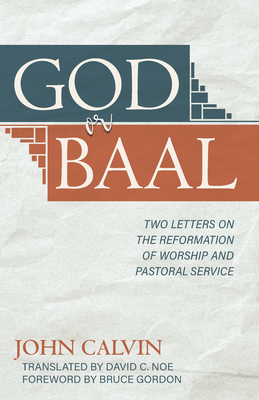
This book consists of two open letters by the young John Calvin to evangelical believers who desired to stay and work within the Roman Catholic Church.
The first letter exposes the idolatry involved in the Mass, while the second denounces the papal abuses of the pastoral office of the church. Together, they form a resounding call for the necessity of a thoroughgoing Reformation.
This translation from David C. Noe makes the two letters available together for the first time in English. Noe also provides a helpful introduction to Calvin’s early life and the problem of evangelical believers remaining in the Roman Catholic Church.
This book does not merely provide a helpful view of how Calvin believed the moderate French reform movement should decide between God and the worship of false prophets. It is also an opportunity for us to reflect on the abiding significance of the need for reformation.
Table of Contents: Table of Contents:
Foreword - Bruce Gordon
The First Letter: We Must Flee the Forbidden Rites of the Wicked, and Maintain the Purity of the Christian Faith
The Second Letter: The Christian Man’s Obligation Either to Fulfill or Renounce the Priestly Offices of the Papal Church






















John Calvin (1509 - 1584)
Was an influential French theologian and pastor during the Protestant Reformation. He was a principal figure in the development of the system of Christian theology later called Calvinism. Originally trained as a humanist lawyer, he broke from the Roman Catholic Church around 1530. After religious tensions provoked a violent uprising against Protestants in France, Calvin fled to Basel, Switzerland, where he published the first edition of his seminal work The Institutes of the Christian Religion in 1536.Calvin's writing and preachings provided the seeds for the branch of theology that bears his name. The Reformed, Congregational, and Presbyterian churches, which look to Calvin as the chief expositor of their beliefs, have spread throughout the world.
John Calvin was an influential French theologian and pastor during the Protestant Reformation. He was a principal figure in the development of the system of Christian theology later called Calvinism. Originally trained as a humanist lawyer, he broke from the Roman Catholic Church around 1530. After religious tensions provoked a violent uprising against Protestants in France, Calvin fled to Basel, Switzerland, where in 1536 he published the first edition of his seminal work Institutes of the Christian Religion.
Calvin's writing and preaching provided the seeds for the branch of theology that bears his name. The Presbyterian and other Reformed churches, which look to Calvin as a chief expositor of their beliefs, have spread throughout the world. Calvin's thought exerted considerable influence over major religious figures and entire religious movements, such as Puritanism, and some have argued that his ideas have contributed to the rise of capitalism, individualism, and representative democracy in the West.
Founder of Calvinism. John Calvin, a French scholar who became a leading preacher and dominant force in the Reformation of the 16th Century, studied at the University of Paris and at the University of Orleans. He became dissatisfied with the teachings of the Roman Catholic Church and allied himself with the cause of the Protestant Reformation in 1532.
When the king of France decided to settle the religious question in his country in favor of the Catholics, Calvin fled to Geneva, Switzerland, where his writings and lectures made Geneva the Rome of Protestantism. His institutes of the Christian religion became the basis for the Presbyterian way of thought and church life. Calvinism is the main doctrine of the Presbyterian and Reformed Churches.
... Show more