The Crossway Classic CommentariesThe Crossway Classic Commentaries
Original works by godly writers, tailored for the understanding of today's readers
For hundreds of years Christendom has been blessed with Bible commentaries written by great men of God who were highly respected for their godly walk and their insight into spiritual truth. The Crossway Classic Commentaries series, carefully adapted for maximum understanding and usefulness, presents the very best work on individual Bible books for today's believers.
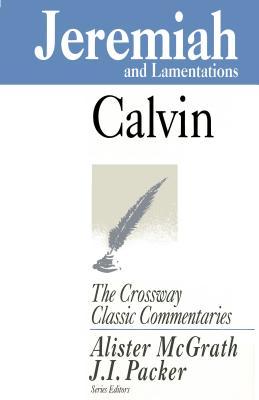
For forty years Jeremiah warned Judah of God's impending punishment for their flagrant disobedience of His commands. The many messages of judgment, though, were mixed with the words of mercy Judah would experience if only they would repent. The weeping prophet lamented over their obstinancy and the resulting calamities, yet always reminded them of the hope they would find in God's compassion.
Writing as if closely acquainted with the prophet, John Calvin explains Jeremiah's emphasis on God's mercy and kindness toward His chosen but erring people. Just as Jeremiah looked forward to the future messianic kingdom, Calvin's enthusiasm never wanes as he applies the prophet's teachings to both the church and individual Christians.






















John Calvin (1509 - 1584)
Was an influential French theologian and pastor during the Protestant Reformation. He was a principal figure in the development of the system of Christian theology later called Calvinism. Originally trained as a humanist lawyer, he broke from the Roman Catholic Church around 1530. After religious tensions provoked a violent uprising against Protestants in France, Calvin fled to Basel, Switzerland, where he published the first edition of his seminal work The Institutes of the Christian Religion in 1536.Calvin's writing and preachings provided the seeds for the branch of theology that bears his name. The Reformed, Congregational, and Presbyterian churches, which look to Calvin as the chief expositor of their beliefs, have spread throughout the world.
John Calvin was an influential French theologian and pastor during the Protestant Reformation. He was a principal figure in the development of the system of Christian theology later called Calvinism. Originally trained as a humanist lawyer, he broke from the Roman Catholic Church around 1530. After religious tensions provoked a violent uprising against Protestants in France, Calvin fled to Basel, Switzerland, where in 1536 he published the first edition of his seminal work Institutes of the Christian Religion.
Calvin's writing and preaching provided the seeds for the branch of theology that bears his name. The Presbyterian and other Reformed churches, which look to Calvin as a chief expositor of their beliefs, have spread throughout the world. Calvin's thought exerted considerable influence over major religious figures and entire religious movements, such as Puritanism, and some have argued that his ideas have contributed to the rise of capitalism, individualism, and representative democracy in the West.
Founder of Calvinism. John Calvin, a French scholar who became a leading preacher and dominant force in the Reformation of the 16th Century, studied at the University of Paris and at the University of Orleans. He became dissatisfied with the teachings of the Roman Catholic Church and allied himself with the cause of the Protestant Reformation in 1532.
When the king of France decided to settle the religious question in his country in favor of the Catholics, Calvin fled to Geneva, Switzerland, where his writings and lectures made Geneva the Rome of Protestantism. His institutes of the Christian religion became the basis for the Presbyterian way of thought and church life. Calvinism is the main doctrine of the Presbyterian and Reformed Churches.
... Show more