
- Bible
- Read the Bible
- Bible Versions
- Verse of the Day
- Reading Plans
- Verses by Topic
- Books of the Bible
- Bible Images
- Study
- Commentaries
- Concordances
- Dictionaries
- Encyclopedias
- Sermons
- Bible Atlas & Maps
- BP Wiki
- Devotionals
- Today's Devotionals
- All Devotionals
- Inspirational Quotes
- More
- Picture Quotes
- Videos
- Inspirational
- Bible Study
- What The Bible Says
- Bible Q&As
- Daily Bread
- Bible by Genre
- Bible Stories
- Random Bible Verse
- Community
- Store
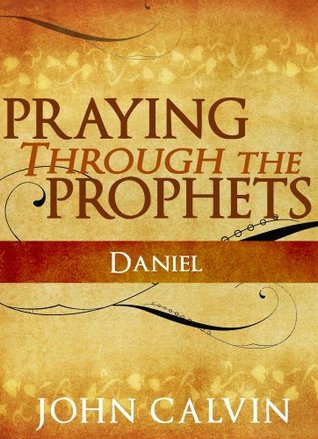
Praying through the Prophets: Daniel
by John Calvin
Praying can be hard. It's hard to make the time to pray. It's hard to get up early, or go to bed later in an effort to draw close to God. It's hard when there are so many other things demanding time and attention. And it's especially hard when you are feeling spiritually dry and just don't know what to say or where to start.
We all know that not praying and drawing close to God results in a very superficial relationship with Him. Yet so often we fall into the trap of putting other things first. If you are feeling spiritually dry and just know it is because you are not spending time with your God, this book is for you. If you long to draw close to your Saviour but you are struggling with the words to say, again, this book is for you.
The complete series of Praying Through the Prophets is now available in one volume The complete series of Praying Through the Prophets is now available in one volumeThe complete series of Praying Through the Prophets is now available in one volume
Praying Through the Prophets (Daniel) is a compilation of prayers taken from John Calvin's commentaries on the Old Testament prophets. Each prayer has a scripture that can be read alongside, deepening your love and understanding for the Word. There is nothing so fulfilling as praying to God with a Bible open on your lap ready to listen and hear from Him.
Use these prayers as a springboard into your own prayer life. As you pray you will find yourself thinking of other things to pray about resulting in drawing close once again to your Savior. Putting God first and removing any idols that are taking His place will result in a wonderfully fulfilling relationship with the Lord, and which will have an impact on all around you.
The following is a prayer taken from the 'Daniel' volume The following is a prayer taken from the 'Daniel' volume The following is a prayer taken from the 'Daniel' volume
Daniel 1:17 - 2:2 Daniel 1:17 - 2:2
Grant, Almighty God, since every perfect gift comes from thee, and since some excel others in intelligence and talents, yet as no one has anything of his own, but as thou deignest to distribute to man a measure of thy gracious liberality, - Grant that whatever intelligence thou dost confer upon us, we may apply it to the glory of thy name. Grant also, that we may acknowledge in humility and modesty what thou hast committed to our care to be thine own; and may we study to be restrained by sobriety, to desire nothing superfluous, never to corrupt true and genuine knowledge, and to remain in that simplicity to which thou callest us. Finally, may we not rest in these earthly things, but learn rather to raise our minds to true wisdom, to acknowledge thee to be the true God, and to devote ourselves to the obedience of thy righteousness; and may it be our sole object to devote and consecrate ourselves entirely to the glory of thy name throughout our lives, through Jesus Christ our Lord. Amen
We all know that not praying and drawing close to God results in a very superficial relationship with Him. Yet so often we fall into the trap of putting other things first. If you are feeling spiritually dry and just know it is because you are not spending time with your God, this book is for you. If you long to draw close to your Saviour but you are struggling with the words to say, again, this book is for you.
The complete series of Praying Through the Prophets is now available in one volume The complete series of Praying Through the Prophets is now available in one volumeThe complete series of Praying Through the Prophets is now available in one volume
Praying Through the Prophets (Daniel) is a compilation of prayers taken from John Calvin's commentaries on the Old Testament prophets. Each prayer has a scripture that can be read alongside, deepening your love and understanding for the Word. There is nothing so fulfilling as praying to God with a Bible open on your lap ready to listen and hear from Him.
Use these prayers as a springboard into your own prayer life. As you pray you will find yourself thinking of other things to pray about resulting in drawing close once again to your Savior. Putting God first and removing any idols that are taking His place will result in a wonderfully fulfilling relationship with the Lord, and which will have an impact on all around you.
The following is a prayer taken from the 'Daniel' volume The following is a prayer taken from the 'Daniel' volume The following is a prayer taken from the 'Daniel' volume
Daniel 1:17 - 2:2 Daniel 1:17 - 2:2
Grant, Almighty God, since every perfect gift comes from thee, and since some excel others in intelligence and talents, yet as no one has anything of his own, but as thou deignest to distribute to man a measure of thy gracious liberality, - Grant that whatever intelligence thou dost confer upon us, we may apply it to the glory of thy name. Grant also, that we may acknowledge in humility and modesty what thou hast committed to our care to be thine own; and may we study to be restrained by sobriety, to desire nothing superfluous, never to corrupt true and genuine knowledge, and to remain in that simplicity to which thou callest us. Finally, may we not rest in these earthly things, but learn rather to raise our minds to true wisdom, to acknowledge thee to be the true God, and to devote ourselves to the obedience of thy righteousness; and may it be our sole object to devote and consecrate ourselves entirely to the glory of thy name throughout our lives, through Jesus Christ our Lord. Amen
BUY NOW
Kindle Edition, 75 pages
Published November 29th 2013
tags: prayer
Subscribe
Verse of the Day
Get a Bible verse delivered to your inbox every day!
Daily Devotional
Subscribe separately to receive daily devotionals to help you grow in faith and walk closer with God.
Read on Mobile



Group of Brands


















© 2026 Bibleportal.com All rights reserved.
John Calvin (1509 - 1584)
Was an influential French theologian and pastor during the Protestant Reformation. He was a principal figure in the development of the system of Christian theology later called Calvinism. Originally trained as a humanist lawyer, he broke from the Roman Catholic Church around 1530. After religious tensions provoked a violent uprising against Protestants in France, Calvin fled to Basel, Switzerland, where he published the first edition of his seminal work The Institutes of the Christian Religion in 1536.Calvin's writing and preachings provided the seeds for the branch of theology that bears his name. The Reformed, Congregational, and Presbyterian churches, which look to Calvin as the chief expositor of their beliefs, have spread throughout the world.
John Calvin was an influential French theologian and pastor during the Protestant Reformation. He was a principal figure in the development of the system of Christian theology later called Calvinism. Originally trained as a humanist lawyer, he broke from the Roman Catholic Church around 1530. After religious tensions provoked a violent uprising against Protestants in France, Calvin fled to Basel, Switzerland, where in 1536 he published the first edition of his seminal work Institutes of the Christian Religion.
Calvin's writing and preaching provided the seeds for the branch of theology that bears his name. The Presbyterian and other Reformed churches, which look to Calvin as a chief expositor of their beliefs, have spread throughout the world. Calvin's thought exerted considerable influence over major religious figures and entire religious movements, such as Puritanism, and some have argued that his ideas have contributed to the rise of capitalism, individualism, and representative democracy in the West.
Founder of Calvinism. John Calvin, a French scholar who became a leading preacher and dominant force in the Reformation of the 16th Century, studied at the University of Paris and at the University of Orleans. He became dissatisfied with the teachings of the Roman Catholic Church and allied himself with the cause of the Protestant Reformation in 1532.
When the king of France decided to settle the religious question in his country in favor of the Catholics, Calvin fled to Geneva, Switzerland, where his writings and lectures made Geneva the Rome of Protestantism. His institutes of the Christian religion became the basis for the Presbyterian way of thought and church life. Calvinism is the main doctrine of the Presbyterian and Reformed Churches.
... Show more