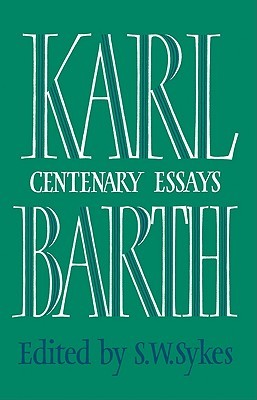
This short volume, which emerged from the Karl Barth centenary year in 1986, brings together a collection of essays which makes an important contribution to Barth interpretation. Few would dispute the fact that Karl Barth is one of the great figures of twentieth-century theology, and two decades after his death he continues to fascinate those who study the field and his own thought in the magisterial, unfinished Church Dogmatics. Yet while his impact and influence upon modern theology has been great, Barth has been subject, too, to suspicion and sometimes to fierce opposition. The contributors to this book examine and refute some of the more simplistic reasons why the thought of Karl Barth has had a somewhat limited appeal in modern English-language theology. Writing form a variety of ecclesiastical persuasions, Reformed, Lutheran, Anglican and Roman Catholic, the authors seek to demonstrate at a fundamental level the continuing important of some of Barth's major concerns. Collectively the essays constitute a positive introduction to Barth, to his place in the history of the philosophy of religion, as a constructive theologian, as a Churchman and in specific relation to the modern history of English-language theology.






















Karl Barth was a Swiss Reformed theologian whom critics hold to be among the most important Christian thinkers of the 20th century.
Beginning with his experience as a pastor, he rejected his training in the predominant liberal theology typical of 19th-century Protestantism. Instead he embarked on a new theological path initially called dialectical theology, due to its stress on the paradoxical nature of divine truth (e.g., God's relationship to humanity embodies both grace and judgment). Other critics have referred to Barth as the father of neo-orthodoxy -- a term emphatically rejected by Barth himself. The most accurate description of his work might be "a theology of the Word." Barth's theological thought emphasized the sovereignty of God, particularly through his innovative doctrine of election.
Barth tries to recover the Doctrine of the Trinity in theology from its putative loss in liberalism. His argument follows from the idea that God is the object of God's own self-knowledge, and revelation in the Bible means the self-unveiling to humanity of the God who cannot be discovered by humanity simply through its own efforts.
... Show more