It is an extraordinarily impressive fact that that greatest of theological giants St Paul, whose thoughts range through the universe, embracing in their width and scope and penetration the mysteries of life and death, things present and things to come, stands firmly based on 'the simplicity that is in Christ' (II Cor. 11.3). It is indeed this 'single-hearted devotion to Christ' (as the New English Bible translates it) that underlies both his profound insight into the divine wisdom and his revolutionary understanding of human existence.
Of Paul's greatest twentieth-century exponent, Karl Barth, the same could be said. His productivity has been immense, his horizons all-embracing, his domination of the contemporary theological scene unquestioned. Probably not since Calvin has there appeared a figure of like dimensions; and even those whose interpretation of the faith at many points is radically different have gladly confessed their indebtedness. Distinguished Roman Catholic theologians have listened attentively to this trumpet-toned Protestant voice, and have acknowledged the validity of this consuming quest of the truth. Yet the fact remains that this Colossus of a theologian is basically concerned with simple things; and no one reading Barth can have any doubt that the driving force behind the mighty argument is the man's own single-hearted devotion to Christ. This is what makes the encounter with Barth, even through the printed page, a spiritual experience.

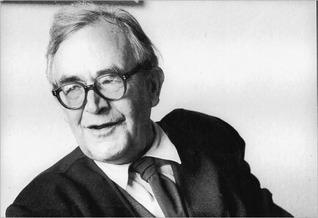





















Karl Barth was a Swiss Reformed theologian whom critics hold to be among the most important Christian thinkers of the 20th century.
Beginning with his experience as a pastor, he rejected his training in the predominant liberal theology typical of 19th-century Protestantism. Instead he embarked on a new theological path initially called dialectical theology, due to its stress on the paradoxical nature of divine truth (e.g., God's relationship to humanity embodies both grace and judgment). Other critics have referred to Barth as the father of neo-orthodoxy -- a term emphatically rejected by Barth himself. The most accurate description of his work might be "a theology of the Word." Barth's theological thought emphasized the sovereignty of God, particularly through his innovative doctrine of election.
Barth tries to recover the Doctrine of the Trinity in theology from its putative loss in liberalism. His argument follows from the idea that God is the object of God's own self-knowledge, and revelation in the Bible means the self-unveiling to humanity of the God who cannot be discovered by humanity simply through its own efforts.
... Show more