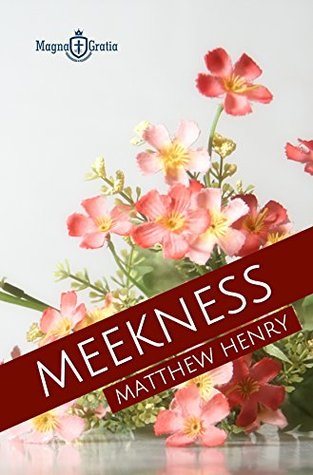
"Learn from Me", said the Lord, "for I am meek." Years later, after experiencing many trials and tribulations, Peter said that the meekness and quietness of a soul are two things that are held very precious in the sight of God. But the challenge and the question for us today is this: How can we be meek in a world filled with conflicts, strife, spiritual wars, and especially when we are tempted from inside and outside, and that every day? And does meekness mean we need to be tolerant to each and everyone's opinions and doctrinal views?
If there was one thing that marked Puritans in the history of Christianity it was their zeal for sound doctrine that was marvelously combined and adorned with a compelling love towards their fellow brethren, and, in extension, to the whole world. This book captures the Puritan spirit and teachings on meekness that flow from the very heart of our Savior and Lord Jesus Christ.
Published in original under the title “A Discourse on Meekness and Quietness of Spirit” (1836, ATS edition). Current edition has been proofread, typeset for eBook readers, and slightly updated for modern readers.
About the author: Matthew Henry (1662-1714) was a Welsh Nonconformist minister and author, being most famous for his classic commentary on the whole Bible. He died on June 22, 1714 at Natwich, England.






















Henry's well-known Exposition of the Old and New Testaments (1708-1710) is a commentary of a practical and devotional rather than of a critical kind, covering the whole of the Old Testament, and the Gospels and Acts in the New Testament. After the author's death, the work was finished by a number of ministers, and edited by George Burder and John Hughes in 1811. Not a work of textual criticism, its attempt at good sense, discrimination, its high moral tone and simple piety with practical application, combined with the well-sustained flow of its English style, made it one of the most popular works of its type. Matthew Henry's six volume Complete Commentary, originally published in 1706, provides an exhaustive verse by verse study of the Bible. His commentaries are still in use to this day.
... Show more