
- Bible
- Read the Bible
- Bible Versions
- Verse of the Day
- Reading Plans
- Verses by Topic
- Books of the Bible
- Bible Images
- Study
- Commentaries
- Concordances
- Dictionaries
- Encyclopedias
- Sermons
- Bible Atlas & Maps
- BP Wiki
- Devotionals
- Today's Devotionals
- Light of the World
- All Devotionals
- Inspirational Quotes
- More
- Picture Quotes
- Videos
- Inspirational
- Bible Study
- What The Bible Says
- Bible Q&As
- Daily Bread
- Bible by Genre
- Bible Stories
- Random Bible Verse
- Community
- Store
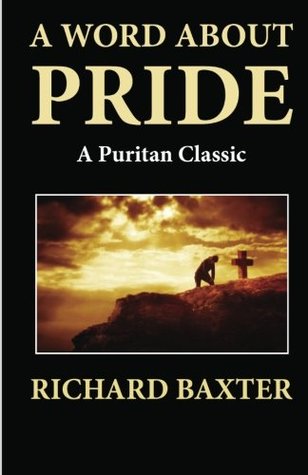
A Word About Pride (A Puritan Classic)
by Richard Baxter
Richard Baxter was a 17th-century Puritan preacher who, according to "Knowing God" author J. I. Packer, was "the most outstanding pastor, evangelist and writer on practical and devotional themes that Puritanism produced." Packer, who did his doctoral work on Richard Baxter, called Baxter's Christian Directory "the most important Christian book ever written besides the Bible itself." Other well-known Christian authors (such as Timothy Keller and Jay Adams) have also praised Baxter's writings. Like other Puritan authors, Baxter sounded a call to Christians to become Word-centered in faith and practice. Like other Puritans of his day, he understood well that the Scriptures provide the only rule of faith and life. Baxter's books, which were exceeded in popularity only by John Bunyan's Pilgrim's Progress, were household reading in many Puritan homes. While noted for the directness with which he addressed his readers, Baxter did not rant. Rather, he addresses readers as if he were by their side, challenging their consciences, arguing, reasoning, persuading, and ultimately-convincing. Baxter utilized the universal Puritan method in his writings-beginning with the Word of God, then announcing the doctrine or doctrines to be derived from his text. After proving the doctrine in question from Scripture, he went on to expound and explain. Baxter dealt with primary truths in his writings-the great themes of heaven and hell, God and Christ, faith and repentance, the cross of Christ-and the need to come to that cross at once. Throughout his writings are woven a deep sense of pastoral care and concern, a burning heart of love for Christless sinners and a motive to move men to God. Ultimately, sin is unmasked, the heart is laid bare, and man is shown to be exceedingly sinful. At the same time, known God through Christ is shown to be supremely delightful and desirable-something to be attained to no matter the cost, difficulty, or sacrifice in this life. This little book is Baxter's treatise on pride. An extract from his much larger book written for ministers, it is nonetheless powerful and extremely helpful for all who desire to be Christians.
BUY NOW
Paperback, 30 pages
Published September 11th 2012 by Createspace Independent Publishing Platform
Subscribe
Get Bible verse every day in your inbox
Read on Mobile



Group of Brands


















© 2026 Bibleportal.com All rights reserved.
He wrote 168 or so separate works -- such treatises as the Christian Directory, the Methodus Theologiae Christianae, and the Catholic Theology, might each have represented the life's work of an ordinary man. His Breviate of the Life of Mrs Margaret Baxter records the virtues of his wife, and reveals Baxter's tenderness of nature. Without doubt, however, his most famous and enduring contribution to Christian literature was a devotional work published in 1658 under the title Call to the Unconverted to Turn and Live. This slim volume was credited with the conversion of thousands and formed one of the core extra-biblical texts of evangelicalism until at least the middle of the nineteenth century.
Richard Baxter was ordained into the Church of England, 1638, but in two years allied with Puritans opposed to the episcopacy of his church. At Kidderminster (1641-60) he made the church a model parish. The church was enlarged to hold the crowds. Pastoral counseling was as important as preaching, and his program for his parish was a pattern for many other ministers. Baxter played an ameliorative role during the English Civil Wars.
He was a chaplain in the parliamentary army but then helped to restore the king (1660). After the establishment of the monarchy, he fought for toleration of moderate dissent in the Church of England. Persecuted for more than 20 years and was imprisoned (1685) for 18 months, the Revolution of 1688, replacing James II with William and Mary, brought about an Act of Toleration that freed Baxter to express his opinions.
... Show more