
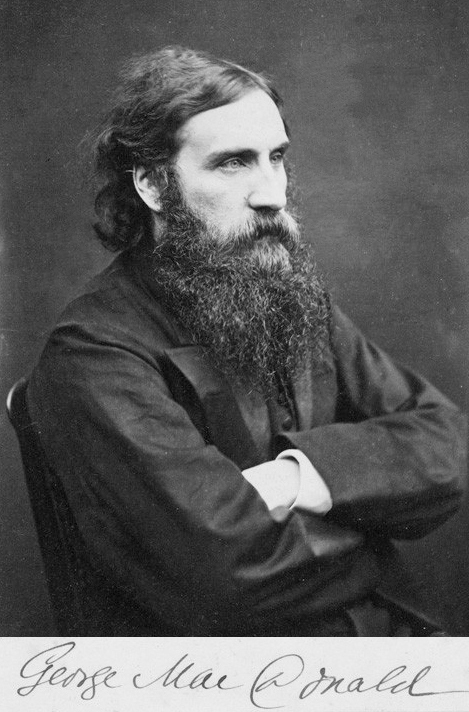
Quote by George MacDonald

“Doubt swells and surges, with swelling doubt behind! My soul in storm is but a tattered sail, Streaming its ribbons on the torrent gale; In calm, 'tis but a limp and flapping thing: Oh! swell it with thy breath; make it a wing, To sweep through thee the ocean, with thee the wind Nor rest until in thee its haven it shall find. Roses are scentless, hopeless are the morns, Rest is but weakness, laughter crackling thorns, But love is life. To die of love is then The only pass to higher life than this. All love is death to loving, living men; All deaths are leaps across clefts to the abyss. Weakness needs pity, sometimes love's rebuke; Strength only sympathy deserves and draws - And grows by every faithful loving look. Ripeness must always come with loss of might.”
― George MacDonald ,
Be the first to react on this!



Group of Brands


















© 2025 Bibleportal.com All rights reserved.
George MacDonald was a Scottish author, poet, and Christian minister.
Known particularly for his poignant fairy tales and fantasy novels, George MacDonald inspired many authors, such as W. H. Auden, J. R. R. Tolkien, C. S. Lewis, E. Nesbit and Madeleine L'Engle. G. K. Chesterton cited The Princess and the Goblin as a book that had "made a difference to my whole existence."
Even Mark Twain, who initially disliked MacDonald, became friends with him, and there is some evidence that Twain was influenced by MacDonald.
MacDonald grew up influenced by his Congregational Church, with an atmosphere of Calvinism. But MacDonald never felt comfortable with some aspects of Calvinist doctrine; indeed, legend has it that when the doctrine of predestination was first explained to him, he burst into tears (although assured that he was one of the elect). Later novels, such as Robert Falconer and Lilith, show a distaste for the idea that God's electing love is limited to some and denied to others.