
Inspirational Quotes on Philosophy


“Oh, now, life, life! I lifted up my hands and called upon eternal truth, not with words, but with tears; ecstasy, immeasurable ecstasy flooded my soul. Yes, life and spreading the good tidings! Oh, I at that moment resolved to spread the tidings, and resolved it, of course, for my whole life. I go to spread the tidings, I want to spread the tidings — of what? Of the truth, for I have seen it, have seen it with my own eyes, have seen it in all its glory. And since then I have been preaching! Moreover I love all those who laugh at me more than any of the rest. Why that is so I do not know and cannot explain, but so be it. I am told that I am vague and confused, and if I am vague and confused now, what shall I be later on? It is true indeed: I am vague and confused, and perhaps as time goes on I shall be more so. And of course I shall make many blunders before I find out how to preach, that is, find out what words to say, what things to do, for it is a very difficult task. I see all that as clear as daylight, but, listen, who does not make mistakes? An yet, you know, all are making for the same goal, all are striving in the same direction anyway, from the sage to the lowest robber, only by different roads. It is an old truth, but this is what is new: I cannot go far wrong. For I have seen the truth; I have seen and I know that people can be beautiful and happy without losing the power of living on earth. I will not and cannot believe that evil is the normal condition of mankind. And it is just this faith of mine that they laugh at. But how can I help believing it? I have seen the truth — it is not as though I had invented it with my mind, I have seen it, seen it, and the living image of it has filled my soul for ever. I have seen it in such full perfection that I cannot believe that it is impossible for people to have it. And so how can I go wrong? I shall make some slips no doubt, and shall perhaps talk in second-hand language, but not for long: the living image of what I saw will always be with me and will always correct and guide me. Oh, I am full of courage and freshness, and I will go on and on if it were for a thousand years!”
“Je voulais vous exposer mon livre aussi succinctement que possible; mais je vois qu'il me faudra y joindre encore quantité d'explications verbales. Mon exposé exigera donc au moins dix soirées d'après le nombre de chapitres de mon livre. (Il y eut quelques rires.) De plus, je dois vous prévenir que mon système n'est pas complètement achevé. (Nouveaux rires.) Je me suis embrouillé dans mes propres données et ma conclusion se trouve en contradiction directe avec l'idée fondamentale du système. Partant de la liberté illimitée, j'aboutis au despotisme illimité. J'ajoute à cela, cependant, qu'il ne peut y avoir d'autre solution du problème que la mienne.”
― Fyodor Dostoevsky ,
from Demons
“I am a sick man.... I am a spiteful man. I am an unattractive man. I believe my liver is diseased. However, I know nothing at all about my disease, and do not know for certain what ails me. I don't consult a doctor for it, and never have, though I have a respect for medicine and doctors. Besides, I am extremely superstitious, sufficiently so to respect medicine, anyway (I am well-educated enough not to be superstitious, but I am superstitious). No, I refuse to consult a doctor from spite. That you probably will not understand. Well, I understand it, though. Of course, I can't explain who it is precisely that I am mortifying in this case by my spite: I am perfectly well aware that I cannot "pay out" the doctors by not consulting them; I know better than anyone that by all this I am only injuring myself and no one else. But still, if I don't consult a doctor it is from spite. My liver is bad, well--let it get worse!”
“- Escute mais isso. Por outro lado, forças jovens, frescas, sucumbem em vão por falta de apoio, e isso aos milhares, e isso em toda parte! Cem, mil boas ações e iniciativas que poderiam ser implementadas e reparadas com o dinheiro da velha, destinado a um mosteiro! Centenas, talvez milhares de existências encaminhadas; dezenas de famílias salvas da miséria, da desagregação, da morte, da depravação, das doenças venéreas - e tudo isso com o dinheiro dela. Mate-a e tome-lhe o dinheiro, para com sua ajuda dedicar-se depois a servir toda a humanidade e a uma causa comum: o que você acha, esse crime ínfimo não seria atenuado por milhares de boas ações? Por uma vida - milhares de vidas salvas do apodrecimento e da degeneração. Uma morte e cem vidas em troca - ora, isso é uma questão de aritimética.”
― Fyodor Dostoevsky ,
from Crime e Castigo
“Jeżeli ludzkość bez wyjątku raz wyrzeknie się Boga (...), to sam przez się, bez ludożerstwa, upadnie cały stary światopogląd, przede wszystkim zaś, cała stara moralność, i nastąpi wszystko nowe. Ludzie zjednoczą się, by wziąć od życia wszystko, co ono dać może dla szczęścia i radości na jednym tylko świecie, na tym świecie. Człowiek wzniesie się do boskiej, tytanicznej dumy i zjawi się człowiek-bóg. Nieustannie pokonując przyrodę, już bez granic, wolą swą i nauką człowiek będzie odczuwał w tym rozkosz tak wzniosłą, że mu zastąpi ona całkowicie dawną nadzieję na niebieskie radości. Każdy pozna, że jest śmiertelny i nie licząc już na zmartwychwstanie, powita śmierć dumnie i spokojnie jak Bóg. Pojmie w dumie swojej, że nie ma co szemrać na to, że życie jest chwilką tylko i pokocha brata swego już bez żadnego wyrachowania na zapłatę. Miłość będzie wypełniała tylko krótki moment życia, lecz samo poczucie jej chwilowości wzmocni jej ogień nieskończenie silniej, niż dziś, gdy rozpływa się w nadziejach na miłość pozagrobową i nieskończoną...”
“إنني في حاجة إلى قصاص وعدل، وإلا دمرت نفسي. وهذا القصاص الذي أطالب به، أنا لا أريده في لا نهاية لا يمكن الوصول إليها، وفي أبدية تفوقني، وإنما أنا أريد أن أراه على هذه الأرض، أن أراه بعيني.”
“Why didst Thou reject that last gift? Had Thou accepted that last offer of the mighty spirit, Thou wouldst have accomplished all that man seeks on earth-- that is, someone to worship, someone to keep his conscience, and some means of uniting all in one unanimous and harmonious ant heap, because the craving for universal unity is the third and last anguish of men. Mankind as a whole has always striven to organize a universal state.”
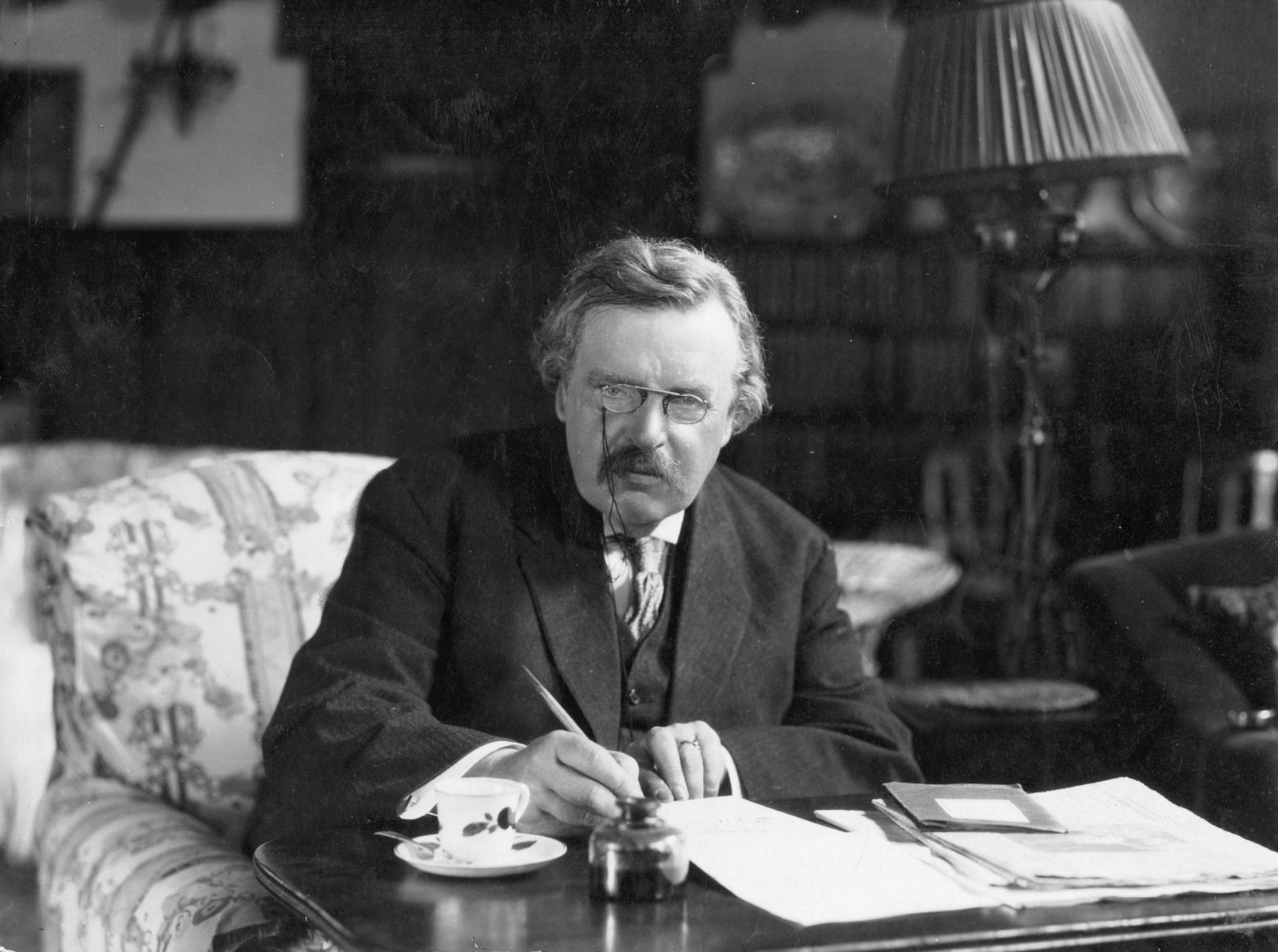
“After belabouring a great many people for a great many years for being unprogressive, Mr. Shaw has discovered, with characteristic sense, that it is very doubtful whether any existing human being with two legs can be progressive at all. Having come to doubt whether humanity can be combined with progress, most people, easily pleased, would have elected to abandon progress and remain with humanity. Mr. Shaw, not being easily pleased, decides to throw over humanity with all its limitations and go in for progress for its own sake. If man, as we know him, is incapable of the philosophy of progress, Mr. Shaw asks, not for a new kind of philosophy, but for a new kind of man. It is rather as if a nurse had tried a rather bitter food for some years on a baby, and on discovering that it was not suitable, should not throw away the food and ask for a new food, but throw the baby out of window, and ask for a new baby.”
― G.K. Chesterton ,
from Heretics
topics: philosophy
“Wherever there is animal worship there is human sacrifice.”
― G.K. Chesterton ,
“My father's wery much in that line now. If my mother-in-law blows him up, he whistles. She flies in a passion, and breaks his pipe; he steps out, and gets another. Then she screams wery loud, and falls into 'sterics; and he smokes wery comfortably till she comes to agin. That's philosophy, Sir, ain't it?”
topics: philosophy
“Honesty is a moral virtue, a matter of the will. Honesty means willing the truth with the whole of your heart. This demands sacrifice. We have little hope of attaining honesty unless we realize how demanding it is. It demands sacrifice of self-will, self-image, the desire to win, and the comfort of being right. The “honesty” often praised today is usually only emotional honesty with others, not intellectual honesty with one’s self; only “letting it all hang out,” not asking what is the real truth. Sometimes “honesty” is only a code word for shamelessness. Rarely does it mean the absolute, fanatical, selfless love of truth.”

“The great writings interact with one another. They cannot be read in isolation..”

“Proxy religion involves too great a risk: you had better see to your soul's matters yourself, and leave them in no man's hands.”

“I call him truly learned who brings everything to bear on the truth, so that from geometry, music, grammar, and philosophy itself, culling what is usefule, he guards the faith against assault.”
topics: philosophy

“Man is spirit. But what is spirit? Spirit is the self. But what is the self? The self is a relation which relates itself to its own self, or it is that in the relation [which accounts for it] that the relation relates itself to its own self; the self is not the relation but [consists in the fact] that the relation relates itself to its own self. Man is a synthesis of the infinite and the finite, of the temporal and the eternal, of freedom and necessity, in short it is a synthesis. A synthesis is a relation between two factors. So regarded, man is not yet a self.”
“But it is just as useless for a man to want first of all to decide the externals and after that the fundamentals as it is for a cosmic body, thinking to form itself, first of all to decide the nature of its surface, to what bodies it should turn its light, to which its dark side, without first letting the harmony of centrifugal and centripetal forces realize [*realisere*] its existence [*Existents*] and letting the rest come of itself. One must learn first to know himself before knowing anything else (γνῶθι σε αυτόν). Not until a man has inwardly understood himself and then sees the course he is to take does his life gain peace and meaning; only then is he free of the irksome, sinister traveling companion―that irony of life which manifests itself in the sphere of knowledge and invites true knowing to begin with a not-knowing (Socrates), just as God created the world from nothing. But in the waters of morality it is especially at home to those who still have not entered the tradewinds of virtue. Here it tumbles a person about in a horrible way, for a time lets him feel happy and content in his resolve to go ahead along the right path, then hurls him into the abyss of despair. Often it lulls a man to sleep with the thought, "After all, things cannot be otherwise," only to awaken him suddenly to a rigorous interrogation. Frequently it seems to let a veil of forgetfulness fall over the past, only to make every single trifle appear in a strong light again. When he struggles along the right path, rejoicing in having overcome temptation's power, there may come at almost the same time, right on the heels of perfect victory, an apparently insignificant external circumstance which pushes him down, like Sisyphus, from the height of the crag. Often when a person has concentrated on something, a minor external circumstance arises which destroys everything. (As in the case of a man who, weary of life, is about to throw himself into the Thames and at the crucial moment is halted by the sting of a mosquito). Frequently a person feels his very best when the illness is the worst, as in tuberculosis. In vain he tries to resist it but he has not sufficient strength, and it is no help to him that he has gone through the same thing many times; the kind of practice acquired in this way does not apply here. Just as no one who has been taught a great deal about swimming is able to keep afloat in a storm, but only the man who is intensely convinced and has experiences that he is actually lighter than water, so a person who lacks this inward point of poise is unable to keep afloat in life's storms.―Only when a man has understood himself in this way is he able to maintain an independent existence and thus avoid surrendering his own I. How often we see (in a period when we extol that Greek historian because he knows how to appropriate an unfamiliar style so delusively like the original author's, instead of censuring him, since the first prize always goes to an author for having his own style―that is, a mode of expression and presentation qualified by his own individuality)―how often we see people who either out of mental-spiritual laziness live on the crumbs that fall from another's table or for more egotistical reasons seek to identify themselves with others, until eventually they believe it all, just like the liar through frequent repetition of his stories.”
“If I could forget you! Is my love then a work of memory? Even if time expunged everything from its tablets, expunged even memory itself, my relation to you would stay just as alive, you would still not be forgotten. If I could forget you! What then should I remember? For after all, I have forgotten myself in order to remember you: so if I forgot you I would come to remember myself; but the moment I remembered myself I would have to remember you again. If I could forget you! What would happen then? There is a picture from antiquity. It depicts Ariadne. She is leaping up from her couch and gazing anxiously after a ship that is hurrying away under full sail. By her side stands Cupid with unstrung bow and drying his eyes. Behind her stands a winged female figure in a helmet. It is usually assumed this is Nemesis. Imagine this picture, imagine it changed a little. Cupid is not weeping and his bow is not unstrung; or would you have become less beautiful, less victorious, if I had become mad? Cupid smiles and bends his bow. Nemesis does not stand inactive by your side; she too draws her bow. In that other picture we see a male figure on the ship, busily occupied. It is assumed it is Theseus. Not so in my picture. He stands on the stern, he looks back longingly, spreads his arms. He has repented, or rather, his madness has left him, but the ship carries him away. Cupid and Nemesis both aim at him, an arrow flies from each bow; their aim is true; one sees that, one understands, they have both hit the same place in his heart, a sign that his love was the Nemesis that wrought vengeance." ―Johannes de Silentio, from_Either/Or: A Fragment of Life_”
“In love with myself, that is what people say I am. It doesn’t surprise me, for how could they notice that I can love when I love only you; how could anyone else suspect it when I love only you? In love with myself. Why? Because I’m in love with you, because it is you I love, you alone, and all that truly belongs to you, and it is thus I love myself, because this, my self, belongs to you, so that if I ceased loving you I would cease loving myself. What then is, in the eyes of the profane world, an expression of the greatest egoism, is for your initiated eyes the expression of purest sympathy; what in the profane eyes of the world is an expression of the most prosaic self-preservation, is for your sacred sight the expression of the most enthusiastic self-annihilation.” ―Johannes de Silentio, from_Either/Or: A Fragment of Life_”
“Love is everything. So, for one who loves, everything has ceased to have meaning in itself and only means something through the interpretation love gives it. Thus if another betrothed became convinced there was some other girl he cared for, he would presumably stand there like a criminal and his fiancée be outraged. You, however, I know would see a tribute in such a confession; for me to be able to love another you know is an impossibility; it is my love for you casting its reflections over the whole of life. So when I care about someone else, it is not to convince myself that I do not love her but only you—that would be presumptuous; but since my whole soul is filled with you, life takes on another meaning for me: it becomes a myth about you." —Johannes the Seducer, from_Either/Or_”
“I am poor—you are my riches; dark—you are my light; I own nothing, need nothing. And how could I own anything? After all, it is a contradiction that he can own something who does not own himself. I am happy as a child who is neither able to own anything nor allowed to. I own nothing, for I belong only to you; I am not, I have ceased to be, in order to be yours.” —Johannes De Silentio, from_Either/Or_”



Group of Brands


















© 2026 Bibleportal.com All rights reserved.