
Inspirational Quotes on Philosophy

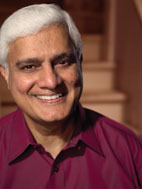
“Through technology the whole world has now become the media's parish, talk-show hosts the prophets, actors and musicians the priests, and any script will do for the Scriptures as long as moral constraints are removed. Sitting before a well-lit box is all the cultic performance needs, and each person can enthrone his or her own self as divine. Truth has been relegated to subjectivity; beauty has been subjugated to the beholder; and as millions are idiotized night after night, a global commune has been constructed with he arts enjoying a totalitarian rule.”

“To say that the holocaust was objectively wrong, is to say that the holocaust was wrong even though the Nazis who carried it out thought that it was right, and it would still have been wrong, even if the Nazis had won World War II and succeeded in brainwashing or exterminating everybody who disagreed with them, so that everyone in the world thought that the holocaust was right and good. To say that the holocaust was objectively wrong, means that it's wrong regardless of the outcome of World War II. The premise is that if there is no God, then moral values or duties are not objective in that sense.”

“as long as we possess the body, and our soul is contaminated by such an evil, we'll surely never adequately gain what we desire —and that, we say, is truth. (...) besides, it fills us up with lusts and desires, with fears and fantasies of every kind, and with any amount of trash, so that really and truly we are, as the saying goes, never able to think of anything at all because of it.”

“Όταν λέμε την αλήθεια, ωφελούμε κείνους που τη μαθαίνουν, μα ζημιώνουμε τον εαυτό μας, γιατί θα μας μισήσουν”
“Δύο υπερβολές : ν' αποκλείουμε το Λόγο, και να μη δεχόμαστε παρά μόνο το Λόγο.”

“But yet possibly it will still be objected, suppose I wholly lose the memory of some parts of my life, beyond a possibility of retrieving them, so that perhaps I shall never be conscious of them again; yet am I not the same person, that did those actions, had those thoughts, that I once was conscious of, though I have now forgot them? To which I answer, that we must here take notice what the word I is applied to, which in this case is the man only. And the same man being presumed to be the same person, I is easily here supposed to stand also for the same person. But if it be possible for the same man to have distinct incommunicable consciousness at different times, it is past doubt the same man would at different times make different persons”

“This was sheer idleness to my fellow-townsmen, no doubt; but if the birds and flowers had tried me by their standard, I should not have been found wanting. A man must find his occasions in himself, it is true. The natural day is very calm, and will hardly reprove his indolence.”
“I saw it throwing off its nightly clothing of mist, and here and there, by degrees, its soft ripples or its smooth reflecting surface was revealed.”
“What is a course of history or philosophy, or poetry, no matter how well selected, or the best society, or the most admirable routine of life, compared with the discipline of looking always at what is to be seen? Will you be a reader, a student merely, or a seer? Read your fate, see what is before you, and walk on into futurity.”
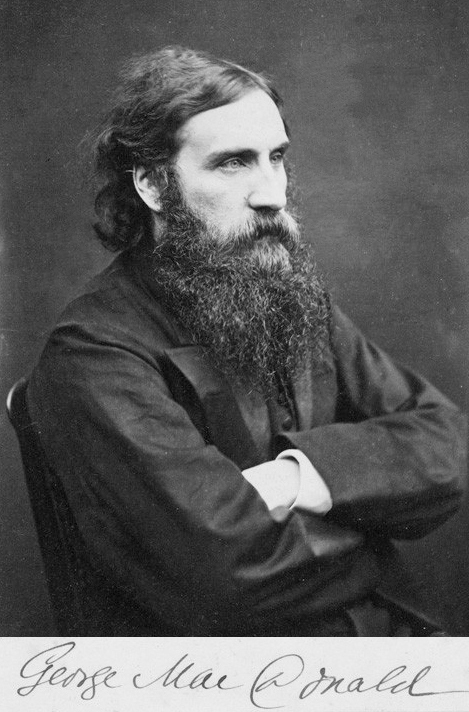
“There are more things in heaven and earth...than are dreamt of by your philosophy.”

“It is the thought, not the incidentals of expression, that essentially makes an exposition unpopular. A systematic ribbon and button maker can become unpopular but essentially is not at all, inasmuch as he does not mean much by the very odd things he says (alas, and this is a popular art!). Socrates, on the other hand, was the most unpopular in Greece because he said the same thing as the simplest person but meant infinitely much by it. To be able to stick to one thing, to stick to it with ethical passion and undauntedness of spirit, to see the intrinsic duplexity of this one thought with the same impartiality, and at one and the same time to see the most profound earnestness and the greatest jest, the deepest tragedy and highest comedy―this is unpopular in any age for anyone who has not realized that immediacy is over. But neither can what is essentially unpopular be learned by rote. More on that later.”
― Soren Kierkegaard ,
from Stages on Life's Way
“Love is the unfathomable ground that is hidden in darkness, but the resolution is the triumphant victor who, like Orpheus, fetches the infatuation of falling in love to the light of day, for the resolution is the true form of love, the true explanation and transfiguration.”
― Soren Kierkegaard ,
from Either/Or, Part I
“Just as the weak, despairing person is unwilling to hear anything about any consolation eternity has for him, so a person in such despair does not want to hear anything about it, either, but for a different reason: this very consolation would be his undoing; as a denunciation of all existence. Figuratively speaking, it is as if an error slipped into an author's writing and the error became conscious of itself as an error; perhaps it actually was not a mistake but in a much higher sense an essential part of the whole production, and now this error wants to mutiny against the author, out of hatred toward him, forbidding him to correct it and in maniacal defiance saying to him: No! I refuse to be erased! I will stand as a witness against you; a witness that you are a second-rate author.”

“Jeder hat in sich etwas, das man nicht kennt, solange man es nicht erprobt hat; hat man es aber erprobt – schaudert man.”
topics: philosophy

“To the extent that anyone gives up the mentality of antithesis, he has moved over to the other side, even if he still tries to defend orthodoxy or evangelicalism. If Christians are to take advantage of the death of romanticism, we must consciously build back the mentality and practice of antithesis among Christians in doctrine and life. We must do it in our teaching and example toward compromise, both ecclesiastically and in evangelism. To fail to exhibit that we take truth seriously at these points where there is a cost in doing so, is to push the next generation into the relative, dialectical millstream that surrounds us.”
― Francis Schaeffer ,
from The God Who Is There

“So, he who displays himself does not shine; he who asserts his own views is not distinguished; he who vaunts himself does not find his merit acknowledged; he who is self-conceited has no superiority allowed to him.”

“True resignation consists of this: that man, feeling his subordination to the course of world events, makes his way toward inward freedom from the fate that shapes his external existence. Inward freedom gives him the strength to triumph over the difficulties of everyday life and to become a deeper and more inward person, calm, and peaceful. Resignation, therefore, is the spiritual and ethical affirmation of one’s own existence. Only he that has gone through the trial of resignation is capable of accepting the world.”

“Wither knew that everything was lost. It is incredible how little this knowledge moved him. What had been in his far-off youth a merely aesthetic repugnance to realities that were crude or vulgar, had deepened and darkened, year after year, into a fixed refusal of everything that was in any degree other than himself. He had passed from Hegel into Hume, thence through Pragmatism, and thence through logical Positivism, and out at last into the complete void. The indicative mood now corresponded to no thought that his mind could entertain. He had willed with his whole heart that there should be no reality and no truth, and now even the imminence of his own ruin could not wake him.”
― C.S. Lewis ,
topics: philosophy
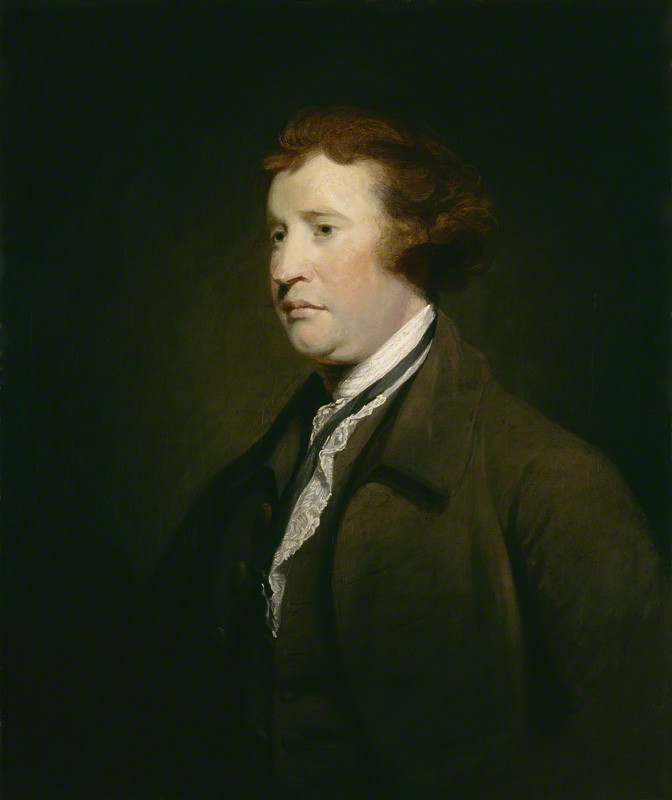
“The great has terror for its basis... the beautiful is founded on mere positive pleasure...”

“How can [people] be expected to take in a totally unfamiliar line of thought, which goes against all their deepest prejudices? … [S]uch philosophizing [which says what it thinks irrespective of circumstances] would be completely out of place. But there is a more civilized form of philosophy which knows the dramatic context, so to speak, tries to fit in with it, and plays an appropriate part in the current performance. … [D]o the best you can to make the present production a success – don’t spoil the entire play just because you happen to think of another one that you’d enjoy rather more. … If you can’t completely eradicate wrong ideas, or deal with inveterate vices as effectively as you could wish, that’s not reason for turning your back on public life altogether. You wouldn’t abandon ship in a storm just because you couldn’t control the winds.”



Group of Brands


















© 2026 Bibleportal.com All rights reserved.