
- Biblia
- Leer la Biblia
- Versiones de la Biblia
- Verso del dia
- Planes de lectura
- Versos por tema
- Books of the Bible
- Imágenes De La Biblia
- Estudio
- Comentarios
- Concordancias
- Diccionarios bíblicos
- Enciclopedias bíblicas
- Sermones
- Bible Atlas & Maps
- BP Wiki
- Devocionales
- Devocionales de hoy
- Light of the World
- Todos los devocionales
- Inspirational Quotes
- Más
- Picture Quotes
- Videos
- Inspirador
- Estudio Bíblico
- Lo que dice la Biblia
- Bible Q&As
- Daily Bread
- Bible by Genre
- Bible Stories
- Random Bible Verse
- Comunidad
- Store
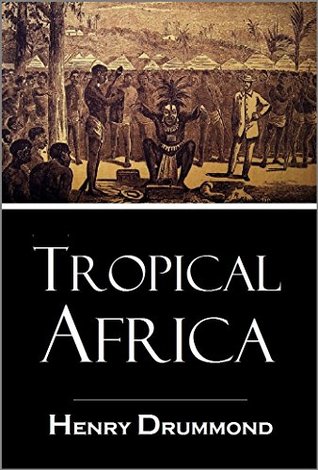
Tropical Africa (1889)
by Henry Drummond
Rev. Henry Drummond (1851 – 1897) was a Scottish evangelist, writer, traveler, and lecturer who wrote "Tropical Africa."
"Tropical Africa" is the most delightfully artistic melange of travel and natural history in Africa that has yet been published. "Tropical Africa", by the author of "Natural Law in the Spiritual World", tells of his experiences in the course of a journey he took up the Zambesi and Shire to the mission-stations of Scotland, and along the plateau between Tanganyika and Nyassa, and to a certain extent also embodies the experiences of other travellers, and may well become the most popular and beloved work on the subject that has been issued. After the numerous and enormous volumes which have been written upon Africa, it is a genuine treat to find Professor Drummond going to the heart of his subject in a volume of a little over two hundred pages.
As already hinted, this volume is eminently artistic. Whoever has read Natural Law in the Spiritual World knows that its author is a remarkable writer as well as a remarkable thinker. Most African travellers have not been literary artists, and so Professor Drummond has an advantage over them. The word "charming," alike in its proper and in its afternoon-tea sense, is the correct adjective to apply to Tropical Africa.
Professor Drummond has humour, but it also is in danger of losing in fibre. When he was travelling on the Nyassa-Tanganyika plateau, some of his men deserted him. He summoned others (who didn't understand English) who were on the point of doing likewise to his tent:—
"Like the Judge putting on the black cap, I drew my revolver from under my pillow, and laying it before me, proceeded to address them. Beginning with a few general remarks on the weather, I first sketched the geology of Africa, and then broke into an impassioned defence of the British Constitution. The three miserable sinners—they had done nothing in the world—quaked like aspens. I then followed up my advantage by intoning, in a voice of awful solemnity, the enunciation of the forty-seventh proposition of Euclid, and then threw my all into a blood-curdling Quod erat demonstrandum. Scene two followed, when I was alone; I turned on my pillow and wept for shame. "
What can be a more appropriate criticism on this than, "How very dreadful of you, Professor Drummond! Was it necessary that you should weep after so very innocuous—and so very elaborate—a practical joke? Should you not have indulged in a hearty laugh?"
Tropical Africa is quite a multum in parvo. It gives us travel in the chapters on the water-route to the heart of Africa by the Zambesi and Shire (which Professor Drummond prefers, and for good reasons, to the Zanzibar route), the East African Lake country, and wanderings on the Nyassa-Tanganyika plateau; sociology and moral pathology in the chapters on "The Aspect of the Heart of Africa" and "The Heart Disease of Africa;" science in "The White Ant," "The Ways of African Insects," "A Geological Sketch," and "A Meteorological Note;" and politics in "A Political Warning."
The most stirring chapter in Professor Drummond's book is that which treats of the slave-trade, which he calls "the heart-disease of Africa." "The White Ant" is perhaps the most fascinating chapter of a fascinating book.
After reading a score or two of books on Africa, one could easily declare that ‘ Tropical Africa ’ supplants them all, and is livelier, brighter and wittier than most of them. The Professor must be a jolly travelling-companion (though he travelled alone, except for black porters), and his pages crackle and sparkle with fun.
"Tropical Africa" is the most delightfully artistic melange of travel and natural history in Africa that has yet been published. "Tropical Africa", by the author of "Natural Law in the Spiritual World", tells of his experiences in the course of a journey he took up the Zambesi and Shire to the mission-stations of Scotland, and along the plateau between Tanganyika and Nyassa, and to a certain extent also embodies the experiences of other travellers, and may well become the most popular and beloved work on the subject that has been issued. After the numerous and enormous volumes which have been written upon Africa, it is a genuine treat to find Professor Drummond going to the heart of his subject in a volume of a little over two hundred pages.
As already hinted, this volume is eminently artistic. Whoever has read Natural Law in the Spiritual World knows that its author is a remarkable writer as well as a remarkable thinker. Most African travellers have not been literary artists, and so Professor Drummond has an advantage over them. The word "charming," alike in its proper and in its afternoon-tea sense, is the correct adjective to apply to Tropical Africa.
Professor Drummond has humour, but it also is in danger of losing in fibre. When he was travelling on the Nyassa-Tanganyika plateau, some of his men deserted him. He summoned others (who didn't understand English) who were on the point of doing likewise to his tent:—
"Like the Judge putting on the black cap, I drew my revolver from under my pillow, and laying it before me, proceeded to address them. Beginning with a few general remarks on the weather, I first sketched the geology of Africa, and then broke into an impassioned defence of the British Constitution. The three miserable sinners—they had done nothing in the world—quaked like aspens. I then followed up my advantage by intoning, in a voice of awful solemnity, the enunciation of the forty-seventh proposition of Euclid, and then threw my all into a blood-curdling Quod erat demonstrandum. Scene two followed, when I was alone; I turned on my pillow and wept for shame. "
What can be a more appropriate criticism on this than, "How very dreadful of you, Professor Drummond! Was it necessary that you should weep after so very innocuous—and so very elaborate—a practical joke? Should you not have indulged in a hearty laugh?"
Tropical Africa is quite a multum in parvo. It gives us travel in the chapters on the water-route to the heart of Africa by the Zambesi and Shire (which Professor Drummond prefers, and for good reasons, to the Zanzibar route), the East African Lake country, and wanderings on the Nyassa-Tanganyika plateau; sociology and moral pathology in the chapters on "The Aspect of the Heart of Africa" and "The Heart Disease of Africa;" science in "The White Ant," "The Ways of African Insects," "A Geological Sketch," and "A Meteorological Note;" and politics in "A Political Warning."
The most stirring chapter in Professor Drummond's book is that which treats of the slave-trade, which he calls "the heart-disease of Africa." "The White Ant" is perhaps the most fascinating chapter of a fascinating book.
After reading a score or two of books on Africa, one could easily declare that ‘ Tropical Africa ’ supplants them all, and is livelier, brighter and wittier than most of them. The Professor must be a jolly travelling-companion (though he travelled alone, except for black porters), and his pages crackle and sparkle with fun.
BUY NOW
Kindle Edition, 119 pages
Published June 4th 2016 (first published 1888)
Suscribir
Obtenga el versículo bíblico diario todos los días en su bandeja de entrada
Leer en el móvil



Grupo de marcas


















© 2025 Bibleportal.com Reservados todos los derechos.
Henry Drummond (1851 - 1897)
Was a Scottish evangelist, writer and lecturer. Drummond was born in Stirling. He was educated at Edinburgh University, where he displayed a strong inclination for physical and mathematical science. The religious element was an even more powerful factor in his nature, and disposed him to enter the Free Church of Scotland. While preparing for the ministry, he became for a time deeply interested in the evangelizing mission of Moody and Sankey, in which he actively co-operated for two years.In 1877 he became lecturer on natural science in the Free Church College, which enabled him to combine all the pursuits for which he felt a vocation. His studies resulted in his writing Natural Law in the Spiritual World, the argument of which is that the scientific principle of continuity extends from the physical world to the spiritual. Before the book was published in 1883, an invitation from the African Lakes Company drew Drummond away to Central Africa.
Henry Drummond, English banker, politician and writer, best known as one of the founders of the Catholic Apostolic or Irvingite Church, was born at the Grange, near Alresford, Hampshire.
He entered Parliament in 1810, and took an active interest from the first in nearly all departments of politics. Thoroughly independent and often eccentric in his views, he yet acted generally with the Conservative party. His speeches were often almost inaudible but were generally lucid and informing, and on occasion caustic and severe.
From 1847 until his death he represented West Surrey in parliament. Drummond took a deep interest in religious subjects, and published numerous books and pamphlets on such questions as the interpretation of prophecy, the circulation of the Apocrypha and the principles of Christianity. These attracted considerable attention.
Drummond was educated at Edinburgh University, where he displayed a strong inclination for physical and mathematical science. The religious element was an even more powerful factor in his nature, and disposed him to enter the Free Church of Scotland. While preparing for the ministry, he became for a time deeply interested in the evangelizing mission of Moody and Sankey, in which he actively cooperated for two years. In 1877 he became lecturer on natural science in the Free Church College, which enabled him to combine all the pursuits for which he felt a vocation. His studies resulted in his writing Natural Law in the Spiritual World, the argument of which was that the scientific principle of continuity extended from the physical world to the spiritual. Before the book issued from the press (1883), a sudden invitation from the African Lakes Company drew Drummond away to Central Africa.
Upon his return in the following year he found himself famous. Large bodies of serious readers, alike among the religious and the scientific classes, discovered in Natural Law the common standing-ground which they needed; and the universality of the demand proved, if nothing more, the seasonableness of its publication. Drummond continued to be actively interested in missionary and other movements among the Free Church students.
In 1888 he published Tropical Africa, a valuable digest of information. In 1890 he traveled in Australia, and in 1893 delivered the Lowell Lectures at Boston. Drummond's health failed shortly afterwards, and he died on the 11th of March 1897.
... Show more