Ce livre est parfaitement mis en page pour une lecture sur Kindle,
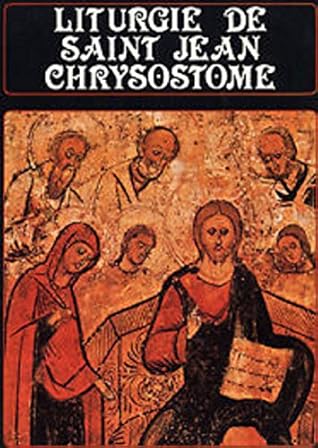
Liturgie - Saint Jean Chrysostome
Extrait : Le Prêtre qui se prépare à célébrer le Divin Sacrifice, doit avant toutes choses être en paix avec tout le monde, et n’avoir rien contre qui que ce soit ; il doit tenir son cœur en garde contre toute mauvaise pensée et observer une abstinence entière et absolue depuis le soir jusqu’au moment du sacrifice. Ce moment étant arrivé, après avoir fait le salut d’usage au Supérieur, il entre dans l’Église, et s’étant réuni au Diacre, tous deux s’inclinent trois fois vers l’orient devant les portes-saintes.
Le Diacre : Mon père, bénissez.
Le Prêtre : Béni soit notre Dieu perpétuellement, maintenant, et toujours, et dans les siècles des siècles. Ainsi soit-il.
Le Diacre : Roi des cieux, Consolateur, Esprit de vérité, vous qui êtes présent partout et qui remplissez tout, Trésor de tous biens, Dispensateur de la vie, venez et faites-vous une demeure en nous, purifiez-nous de toute tache et sauvez nos âmes, vous qui êtes la bonté même.
Dieu Saint, Dieu Tout-puissant, Dieu Éternel, ayez pitié de nous (3 fois).
Gloire au Père, et au Fils, et au Saint-Esprit, maintenant et toujours, et dans les siècles des siècles. Ainsi soit-il.
Ô Trinité Sainte, ayez pitié de nous ; Dieu Tout-puissant, purifiez-nous de nos péchés ; Seigneur, pardonnez-nous nos iniquités ; Dieu Saint, visitez-nous dans nos infirmités, et guérissez-nous pour la gloire de votre nom.






















John Chrysostom (349 - 407)
Read freely text sermons and articles by the speaker John Chrysostom in text and pdf format Archbishop of Constantinople, was an important Early Church Father. He is known for his preaching and public speaking, his denunciation of abuse of authority by both ecclesiastical and political leaders, the Divine Liturgy of St. John Chrysostom, and his ascetic sensibilities. The epithet Χρυσόστομος (Chrysostomos, anglicized as Chrysostom) means "golden-mouthed" in Greek and given for his celebrated eloquence.The Eastern Orthodox and Byzantine Catholic churches honor him as a saint and count him among the Three Holy Hierarchs, together with Basil the Great and Gregory Nazianzus. He is recognized by the Eastern Orthodox Church and the Catholic Church as a saint and as a Doctor of the Church. Churches of the Western tradition, including the Roman Catholic Church, some Anglican provinces, and some Lutheran churches, commemorate him on 13 September. Some other Lutheran churches and Anglican provinces commemorate him on the traditional Eastern feast day of 27 January. Chrysostom's extant homiletical works are vast, including many hundreds of exegetical homilies on both the New Testament (especially the works of Saint Paul) and the Old Testament (particularly on Genesis). Among his extant exegetical works are sixty-seven homilies on Genesis, fifty-nine on the Psalms, ninety on the Gospel of Matthew, eighty-eight on the Gospel of John, and fifty-five on the Acts of the Apostles.
John Chrysostom, Archbishop of Constantinople, was an important Early Church Father. He is known for his eloquence in preaching and public speaking, and his denunciation of abuse of authority by both ecclesiastical and political leaders.
Chrysostom is known in Christianity chiefly as a preacher, theologian and liturgist, particularly in the Eastern Orthodox Church.
During a time when city clergy were subject to criticism for their high lifestyle, John was determined to reform his clergy in Constantinople. These efforts were met with resistance and limited success. He was an excellent preacher. As a theologian, he has been and continues to be very important in Eastern Christianity, and is generally considered the most prominent doctor of the Greek Church, but has been less important to Western Christianity.
His writings have survived to the present day more so than any of the other Greek Fathers. He rejected the contemporary trend for allegory, instead speaking plainly and applying Bible passages and lessons to everyday life.
... Show more