
- Biblia
- Leer la Biblia
- Versiones de la Biblia
- Verso del dia
- Planes de lectura
- Versos por tema
- Books of the Bible
- Imágenes De La Biblia
- Estudio
- Comentarios
- Concordancias
- Diccionarios bíblicos
- Enciclopedias bíblicas
- Sermones
- Bible Atlas & Maps
- BP Wiki
- Devocionales
- Devocionales de hoy
- Light of the World
- Todos los devocionales
- Inspirational Quotes
- Más
- Picture Quotes
- Videos
- Inspirador
- Estudio Bíblico
- Lo que dice la Biblia
- Bible Q&As
- Daily Bread
- Bible by Genre
- Bible Stories
- Random Bible Verse
- Comunidad
- Store
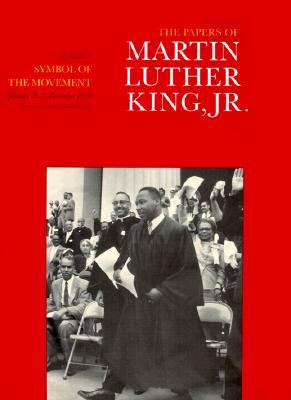
The Papers of Martin Luther King, Jr., Vol. 4: Symbol of the Movement, January 1957–December 1958
by Martin Luther King, Jr.
Acclaimed by "Ebony" magazine as "one of those rare publishing events that generate as much excitement in the cloistered confines of the academy as they do in the general public," "The Papers of Martin Luther King, Jr." chronicles one of the twentieth century's most dynamic personalities and one of the nation's greatest social struggles. King's call for racial justice and his faith in the power of nonviolence to engender a major transformation of American society is movingly conveyed in this authoritative multivolume series. In "Volume IV," with the Montgomery bus boycott at an end, King confronts the sudden demands of celebrity while trying to identify the next steps in the burgeoning struggle for equality. Anxious to duplicate the success of the boycott, he spends much of 1957 and 1958 establishing the Southern Christian Leadership Conference. But advancing the movement in the face of dogged resistance, he finds that it is easier to inspire supporters with his potent oratory than to organize a mass movement for social change. Yet King remains committed: "The vast possibilities of a nonviolent, non-cooperative approach to the solution of the race problem are still challenging indeed. I would like to remain a part of the unfolding development of this approach for a few more years." King's budding international prestige is affirmed in March 1957, when he attends the independence ceremonies in Ghana, West Africa. Two months later his first national address, at the "Prayer Pilgrimage for Freedom," is widely praised, and in June 1958, King's increasing prominence is recognized with a long-overdue White House meeting. During this period King also cultivates alliances with the labor and pacifist movements, and international anticolonial organizations. As "Volume IV" closes, King is enjoying the acclaim that has greeted his first book, "Stride Toward Freedom," only to suffer a near-fatal stabbing in New York City.
BUY NOW
Hardcover, 670 pages
Published April 27th 2000 by University of California Press (first published March 28th 2000)
tags: history
Suscribir
Obtenga el versículo bíblico diario todos los días en su bandeja de entrada
Leer en el móvil



Grupo de marcas


















© 2025 Bibleportal.com Reservados todos los derechos.
1929-1968
Martin Luther King, Jr. was an American clergyman, activist and prominent leader in the African-American civil rights movement. His main legacy was to secure progress on civil rights in the United States and he is frequently referenced as a human rights icon today.
A Baptist minister, King became a civil rights activist early in his career. He led the 1955 Montgomery Bus Boycott and helped found the Southern Christian Leadership Conference in 1957, serving as its first president. King's efforts led to the 1963 March on Washington, where King delivered his "I Have a Dream" speech. There, he raised public consciousness of the civil rights movement and established himself as one of the greatest orators in U.S. history.
King's main legacy was to secure progress on civil rights in the United States, which has enabled more Americans to reach their potential.
... Show more